RigidWall Cleanroom Features

RigidWall Cleanroom Features

Planning to install a new cleanroom in your facility? One of your first steps should be to figure out which type of cleanroom is the best fit: SoftWall, HardWall, or RigidWall. All of these have great features and performance capabilities, but one of them may work better for your application than the others. That’s where we come in — to help you narrow down your options. 

We’ve already published blogs about SoftWall and HardWall cleanroom features (check them out if you haven’t yet!). So, this article will finish up the series by diving into RigidWall cleanrooms. We’ll discuss what they are, what unique features they offer, and what benefits they could bring to your facility. 

What Are RigidWall Cleanrooms?

RigidWall cleanrooms are constructed with aluminum extrusions, and are somewhat of a mixture between HardWall and SoftWall cleanrooms. They are durable and flexible, much like the HardWall, and more robust than the SoftWall. They have the same once-through configuration and design that SoftWall cleanrooms offer. 

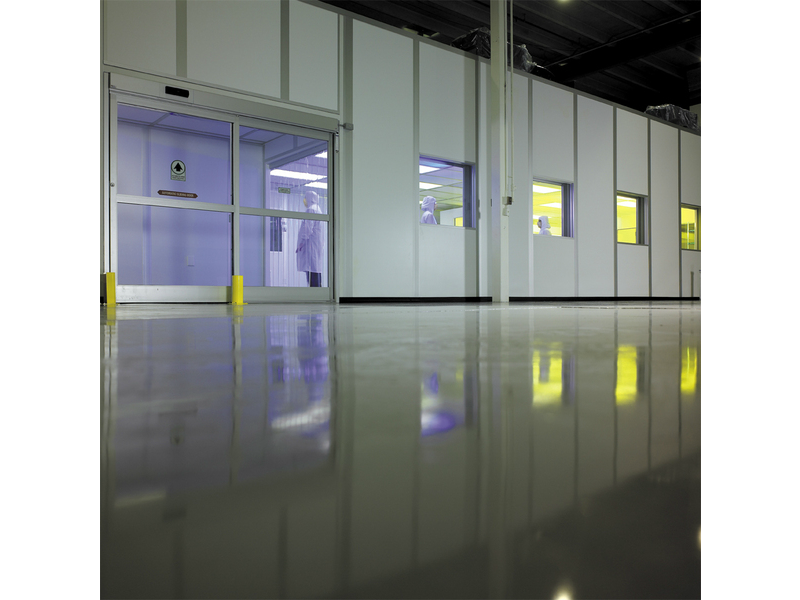
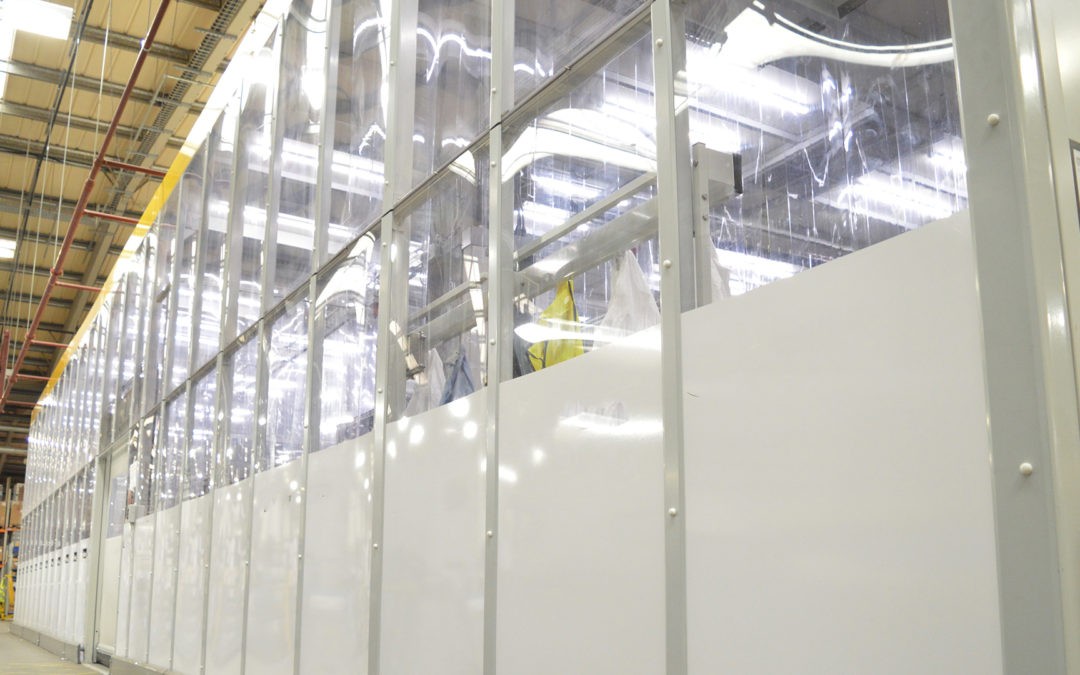
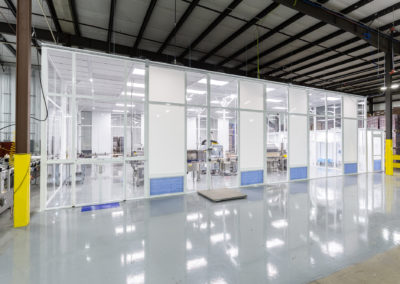
You might recognize a RigidWall cleanroom by paying attention to one specific aspect of them: aesthetics. RigidWall cleanrooms are generally built with transparent panel inserts that provide full visibility into the room, from floor to ceiling. 

Because of this trait, RigidWall cleanrooms are a common choice for applications that require the transparency aspect. This could include processes that require outside monitoring and safety or use as a show piece for new and potential customers.

RigidWall Cleanroom Features

Just like the other types of cleanrooms, RigidWall cleanrooms can be customized to meet specific customer needs. However, every RigidWall cleanroom does have a certain list of basic features. We’ll walk through them in the three sections below. 

RigidWall Cleanroom Materials

The most prominent material in RigidWall cleanrooms is their transparent wall panel inserts. We outline those, as well as some of their other structural materials below: 

  • Wall Panels – RigidWall panels are prefabricated utilizing high-strength aluminum extrusions that are finished with white powder baked enamel with ¼” inserts. They can be composed of ¼” acrylic, static dissipative PVC, or polycarbonate. The inserts can be either clear or opaque.
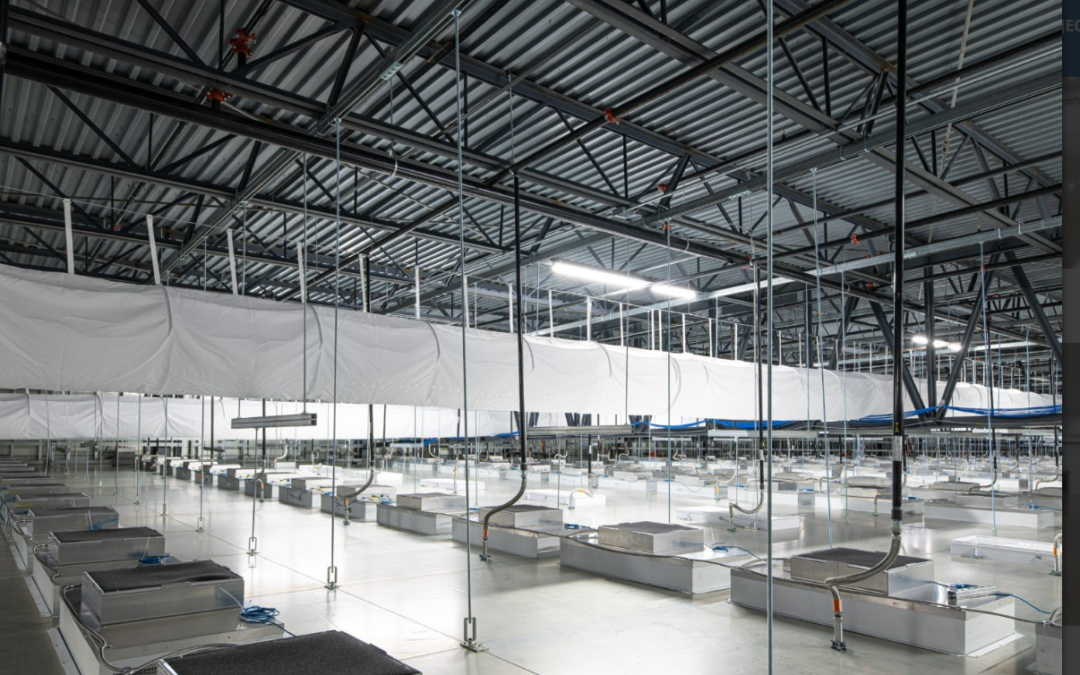
  • Ceiling System – The RigidWall structural ceiling system follows a T-grid layout, and is composed of 2” extruded aluminum framework. It holds necessary equipment like fan filters, ceiling tiles, and lighting.
  • Entrances – RigidWall cleanrooms are compatible with the same types of entrances as HardWall cleanrooms: swing doors, overhead doors, automatic or manual sliding doors, and more. 

RigidWall Cleanroom Sizes

No matter the size of your cleanroom, a RigidWall solution can meet the requirement. Standard rooms are available in 2’x4’ increments and can free span up to 30’. Their standard prefabricated panels are available in the same size as HardWall panels — so 4’ wide and 8’ tall nominally. 

RigidWall Cleanroom Standards

Due to their solid, durable wall systems, RigidWall cleanrooms are capable of meeting ISO classification between ISO Class 5-8. 

Benefits of RigidWall Cleanrooms

RigidWall cleanrooms aren’t the most common type of cleanroom we build at Angstrom Technology, but they’re highly rewarding solutions for the right applications. Below are some of the unique benefits they offer. 

Sleek Appearance

RigidWall cleanrooms’ transparent appearance offers a sleek, transparent style that other types of cleanrooms don’t. For applications that require full visibility into the cleanroom, this is a great option. 

Good Contamination Control

RigidWall cleanrooms offer control over contamination, static, pressure, and airborne particulates. As mentioned above, their level of control can meet ISO Class 5-8 requirements. 

However, it should be noted that RigidWall cleanroom panels don’t have the insulation properties needed for regulating temperature and humidity. If your application requires stringent temperature and/or humidity control, a HardWall cleanroom is a better option. HardWall cleanrooms offer great control over contamination, particulate matter, and temperature and humidity. 

Great Reconfigurability

Since RigidWall cleanrooms are constructed with prefabricated, modular wall panels, they can be easily reconfigured to change with you. As your facility evolves and grows, your RigidWall cleanroom can seamlessly evolve and grow too. It also improves the ability to include new types of equipment or technology within your cleanroom if need be. No matter what your needs are or may be in the future, a RigidWall cleanroom is a long-lasting solution. 

Extreme Durability

High-strength 6063-T6 aluminum extrusions, a robust 2” ceiling system, and reliable structural framework make RigidWall cleanrooms highly durable. Their coat of white, powder-baked enamel prevents corroding and contamination. Also, because the system requires no drilling and tapping, it’s quite clean and easy to install.

Simple Cleaning & Maintenance

RigidWall cleanrooms have non-porous surfaces and specific powder baked enamel finishes that make routine cleaning easy without rust or corrosion. You can wipe down all of these surfaces with cleanroom-approved cleaning products quickly and easily. This is a great advantage, especially for cleanroom applications that require very frequent cleanings to ensure their safety. 

Interested in installing a RigidWall cleanroom in your facility, or have questions about which type of cleanroom is right for your application? Let us know! Our cleanroom design and installation team can deliver a solution that meets your unique specifications. Give us a call at (888) 768-6900 or contact us online today. 

What Is the Equivalent ISO Class for cGMP Areas?

What Is the Equivalent ISO Class for cGMP Areas?

At Angstrom Technology, we get asked a lot what the equivalent ISO class for a cGMP area is. Particularly from organizations at the start of a cleanroom project. Here, we answer that question for you.

The International Standard for cleanrooms and associated controlled environments is ISO 14644. To be classified as a cleanroom, zones must meet air cleanliness levels that are classified by particle concentration limits detailed in ISO 14644-1. While ISO 14644 governs all cleanrooms, the FDA Current Good Manufacturing Practice (cGMP) is specifically for medicines manufacturers. It describes the minimum standard they must meet in their production processes.

What are the different cGMP areas?

Two clean areas are of particular importance to sterile drug product quality in cGMP. These are the critical area and the supporting clean areas associated with it. Each area has a minimum recommended ISO class. Although, with ISO validation two particle sizes are usually considered, whereas cGMP standards dictate that only particles ≥ 0.5 μm should be controlled.

EU GMP takes a slightly different approach. Four grades (A-D) are detailed. Since each grade has particle concentration limits, there is an equivalent ISO class for each cGMP grade. Although they are not mentioned in cGMP guidance, these grades are becoming part of the common cGMP language in the US.

  • EU GMP Grade A is approximately equivalent to ISO Class 5
  • EU GMP Grade B is approximately equivalent to ISO Class 5
  • EU GMP Grade C is approximately equivalent to ISO Class 7
  • EU GMP Grade D is approximately equivalent to ISO Class 8

Need more information on the ISO particulate concentration limits? We have a table that breaks them down on our cleanroom classifications page.

What ISO Class Should Critical Areas Meet?

Critical areas must meet particle concentration limits according to ISO Class 5. These areas are equivalent to EU GMP grades A/B.

A critical area is one where the sterilized drug product is exposed to environmental conditions that must maintain product sterility. Activities conducted in such areas include aseptic processes. This can include manipulations of sterile materials before and during filling and closing operations.

Because an exposed product is vulnerable to contamination and will not be subsequently sterilized in its immediate container, this area is critical.

What ISO Class Should Supporting Clean Areas Meet?

Supporting clean areas must meet a minimum of ISO 7 (equivalent to EU GMP grade C). Depending on the activity in these areas, manufacturers can also classify them as ISO 6 or maintain the entire aseptic filling room at ISO 5.

Supporting clean areas can have various classifications and functions. Many support areas function as zones in which nonsterile components, formulated products, in-process materials, equipment, and container/closures are prepared, held, or transferred. These environments are soundly designed when they minimize the level of particle contaminants in the final product and control the microbiological content (bioburden) of articles and components that are subsequently sterilized.

Build a cGMP-Compliant Cleanroom with Angstrom Technology

At Angstrom Technology, we’re proud to have delivered high-quality, high-performance cleanrooms across North America for over 30 years.

If you’re interested in building an ISO or GMP-compliant cleanroom in your facility, contact Angstrom’s Life Sciences group for information on how to get started.

CONTACT A LIFE SCIENCE CLEANROOM EXPERT

The CHIPS Act: Designing your Semiconductor Cleanroom

The CHIPS Act: Designing your Semiconductor Cleanroom

On August 9, 2022, President Biden passed the CHIPS Act.

What’s that? We’re here to fill you in. 

The CHIPS Act

CHIPS stands for Creating Helpful Incentives to Produce Semiconductors for America Act. The investment promises $50 billion to domestic R&D and manufacturing, marking a seminal moment for US semiconductor manufacturing.

This article looks at how organizations can use the funding to create a cleanroom space that supports the semiconductor supply chain.

What does the CHIPS Act mean for OEMs?

The CHIPS Act presents an opportunity for semiconductor R&D companies and manufacturers—along with their supply chain—to upgrade or extend facilities.

The program also intends to incentivize new participants to the semiconductor industry, allowing companies in vertical industries, such as electronics manufacturers, to diversify with reduced risk.

Funding will be available for a range of purposes, including the following:

  • Construction or expansion of facilities for the fabrication, packaging, assembly, and testing of legacy and current-generation semiconductors
  • Facilities to produce new or specialty technologies or emerging technologies
  • Facilities that manufacture equipment and materials for semiconductor manufacturing, potentially co-located in regional clusters

Entering the semiconductor market

The cost of semiconductor fabrication plants—often termed semiconductor fabs—can run into the billions of dollars. This creates a significant barrier that has obstructed new entrants into the market. But to be part of the supply chain, a semiconductor fab is not essential.

Before they are scaled up to industrial production, there are pre-commercial activities that need to be conducted to research, develop, and learn about new products. A semiconductor pilot plant can produce small volumes of chips for R&D purposes.

Since chips are highly susceptible to damage, even the smallest particle could cause a defect. This is why the specification for semiconductor chip fabrication cleanrooms typically ranges from ISO class 4 to 6. A HardWall cleanroom would be able to achieve this level of particulate control for a pilot plant. Zones can provide segregated spaces with control of environmental parameters—such as temperature, humidity, and UV—to be optimized for various steps of the production process.

The packaging, assembly, and testing of circuits or chips could be performed in ISO class 7 or ISO class 8 cleanrooms, with all considerations handled on a project-by-project basis. Equipment can be enclosed in a modular cleanroom, either RigidWall or SoftWall construction.

Over the years, Angstrom Technology has served the semiconductor industry with a wide range of cleanrooms. We’ve put together a simple guide to help you understand more about what type of cleanroom is suitable for your process.


Whether you are an existing semiconductor specialist or looking to diversify — the Angstrom Technology team can support your organization.

Contact Angstrom Technology to discuss your semiconductor cleanroom

Our cleanrooms are proudly made in America. We have the expertise to support organizations looking to build domestic capacity in line with the principles of the CHIPS program.

Are you thinking about investing in a semiconductor cleanroom? Request a semiconductor cleanroom quote today, or contact our team of experts for more information.

The Cleanroom Commissioning Process: Explained

The Cleanroom Commissioning Process: Explained

Before a cleanroom is determined safe and viable for use, it typically will undergo a commissioning process.

What’s that? We’re here to fill you in. 

What Is Cleanroom Commissioning & Why Is It Important?

Cleanroom commissioning is the practice of verifying that a cleanroom functions in alignment with its design intent and the user’s operational requirements. It’s a systematic process that involves thorough evaluation and documentation of designs, systems, and procedures. 

Cleanroom commissioning is important because it helps to ensure a cleanroom operates as it’s intended and that all stakeholder expectations are met. It also ensures that components, machinery, and equipment within the cleanroom are approved by regulatory authorities and function appropriately. 

Who Is Responsible for Cleanroom Commissioning?

Depending on the extensivity of the commissioning needed, commissioning can start at different points during the cleanroom build process. In most cases, it’s largely the responsibility of the customer/user to complete the commissioning process. The cleanroom provider can help provide necessary documentation, but is not involved much more than that. 

However, a reputable cleanroom provider can help make the commissioning process successful by listening closely to customer specifications and delivering a high-quality solution that meets them. 

5 Stages of the Cleanroom Commissioning Process

The cleanroom commissioning process can vary tremendously. It can be abbreviated and include just a few stages or types of commissioning, or it can be very in-depth and take longer than the entire cleanroom project. It’s all set forth by the customer, their specific commissioning requirements, and documentation needed for their project. 

To give you a general sense of what the commissioning process could look like, we’ll outline five of the most common stages below. 

1. Design

One step of the commissioning process happens before a cleanroom is constructed: design. The design stage is important because this is where project expectations are set. 

Here are a few examples of expectations that are established during the design stage:

  • Vision and requirements for the cleanroom
  • Project and design goals
  • Measurable performance criteria
  • Budget
  • Schedule

From there, a cleanroom provider steps in to create the preliminary cleanroom designs, keeping applicable standards, codes, and regulations in mind. Once drawn, stakeholders are given multiple chances to review and approve designs before installation begins. 

2. Installation Verification

For modular cleanrooms with prefabricated components, installation verification is a two-part process. It begins offsite in the controlled environment where various modular components are engineered and manufactured. Here, the following tasks are performed: 

  • Verification that materials and equipment meet the original design intent
  • Verification that materials and equipment meet industry standards
  • Factory acceptance testing

Then, once the modular components are manufactured, they’re shipped to the site where they’ll be installed. Onsite, a few more tasks are performed: 

  • Site acceptance testing
  • Verification that equipment and system start-up meet protocol requirements
  • Verification of the test and balance report
  • Assembly of the cleanroom in accordance with established protocols
  • Creation of cleanroom maintenance manuals

3. Operational Verification

Operational verification is completed during three separate installation stages:

  • As-built – The cleanroom structure, mechanical systems, and electrical systems are built, but the cleanroom is empty. There are no machines, equipment, or pieces of furniture in it yet.
  • At-rest – All cleanroom components are in place, but nothing is running. No operators have started and run process systems.
  • Operational: All cleanroom components are in place and operating with operators. 


Throughout each of these sub-stages, tests are run to verify that cleanroom equipment and systems are operating in accordance with the design intent and sequence of operations. Staff also receive some training on how to operate certain machinery and systems.

4. Functional Verification

The functional verification stage is similar to the operational verification stage, but it focuses more on how the cleanroom and its systems function together. The following verifications are completed: 

  • Verification that all cleanroom equipment and systems operate per design intent and sequence of operations when integrated with each other
  • Verification that all cleanroom equipment and systems fail as intended in the user’s established “failure cascade”

5. Post-Occupancy

Once the cleanroom has completed the first four stages, it’s ready to be used for its intended purpose. But the commissioning work isn’t entirely done. After the cleanroom is up and running, a few more tasks need to be completed by the user. 

  • Ongoing tests and maintenance (usually in alternate seasons)
  • End of warranty inspections
  • End of warranty interviews with cleanroom operators
  • Creation of a recommissioning plan

10 Types of Cleanroom Commissioning

There are many different “types” of cleanroom commissioning — or in other words, many different tests and verifications that can happen during the commissioning process. Most of these tests and verifications are completed during the operational verification stage, but some are also completed again during the functional verification and post-occupancy stages. 

Some of these commissioning tests and verifications are: 

Again, the commissioning process often differs from one cleanroom to the next and one end user to the next. So while some cleanrooms may only undergo one or two of these tests, others may require much more.

Ready to Start Your Cleanroom Project? Contact Angstrom Technology. 

Commissioning is an important process that ensures quality control within your cleanroom. While you’re responsible for completing the commissioning process, we’ll do our part by manufacturing, building, and installing a high-quality, per-spec cleanroom that sets you up for success. To learn more about our turnkey cleanroom design-build services, contact us online

GMP vs. cGMP Standards for Cleanrooms

GMP vs. cGMP Standards for Cleanrooms

Understanding cleanroom quality standards can be tricky. There are various systems, all of which have different themes, criteria, guidelines, and regulations.

One distinction that can be particularly challenging is the difference between GMP and cGMP standards. These standard sets sound similar, and they both work to ensure safety, quality, and repeatability in cleanroom environments. However, there are some key differences between the two. 


Let’s take a closer look at GMP vs. cGMP standards below. 

GMP vs. cGMP Standards for Cleanrooms

We’ll first note that GMP and cGMP standards may differ, but neither is “better” or “more effective” than the other. Often, the two systems work hand in hand to ensure a cleanroom is operating at peak performance and is in continuous compliance. In fact, the terms are frequently used interchangeably, even though they technically shouldn’t be. 

Let’s dive into some definitions. 

What Are GMP Standards for Cleanrooms?

GMP stands for “Good Manufacturing Practices.” It’s a quality management system used mainly by medical and pharmaceutical manufacturers. Its main goal is to “minimize the risks of microbiological, particulate, and pyrogen contamination during preparation and sterilization of medicines or medical devices.”

GMP standards focus largely on production and quality control. When applied specifically to cleanrooms, they address issues like:

  • Sanitation and cleanliness
  • Record keeping and documentation
  • Personnel qualification
  • Process validation
  • Equipment verification

In the United States, GMP standards are created and enforced by the Food and Drug Administration (FDA). In other countries, they’re created and enforced by other regulatory agencies. But while GMP standards may have minor differences across the globe, their main goal is the same. 

Learn more about GMP standards for cleanrooms in this blog post

What Are cGMP Standards for Cleanrooms?

cGMP stands for “Current Good Manufacturing Practices.” It’s a quality management system incredibly similar to GMP but with small yet important differences. 

With cGMP standards, every production stage is done using GMP guidelines but in the most “current” manner available. In a broad sense, “current” means a cleanroom and its operators must employ technologies and systems that are up to date and comply with GMP requirements. 

While cGMP standards have rules and regulations, they’re still somewhat flexible. They allow each manufacturer to choose which controls, systems, and technologies to use and how they want to implement them — as long as they remain compliant. This enables manufacturers to take innovative approaches and to constantly work on improving their processes. 

Learn more about cGMP standards in this article from the FDA.

Other Differences Between GMP and cGMP Standards for Cleanrooms

Besides the main distinction of “current,” there are a few other differences to note between GMP and cGMP standards for cleanrooms. The most pertinent ones to many manufacturers are cost and requirements for certification and testing. 

Cost

cGMP cleanrooms use new, innovative systems and technologies. This often makes their overall manufacturing, installation, and operating costs higher than those of GMP cleanrooms. 

Of course, cleanroom costs can vary depending on the overall project size and scope. This is just a common trend we’ve noticed and something to consider while you’re determining a project budget. For many manufacturers, the additional cost is well worth it for modern systems.

Certification & Testing

In most cases, cGMP cleanrooms are subject to a longer, more rigorous certification process before they’re ready for operation. They also tend to undergo more frequent, thorough tests year after year to verify ongoing compliance. This is to ensure that all controls, technologies, and systems are current, operable, and compliant. 

Questions? Contact Angstrom Technology.

Have more questions about cGMP and GMP standards and how they may fit into your cleanroom manufacturing, installation, and operation processes? Contact our Life Sciences team at Angstrom Technology. We have the experience and an extensive portfolio of cGMP and GMP cleanroom projects under our belt, and we’d be happy to help design and build yours. 

CONTACT A LIFE SCIENCE CLEANROOM EXPERT