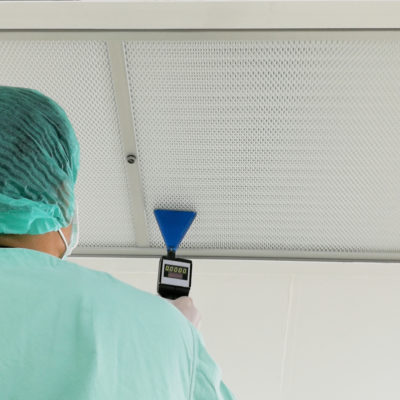
Medical Cleanroom Terminology: What Are Hoods?

Medical Cleanroom Terminology: What Are Hoods?

Many cleanrooms require the implementation of additional features in order to perform their specific application safely and efficiently. One of the most common additions is a cleanroom hood. Below, we’ll outline the basics of what a cleanroom hood is, what it’s used for, and how it can be maintained for maximum efficiency and durability. 

What Are Cleanroom Hoods?

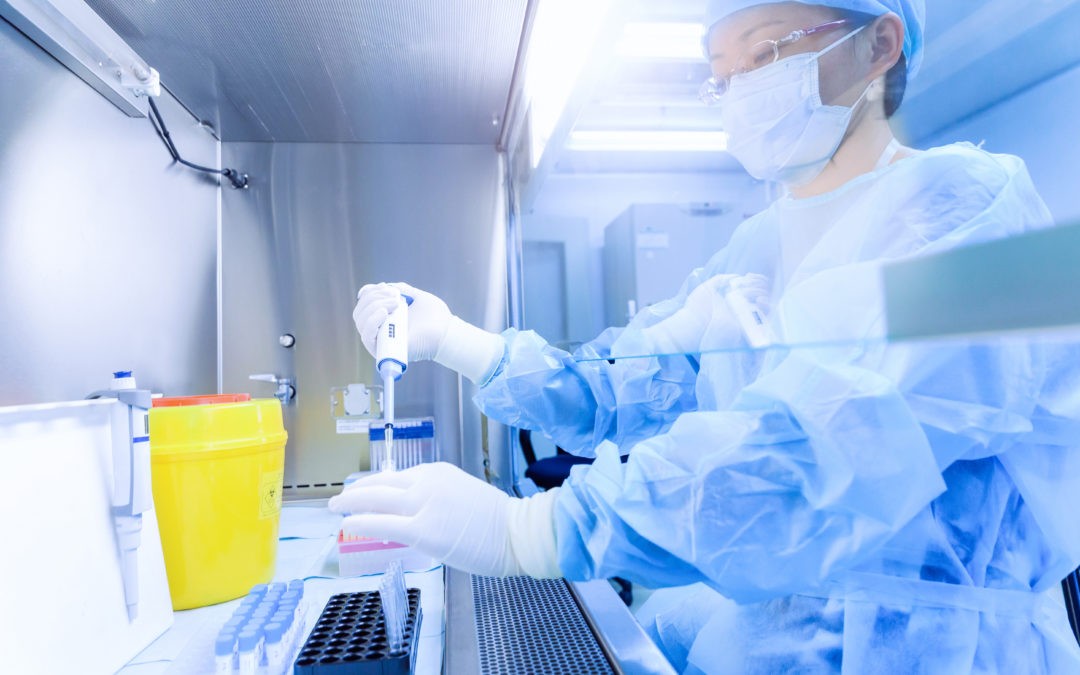
Cleanroom hoods (also called laminar flow hoods) are enclosures designed to guide filtered air in a uniform speed and direction, all in an effort to prevent contaminant particles from building up on the work surface, and to protect the product and operator. They can come in the form of workstations, work benches, and cabinets. 

Cleanroom hoods work in a circulatory process, pushing treated air from the fan filter unit to flow across the work surface until it reaches the enclosure’s exit area where it’s treated and circulated again. This ensures that any sensitive materials placed on the hood’s work surface are always upstream and suffer little to no contamination. 

Types of Cleanroom Hoods

There are two types of laminar flow hoods: horizontal and vertical. As their names suggest, each of them either blows air horizontally or vertically in relation to the hood’s work surface, and there’s some debate in the industry over which method is best. 

Horizontal laminar flow hoods direct air horizontally, or parallel across the work surface. This system helps reduce the amount of turbulence (random air movement) drastically, offering sensitive materials maximum protection from contaminants. 

Vertical laminar flow hoods direct air vertically, or perpendicular to the hood’s work surface. They resemble the design and operation of a laminar flow cleanroom, where air is treated through a fan filter at the top of the enclosure, then pushed downwards — just on a much smaller scale. The vertical flow of air is especially good at preventing any harmful particles from being blown at the operator. 

Cleanroom Hood Components

No matter if they’re horizontal or vertical flow, all cleanroom hoods have the same basic components. If you’re planning on using a hood for your cleanroom application, it’s important to be comfortable with each of the parts and their functions. 

  • Sash – Located on the face of the hood, this is a transparent panel that shields internal materials from the outside environment, while also providing some protection to the outside environment and operator. 
  • Airfoil – Usually located at the bottom front of the hood, this is a vent that allows room air to enter the hood enclosure. It helps prevent vapors from escaping and air imbalances in the workspace. 
  • Baffle – Usually located on the hood’s ceiling, this is an adjustable partition that affects air force and direction within the enclosure. It works to ensure laminarity (uniformity) by controlling pressure in airflow. 
  • Fan filter unit – This is the component that’s primarily responsible for the hood’s clean environment by filtering particles and maintaining consistent air change rates. For horizontal laminar flow hoods, this is located at the back of the enclosure. For vertical laminar flow hoods, this is located on top of the enclosure. 
  • Plenum – This is the space underneath the work surface or behind the hood walls that balances and distributes air. Air usually enters the plenum from the airfoils and is pushed to the air filter before re-entering the enclosure. 
  • Duct – This is an exhaust passage that’s used to transport contaminated air out of the hood’s clean environment — either into another room or outside of the building completely. 
  • Gauges – These are meters that continuously monitor the hood’s air velocity, particle count, and air pressure. 
  • Work surface – This is the main space where sensitive materials are placed and processes are carried out within the hood. Depending on which type of hood you have, this could be in front of (horizontal flow hood) or underneath (vertical flow hood) the hood’s fan filter unit. 

Which Cleanroom Applications Require Hoods?

Any process involving highly sensitive materials that can’t be contaminated may be carried out within a cleanroom hood. This includes a number of applications within a number of industries, including (but not limited to): 

How to Clean and Maintain Cleanroom Hoods

Cleaning and maintaining your cleanroom hood is paramount in ensuring its effectiveness for years to come. Typically, certification of the hood is required annually or semi-annually, depending on your industry’s standards. In terms of cleaning, there are three levels of cleanliness that you can achieve: 

  • Sanitized – Removing visible dirt and contaminants on the surface, reducing the amount of germs and chances of infection, illness, and/or contamination. 
  • Disinfected – Eliminating virus, bacteria, and fungi from the work surface with a cleaning agent. 
  • Sterilized – Completely eliminating any microorganisms and contaminants from the work surface, usually by means of chemicals, heat, and/or pressure. 


Angstrom Technology’s modular cleanrooms can be customized to meet the needs of your application. If your application requires special equipment like cleanroom hoods, get in touch with our team of design engineers. We’ll help explain the process and design a controlled space that accommodates all of your requests. 

How Much Does a Plastics Industry Cleanroom Cost?

How Much Does a Plastics Industry Cleanroom Cost?

In the plastics industry, quality is critical. No matter which industrial application you’re manufacturing for, a controlled cleanroom environment is critical for the efficient production of safe, durable, reliable plastic products. But with all that emphasis on quality and cleanliness, you may be left wondering, how much is all of this going to cost me? 

In this article, we’ll explore the answer to that question. After we discuss what a plastics industry cleanroom consists of, we can discover how much one may cost you, depending on your unique specifications. 

What Is a Plastics Industry Cleanroom?

Plastics industry cleanrooms are used for researching, developing, and assembling plastic components in a controlled, clean environment. Plastic products can be used for a number of industrial applications, so their cleanrooms vary in stringency based on that. For example, if your plastic components are used to make medical devices, you’ll need much more cleanliness regulation than another facility that uses plastic components to make furniture. 

Regardless of the application, there is still some amount of regulation for each of them. This helps ensure the quality of end products and the safety of operators throughout various methods of plastic manufacturing, including:

  • Injection molding – Melted plastic is injected into a set mold, fills the shape, and cools to permanent form. 
  • Extrusion molding – Melted plastic is pushed through a die, then cools in the desired shape. 
  • Rotational molding – Plastic powder is placed into a mold, then rotated until the plastic creates an outer layer with a hollow interior. 
  • Blow molding – Air pressure is used to shape melted plastic around a pre-shaped hollow plastic piece, which creates a cavity where the plastic has expanded around it. 

Changes in temperature, humidity, pressure, or static during any of these processes can result in product defects and failures — potentially wasting your facility’s time and money or putting end consumers at risk of harm. A plastics industry cleanroom mitigates that risk by controlling all the environmental factors you need, to the amount you need them. 

How Much Does a Plastics Industry Cleanroom Cost? 

All that being said, it’s apparent that a plastics industry cleanroom could look like a lot of different things — and the same goes for the cost of that cleanroom. Because of this variation, it can be difficult to get a sense of what your cleanroom may cost before you outline your specific needs to an expert manufacturer. However, there are some key considerations that you can look at to give you a general guideline:

ISO Classification

Plastics industry cleanrooms are regulated by standards created by the International Standards Organization (ISO) — specifically by the ISO 146441-1 standard, which provides the particle count, air change rate, and ceiling coverage requirements for all cleanroom environments. ISO 146441-1 is split into nine separate classes, with 1 being the most filtered air, and 9 being equivalent to regular room air. Most plastics industry cleanrooms require an ISO Class of 7 or 8, but some applications that are more sensitive to contamination may bump requirements up to Class 5 or 6. 

How does this relate to the cost of your cleanroom? The general rule is, the more stringent your cleanroom is, the more equipment it usually requires, and the more it will cost you. 

Type

Another factor that determines your cleanroom cost is your choice between these three types of cleanrooms, which is heavily based on which ISO requirements you need to meet: 

  • SoftWall – Meets ISO Class 5-8 requirements, and is completely versatile and customizable to fit whatever space is needed. 
  • HardWall – Offers the highest level of control over the environment, and can uphold even the most stringent ISO Class 1 requirements. 
  • RigidWall – Meets ISO Class 5-8 requirements, and features a modern, transparent panel design. 


In most cases, SoftWall cleanrooms are the most affordable cleanroom option, and you’ll pay extra for the additional structure, control, or design benefits of HardWall and RigidWall types. 

Size

As you can probably imagine, size is the most easily understood factor to account for in terms of cleanroom cost. Simply put, the bigger your cleanroom is, the more expensive it will be. Cleanroom manufacturers usually account for the biggest piece of equipment (in terms of both width and height) that will be stored in it to determine your ideal sizing. 

Design Complexity and Additional Features

The least expensive cleanrooms have basic layouts and no additional features or technologies. However, for many plastics industry applications, this just isn’t feasible. From added equipment, process piping, furniture, static control, access controls, and even attached gowning rooms, your cleanroom will likely need to accommodate specific design complexities that come at an additional cost. 

Get the Most Out of Your Cleanroom at Angstrom Technology

All this being said, it’s important to get the cleanroom you need in order to manufacture, test, assemble, or package products safely and effectively. Budget is an important consideration in the design process, but you need to be sure to make a budget that accommodates all your needs — otherwise, you’ll end up wasting on a space that doesn’t work for you. 

Trying to save on the costs of your cleanroom? Contact one of our experts at Angstrom Technology! Our team of experts will create custom designs to your exact specifications — both for your cleanroom classification and your budget. 

Download the
Cleanroom Checklist

Angstrom Technology Design Guide

Understanding the Value of Modular Cleanrooms

Understanding the Value of Modular Cleanrooms

At Angstrom Technology, we like to take a step back every once in a while, taking the time to acknowledge and appreciate the impact of our work in various industries. It helps us put our work into perspective, and it motivates us to deliver excellence each and every day.

As we’ve reflected throughout the past years, we’ve always been astonished at how much innovation happens within modular cleanrooms. These quickly built, easily modified, heavily treated chambers truly make groundbreaking work possible. As a resource that helps scientists, and engineers test, manufacture, and package products safely, cleanrooms bring tremendous value not only to the workforce, but to society as a whole. 

In this article, we’ll explore some amazing ways that various industries have used modular cleanroom technology to trailblaze a path of innovation.

The Value Modular Cleanrooms Bring to Various Industrial Applications

Modular cleanrooms have proven themselves to be beneficial for a number of applications, in a number of industries. Some of history’s most important inventions required cleanrooms’ quality control, and some of the future’s best and brightest innovations are being tested in them today. Below, let’s discuss some common industries that use cleanrooms, and what important things they’re using them for. 

Aerospace

Aerospace cleanrooms are crucial for the development of aircraft and spacecraft hardware, fine electronics, engine components, and more. In order to manufacture, assemble, and test those components, the aerospace industry needs a high level of control over the cleanroom environment — usually meeting an ISO Class 7 requirement, at minimum.

Each day, aerospace engineers are working hard to develop technologies that help us continue our journey of exploring the unknown. Modular cleanrooms give them the space they need to do that revolutionary work. 

Semiconductor

Semiconductor cleanrooms prevent particles from contaminating certain parts of nanotechnology — like semiconductors and microchips — that allow us to operate phones and computers more safely and efficiently. When even the smallest bit of contamination can lead to serious product issues and failures, a stringent modular cleanroom environment of ISO Class 5 or lower is necessary. 

Our world is reliant on constant technological innovations in order to stay connected, do business, and maintain a quality lifestyle. Modular cleanrooms will always provide a space to make those technological advances happen.

University Labs and Research Facilities

University labs and research facilities encompass a variety of applications, from medical research, to forensic science, to hazardous chemicals. Additionally, the university setting requires that spaces are able to be reassigned and restructured as student, research, and funding needs change throughout the years. Therefore, the versatility of quickly built, easily modified modular cleanrooms is extremely valuable here. 

Universities host some of the most advanced, highly recognized research facilities. Students and faculty are working with state-of-the-art technology to solve some of their industry’s most perplexing problems. A modular cleanroom can provide a controlled environment to foster that learning, no matter what the specific application may be. 

Military 

In regards to the military, weapons manufacturing is a critical component in upholding national security and protecting American citizens. Due to the deadly nature of the products and volatile compounds used in this industry, a controlled cleanroom environment is crucial in maintaining the safety of information, products, and personnel. 

Weapons manufacturing is, and always will be, dangerous. However, it plays a key role in protecting our nation’s infrastructure from devastating threats. Modular cleanrooms can help lessen the risk and bolster the production. 

Angstrom Technology can design a modular cleanroom to meet all your requirements and design considerations. If you’re interested in designing and installing one for your facility, speak with one of our design engineers to get started.

How to Set Up a Semiconductor Manufacturing Cleanroom

How to Set Up a Semiconductor Manufacturing Cleanroom

Semiconductors are extremely sensitive materials. So without a controlled cleanroom to manufacture the chips in, you risk contamination that could lead to various production issues and product failures. 

If your facility manufactures semiconductor chips for computerized devices of any type, size, or application, you’ll need a semiconductor manufacturing cleanroom. Let’s take a look at what components and considerations go into designing one. 

Where to Start: Understanding the Requirements of a Semiconductor Cleanroom

Even the slightest bit of contamination or settling of particulate produce can ruin semiconductor production and performance, sometimes leading to disastrous consequences. Therefore, it’s important to understand the strict cleanliness standards that semiconductor cleanrooms must abide by. 

Semiconductor Cleanroom Classifications

Even the slightest bit of contamination or settling of airborne particles can compromise semiconductor manufacturing efforts — leading to costly product defects. So before you get started designing your semiconductor manufacturing cleanroom, you should gain a thorough understanding of the threats they’re faced with and the cleanliness standards they must abide by. 

Semiconductor Manufacturing Threats

When working in a semiconductor manufacturing cleanroom, operators face a number of challenges regarding detailed processes and contamination control. In fact, human workers themselves are often the main source of contamination during the semiconductor manufacturing process. Aside from particulate matter from their bodies and clothing, they can create unwanted electro-static discharge (ESD) that can ruin electronic circuits in the material. 

Other than that, there are a number of additional environmental threats that can disrupt the semiconductor manufacturing process

  • Static
  • Humidity
  • Airborne particles
  • Power glitches
  • Pressure malfunctions
  • Equipment outgassing
  • Dropped equipment, tools, and parts

Yes — that’s a lot to keep in mind! But semiconductors are so fragile that even the tiniest speck of dust can destroy them.

Fortunately, a reliable, controlled cleanroom can do most of the work for you. When designed, built, and installed properly, your semiconductor manufacturing cleanroom can maintain the level of environmental control you need to optimize productivity and profitability. 


When You’re Ready: 4 Steps to Designing a Semiconductor Manufacturing Cleanroom

Now that you’re aware of the threats your semiconductor manufacturing cleanroom faces and the standards it needs to meet to prevent them, it’s time to start on design. Below we’ve outlined four considerations you’ll want to keep in mind during the design process. 

1. Start with Cleanroom Airflow & Air Filtration 

Airflow and air filtration are two of the most important aspects of great semiconductor manufacturing cleanroom design. They both determine how many airborne particles travel into your cleanroom and how they’re prevented from building up on equipment and materials. Let’s break them down one by one. 

Cleanroom Airflow

ISO 14644-4 describes recommended cleanroom airflow patterns at various classification levels. The most popular (and widely recommended) airflow pattern is unidirectional, or laminar. It involves air blown at a constant speed in a straight and unimpeded path. The air is pushed through a filter (usually in the cleanroom ceiling) and then directed down toward the floor. To reduce turbulence, some semiconductor cleanrooms have raised flooring that use perforated tiles that allow air to flow through holes where it can be retreated and filtered before entering the cleanroom again. 

Cleanroom Air Filtration

Cleanroom air filtration is all about how many airborne particles, and of which sizes, are permitted within a cleanroom. Regulations for this are documented in the ISO 14644-1 classification system. 

Airborne particles are controlled with specialized air filtration systems, such as HEPA and ULPA filters. You can learn more about these systems and how they work on our air filtration page

2. Consider Cleanroom Furniture and Machinery Placement

Semiconductor manufacturing requires various types of furniture, machinery, and equipment. It’s a good idea to map out where these items will be placed in order to produce the most efficient airflow patterns. 

One of the best recommendations for semiconductor manufacturing cleanroom design is to place large furniture, machinery, and equipment along the outer walls. This helps decrease the chance of those big objects obstructing the main airflow. 

Many cleanrooms are also designed with wire racks and shelves instead of regular shelving. This eliminates a portion of flat surfaces that contaminants can build up on. 

3. Implement Anti-Static Protection

Electro-static discharge (ESD) can ruin semiconductors’ conductive properties. To prevent ESD, your semiconductor manufacturing cleanroom must take preventative measures. Cleanroom wall panels, flooring, furniture, and more should be manufactured with static dissipative materials. You may also include various ESD-free products like clothing, tools, and cleaning materials. 

4. Plan For Daily Operations

In order to keep production moving and meet consumer demands, your semiconductor manufacturing cleanroom will likely be used daily. It’s important to design the cleanroom in a way that fits your operational plan. Make sure to note the following:

  • How your operators enter and exit the cleanroom
  • What ESD tests, gowning regimens, airlock rooms, and air showers your operators need to pass through before entry
  • How your operators move from task to task within the cleanroom
  • How often your operators need to clean the cleanroom, and what that process looks like

This information will help ensure your cleanroom is designed to maximize efficiency and cleanliness — which leads to better production quality, safety, and profitability. 

Design a Semiconductor Manufacturing Cleanroom with Angstrom Technology

Need help getting started on your semiconductor manufacturing cleanroom design? Let the experts at Angstrom Technology help. Our design team can help you make the tough choices and ensure you get the robust solution that’s perfect for your application. 

Request a semiconductor manufacturing cleanroom quote today, or contact us for more information. 


Medical Cleanroom Technology that Aids Surface Sterilization

Medical Cleanroom Technology that Aids Surface Sterilization

In order to keep operators and consumers safe, medical cleanrooms have some of the most stringent cleanliness requirements. Depending on whether they’re used for medical research, medical device, or pharmaceutical applications, their ISO standards can range from ISO Class 4-7.  

All that being said, if your facility hosts one or more medical cleanrooms, you may also want to invest in some innovative technologies to ensure consistently sterilized air and surfaces. Below, we’ll explore some of the new medical cleanroom technology on the market, including various portable HEPA filtration systems and peroxide sanitizing solutions. 

Portable HEPA Filtration Systems with UV-C Light Integration

While your cleanroom may already host a number of HEPA filters, some of the newest trends in medical cleanroom technology deem portable HEPA filters a rewarding investment. New portable HEPA filters can be mobile, ceiling mounted, or standalone, and they usually contain a UV-C light integrated for extra cleansing power. This way, you’re able to sterilize any specific area or surface more quickly and effectively than ever before. 

How Do HEPA Filters with UV-C Light Integration Work?

HEPA filters are known for effectively capturing microscopic viruses and bacteria with ease. Generally, airborne viruses are moved through the air via particles with a diameter between 10-100 µm. HEPA filters are capable of capturing large infectious loads of particles that are responsible for virus transmission and exponentially reducing them. 

HEPA filters can remove many of the common human pathogens from air circulation, including (but not limited to) the following:

  • Escherichia coli: Gastrointestinal infections
  • Aspergillus brasiliensis: Sinus infections
  • Mycoplasma pneumoniae: Pneumonia
  • Haemophilus influenzae: Meningitis
  • Mycobacterium Tuberculosis: Tuberculosis

When HEPA filters are combined with UV-C light technology, they can inactivate airborne-mediated microbial disease and microbial resistant bacteria even faster. UV-C lights and lamps are extremely effective, even against some of the most contagious airborne diseases. And while HEPA filters primarily cleanse the air, UV-C lights help sterilize water, hard surfaces, and nonporous objects as well. 

Portable HEPA Filtration System Features and Accessories

Along with your portable HEPA filtration system, you’re able to add on a variety of optional features and accessories for advanced performance, including:

  • Portable UV torches – Portable UV disinfection torches are about 5 feet tall, and designed to sterilize objects and tools within a medical cleanroom. They stand on their own, include 8 UV-C bulbs, and are built with an open center that allows for comprehensive sterilization within a 10-foot radius. 
  • Handheld UV light wands – Handheld UV light wands work similarly to portable UV torches, but are even more mobile. They have a lightweight, ergonomic design that is especially helpful in surface sanitation, and cleanroom inspection procedures. 

Dry Hydrogen Peroxide

Dry Hydrogen Peroxide (DHP™) is the true gas form of hydrogen peroxide, and it attacks microbes like viruses, bacteria, and mold before they can be damaging, both in the air and on surfaces. Developed by Synexis, this technology is designed to flow freely and constantly throughout your controlled space to effectively eliminate pathogens — without any reliance on air exchange rates. It works by taking the oxygen and humidity naturally present in your environment, then breaking them down in the Synexis device through a photocatalytic reaction (chemical reaction involving the absorption of light). Those molecules are then put together again, but as DHP™.

Not only is DHP™ cool and effective technology, but it’s also completely safe — falling far below safety limits for human exposure established by OSHA and meeting UL2998 certification requirements for zero ozone emissions. You can learn more about how DHP™ works and benefits various applications here

If you’re looking to upgrade your medical cleanroom technology to include some of the newest innovations, contact Angstrom Technology! Our cleanroom design experts can make sure your facility is outfitted with the best gadgets and gear to protect your work and workers.