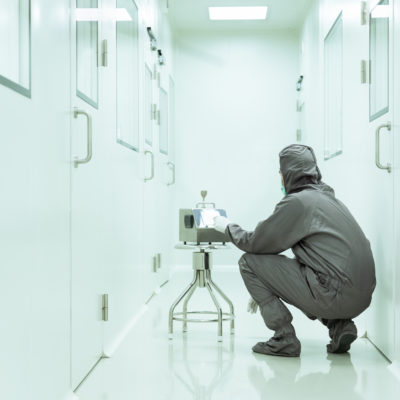
There’s a lot of planning involved in automotive cleanroom construction. From layout design to operational components, you need to figure out what you need and how to implement it before you start building.
Many experienced cleanroom designers and engineers have streamlined this process. However, it’s important to be certain that you’ve got all the details in line so you can get production started without any hiccups. From the experts at Angstrom Technology, here’s a checklist of four questions to ask yourself before starting your automotive cleanroom construction project.
1. What Processes Will Be Housed Within My Cleanroom?
Within an automotive cleanroom, there are various applications that ensure automotive parts are produced, cleaned, and packaged safely. Some of these applications include.
Research and development
Component manufacturing
Assembly
Testing
Packaging
Each of these applications include different manufacturing processes, which also call for differences in humidity, temperature, pressure, and particle contamination. These differences can change the type, design, and level of cleanliness of the cleanroom you choose to construct.
Other process-related elements that could alter your cleanroom plan include: how many personnel access it, how often they access it, and what protective gear they wear when they access it.
2. What Are My Automotive Cleanroom’s ISO Class Requirements?
Automotive cleanrooms are controlled environments where air and surface particle contamination is limited. They’re grouped into various cleanliness classification groups created by the International Standards Organization (ISO). Based on the allowed size and number of particles, rate of air change, and percentage of ceiling coverage with fan filter units, cleanrooms are placed into an ISO Class.
ISO Classes are ranked 1-9, with Class 1 having the most stringent regulations and Class 9 having the most lenient regulations. Most automotive cleanrooms fall into ISO Classes 5-8, but this could vary depending on your application’s specific cleanliness and worker safety requirements. By determining which ISO Class you need, you can make a more informed choice of which type of cleanroom will give you the best results.
3. How Much Space Do I Need for My Automotive Cleanroom?
Your cleanroom will only work if it provides the allotment of space necessary for your application. While some cleanrooms are relatively small in size, automotive cleanrooms occasionally require larger equipment clearances. You’ll want to plan for that ahead of time.
It’s also valuable to keep in mind that cleanrooms are built for long-term use. This means that they’re able to grow and adapt based on your facility’s changing needs. You can add to them, reconfigure them, and relocate them as you need, as long as your changes comply with U.S. building and safety codes. With that in mind, it’s best to plan and design for the space you need now, and have peace of mind knowing you can always expand down the road.
4. What Type of Air Pressure Does My Cleanroom Need?
Positive air pressure is achieved by pumping clean, filtered air into your cleanroom. This makes the air pressure inside your cleanroom greater than the pressure outside of it. It’s meant to protect whatever is inside the cleanroom from being contaminated by the surrounding environment.
Negative air pressure is achieved by filtering air out of the room. This makes the pressure inside your cleanroom lower than the pressure outside it. It’s meant to keep possible contamination from escaping the cleanroom.
Some automotive applications like electronic manufacturing require positive air pressure to ensure products are clean and safe for us. On the other hand, some automotive manufacturing applications, like applying special paints and part coatings, can be harmful to human health. In these situations, you may prefer negative air pressure to ensure those VOCs and harmful chemicals aren’t released into the rest of the facility.
Have more questions about designing and constructing a cleanroom for your automotive application? Give the experts at Angstrom Technology a call or contact us online! We’d be happy to walk through your specific requirements and help you get the best cleanroom installed in your space.
Get Instant Access to Our Cleanroom Design Guide
The Most Comprehensive Guide for Cleanrooms and Modular Offices
Microelectronics manufacturing often involves delicate materials and occasionally toxic substances that require special care for handling and storage. Manufacturing equipment is also highly sensitive and generates heat which must be controlled.
For applications in microelectronics manufacturing to be successful, a high level of control is required over the manufacturing environment. A cleanroom allows regulation of environmental factors like temperature, relative humidity, air quality, static electricity, and more. They are often necessary for microelectronics manufacturing applications to ensure quality and consistency.
Lets look at 4 specific applications of microelectronics manufacturing and how a specialized cleanroom can help achieve their goals.
#1 Semiconductor Cleanrooms
Semiconductors are used to make nearly every piece of technology we rely on today — from cell phones to coffee machines to vehicles. To make the complex microchips these devices need to function and respond with the speed and accuracy modern life demands, they require semiconductors to be meticulously manufactured and assembled.
As the demand for technology continues to rise, semiconductor manufacturers must produce more without sacrificing quality. That’s where a semiconductor cleanroom proves its worth. A strictly controlled environment streamlines the manufacturing process and significantly reduces risk to safety and productivity by limiting particle count and size, temperature fluctuations, relative humidity, and other factors that commonly threaten semiconductor production.
#2 Silicon Wafer Manufacturing Cleanrooms
Silicon wafers are delicate but powerful products that are an essential part of semiconductor devices. Their ability to conduct electricity in a controlled manner makes them highly prized for fine electronics. Silicon used for semiconductors is grown first as an ingot with other elements called dopants, then precisely cut to form thin wafers which are used to produce microchips and other semiconductor applications.
The process of manufacturing silicon wafers requires extreme care. Particularly in the polishing stage of the process, where chemical slurries are used to remove any imperfections on the surface of the silicon wafer, protection from contaminating particles is critical. Polishing must typically be conducted within a cleanroom that meets the standards of ISO Class 5 at minimum to protect both products and personnel during this stage.
#3 SMT Assembly Cleanrooms
Surface-mount technology (SMT) assembly involves automated machinery which connects electronic components to printed circuit boards. These machines use a soldering paste to place and attach the components. SMT assembly must take place in a controlled environment to allow the equipment to work at an optimal level of efficiency.
An ISO Class 7 or 8 cleanroom is common for this microelectronics manufacturing application. A powerful cleanroom HVAC system regulates environmental factors to offset heat generated by machinery and fan filter units remove contaminants and deliver clean, filtered air into the space.
#4 Solar Technology Cleanrooms
Solar cells are used to make electronics that capture the sunlight and convert it into electricity. Before they can be used in a solar panel, they start as a thin slice of silicon and other conductors. Silicon wafers are used to develop solar cells through a complex process of texturing, etching, acid cleaning, and diffusion. Each step in the process requires strict control, as any interfering particles could compromise the product.
Cleanrooms are invaluable in the process of manufacturing solar cells — meeting ISO Class 5 – Class 7 standards. As the silicon wafer is refined, extra care must be taken to ensure that particles cannot damage the semiconductor or disrupt its delicate purposes. A cleanroom using HEPA and ULPA filters can help prevent product failures and secure success for solar cell projects.
Cleanroom Design for Microelectronics Manufacturing
Semiconductor cleanrooms and similar applications use carefully designed systems to regulate temperature and humidity. A robust filtration system limits particles which could interfere with equipment or compromise products. Other cleanroom systems like ESD-safe materials and fire suppression work to protect personnel in the space from the hazards of their work. All components of the cleanroom must also not contribute to the environment by shedding particles or outgassing and must be easy to clean completely.
When properly designed and built, cleanrooms offer a great value to semiconductor manufacturing and other applications involving microelectronics. If you need a cleanroom capable of keeping up with you and your microelectronics manufacturing goals, let us know. We’re happy to design, manufacture, and install the cleanroom that fits your classification and your application.
The ability to achieve aseptic conditions is invaluable in many medical cleanrooms and other healthcare applications. Let’s talk about what aseptic conditions are — and are not — as well and look at what you need to design an aseptic cleanroom.
What are Aseptic Conditions?
Aseptic conditions refers to the objective of a facility to limit microorganisms through design, material choices, and sterilization in order to protect sensitive work, products, or people in a space. Aseptic cleanrooms take every precaution to prevent microorganisms from entering and settling in controlled environments where they could threaten health and safety.
It’s important to note that aseptic does not mean the same thing as sterile. An aseptic environment differs from a sterile environment in that it is not just only that a space that has been sterilized, but one that has been specifically designed to maintain sterility as much as possible.
Medical Cleanroom Applications that Require Aseptic Conditions
The purpose of aseptic cleanrooms is to prevent biological contaminants from threatening work or causing disease. Through choosing aseptic materials and specific design features, cleanrooms capable of achieving aseptic conditions can make important work safe from microorganisms such as bacteria, allergens, fungi, and pathogens. These types of cleanrooms provide a contaminant-free environment that is easier to keep clean.
Any medical cleanroom that is threatened by the presence of microorganisms can benefit from establishing aseptic conditions, but there are many that require them in order for procedures to be safe and effective, such as:
Pharmaceutical cleanrooms
Medical device cleanrooms
Medical research cleanrooms
Hospital settings such as surgery procedure rooms
Many of these applications require additional steps to be taken for the prevention of microorganisms in their industry-specific standards. With the goal of complete asepsis, the design and construction of facilities used for the purposes listed aids in optimizing facility cleanliness and control.
How to Achieve Aseptic Conditions in a Medical Cleanroom
Aseptic conditions are first established through the cleanroom design features, then maintained through proper training of employees to maintain sterile conditions through gowning, cleaning, and proper removal of waste.
Let’s take a look at the design features of medical cleanrooms that can work to create and maintain aseptic conditions, and how proper training and procedures can be used to optimize them.
Aseptic Cleanroom Design Features
A well-designed cleanroom that can prevent contaminants from entering the controlled environment is invaluable to achieving aseptic conditions. All components used in the cleanroom design must:
not contribute to contamination themselves through shedding particles or outgassing
be easy to clean and able withstand thorough cleaning procedures and solution
Here are the cleanroom design features that can help medical cleanrooms achieve aseptic conditions.
Cleanroom Walls: Medical cleanrooms design should promote coved corners wherever possible, to prevent microorganisms or contaminating particles from settling where they are difficult to be removed. All wall panels should be sealed to prevent any particles leaking into the controlled space. Positive air pressurization can help prevent entering contaminants.
Ceiling Grid: Sturdy, reinforced steel ceiling grids provide the necessary support for medical cleanroom systems including fan filter units, lighting, and ceiling panels, while being easy to wipe down to maintain aseptic conditions.
Cleanroom Filtration: Fan filter units (FFUs) are essential to achieve the required cleanliness levels proscribed by the ISO and industry-specific standards for medical cleanrooms. Room-side replaceable FFUs are ideal because they can be serviced easily, reducing effort and cost for maintenance.
Doors, Windows, and Pass-Throughs: Any access points, including cleanroom windows, doors, and pass-throughs, should be flush-mounted to form a complete seal when closed and prevent ledges or lips where particles could settle or be difficult to clean.
Special Features and Technology: Other special features, such as ultraviolet-C technology, which neutralizes bacteria and pathogens in the air, either in the ducting system or in the cleanroom itself, can be used to support filtration and establish aseptic conditions.
When choosing components for your medical cleanroom design, the best materials that will be safe to use in aseptic environments are stainless steel and plastic — either FRP or U-PVC.
Maintaining Aseptic Cleanrooms
With every part of the cleanroom design working to establish aseptic conditions, it’s up to personnel to maintain them. This can be done through comprehensive training, adequate protective clothing, and set procedures for gowning, cleaning, and waste removal.
Also, it’s vital to keep the cleanroom in optimal condition to ensure all systems and components are an effective defense against microorganisms and potential contaminants. Replace filters according to a regular schedule and inspect the facility regularly to check for signs of damage or deterioration. This will ensure that the cleanroom is always working hard to provide a safe environment for workers and work to continue, and that you’re always reaching your cleanroom classification.
Need help achieving aseptic conditions in your cleanroom? At Angstrom Technology we have the expertise and the tools to design the cleanroom that best fits your application and your budget. Reach out to our team today for a free custom quote.
In the aerospace industry, we’re always looking for ways to improve efficiency in your cleanroom facility. Strategies that help you achieve the same or better results at a lower cost, boost efficiency, either by reducing energy expenditures, lowering operating costs, or improving the working environment for employees to increase productivity.
Let’s explore 5 ways to accomplish efficiency in aerospace cleanroom design.
#1 Use Adaptable, Modular Cleanroom Construction
If you’re building a new aerospace cleanroom from scratch, modular construction is the most efficient way to get the new, custom cleanroom you need. Modular cleanrooms are prefabricated off-site with all of the features and systems incorporated within your cleanroom design. Each panel arrives prewired and pre-insulated so it can be easily assembled with the rest of the cleanroom, and up and running when you’re ready to use your completed facility.
The best part about modular cleanroom construction is that your space can be reconfigured or modified as your project evolves, or expanded, condensed, or disassembled and moved easily for a cleanroom redesign on a larger scale. This ability makes modular construction much more efficient than building a new cleanroom for every project.
#2 Optimize Your Efficiency: Aerospace Cleanroom Layout
If your cleanroom layout is inefficient, it can hamper productivity, and generate more particles for your cleanroom to remove. By redesigning your aerospace cleanroom and making your layout more efficient, you can improve the environment for your workers and cleanroom classification.
Try to only use as much space as strictly needed so your cleanroom is as compact as possible, while still maintaining room for personnel, equipment, products, and air to move around. With a smaller volume of air to treat and filter, your cleanroom will run more efficiently.
When designing the ideal cleanroom layout, plan out traffic patterns as well as access to storage to ensure frequently used equipment and supplies are located where they can be easily accessed by personnel. This effectively limits unnecessary movement and reduces air turbulence.
#3 Streamline the Airflow Pattern in Your Cleanroom Design
The airflow pattern is one of the most crucial elements of aerospace cleanroom efficiency. It works with your cleanroom layout to ensure there are no spaces of “dead” air or turbulent air that could deposit contaminants or where particles could settle. Once airflow uniformity has been established, you can trust that your cleanroom is always working to keep the environment as clean as possible.
An expertly-designed airflow pattern will allow your cleanroom filtration system to work most efficiently. It should evenly distribute air from input to exhaust to promote even loading of filters, which not only cleans the air in your space more effectively, but also extends the life of expensive HEPA filters.
#4 Maintain Energy Efficient Cleanroom Systems
One of the best ways to improve efficiency in your aerospace cleanroom design is to choose systems that reduce energy consumption. Finding the right lighting for your facility can help you achieve this goal. Lighting in aerospace cleanrooms needs to provide plenty of illumination for detail-oriented tasks, while conserving energy where possible. LED lighting is not only more efficient than incandescent lighting, but it’s also brighter, more durable, and requires less maintenance.
Cleanroom filtration is another area where efficiency is key. HEPA and ULPA filters are designed to thoroughly clean the air, but they are made more efficient by hardworking pre filters that remove most of the larger particles before air even reaches the HEPA filter. Because of their increased use, pre filters must be inspected and replaced according to a regular schedule to ensure they are working at peak efficiency.
Another way to maintain efficient cleanroom systems is to monitor your aerospace cleanroom HVAC. Are temperature and humidity levels optimal for your cleanroom classification and comfort? Even slight changes to temperature can make a big difference for efficiency and operational costs. Turning the thermostat up or down a degree can have a significant impact over time.
#5 Schedule Environmental Controls to Conserve Energy
Running your cleanroom at its highest levels all the time may be necessary for critical applications or facilities that conduct work on a constant schedule. But, for facilities that maintain at rest periods, adjusting environmental controls to meet a lower classification level can conserve energy and reduce operational costs.
If you schedule your environmental controls to function at a lower capacity during off times, don’t make the difference between operating levels too drastic. If your cleanroom has to expend more energy to reach a high level of cleanliness again, the practice won’t prove to be more efficient. Instead, opt for an incremental change. This will ensure that your cleanroom is conserving energy, not wasting it.
Looking to make some changes to your cleanroom design to increase efficiency? Call the experts at Angstrom Technology. Our cleanroom engineers will help you find solutions that streamline your operations and save you money.
If you own and operate a cleanroom, you know that people are the single largest source of entering contaminants. Cleanrooms serve to limit potential contamination from reaching your work, but even constant filtration, garments, and gloves can only do so much — there will always be particles that make it through. These particles not only threaten your ability to reach your cleanroom classification, but could pose hazards to delicate work — from semiconductor manufacturing to defense system calibration, medical research, and more.
The next layer of defense for sensitive environments is air showers. Air showers are another step before entering the cleanroom that removes lingering particles, providing additional protection for your environment and the critical work you do. How do air showers work and what types of cleanrooms can benefit from air showers? Let’s answer these questions and more.
How Do Air Showers Work?
Air showers are chambers situated at the entrance of a cleanroom or pass-through to a more secure part of a cleanroom that use concentrated bursts of air to remove particles from entering workers, carts, and supplies. They are an added layer of protection for people and products moving from a less secure to a more secure area.
Air used in air showers is concentrated, high-velocity, and ultra-filtered to dislodge any particles that have settled on garments or surfaces. Once it has served its purpose, “dirty” air, full of the removed particles, is pulled out of the chamber through the exhaust system.
When properly installed and utilized, air showers are an effective means of reducing potential contaminants and protecting sensitive work at a relatively low cost.
5 Types of Cleanrooms That Use Air Showers
Air showers aren’t required in all types of cleanrooms, but several applications can benefit from the added step of particle removal. Industries that require stringent cleanliness standards per their cleanroom classification have the most to gain from including air showers in their cleanroom design.
Let’s look at 5 such applications that use air showers.
#1 Air Showers in Medical Research Cleanrooms
Medical research and highly sensitive equipment used in that research can both be compromised by entering contaminants. To keep the environment as free of particles as possible and reach stringent ISO Class 5 or lower standards, these types of cleanrooms use air showers for researchers and doctors to “rinse off” before entering the controlled environment.
In some medical cleanroom applications, such as those working with bio-hazardous materials, infectious diseases, or toxic fumes, what’s inside the cleanroom may be more dangerous than the outside. In addition to negative pressurization to isolate internal contaminants, air showers may be placed within the cleanroom to remove particles from workers exiting the controlled environment as an added defense.
#2 Pharmaceutical Cleanrooms
Pharmaceutical cleanrooms are trusted to develop, test, and produce life-saving drugs and compounds. Any contamination of their processes could adversely affect test results or consumer health. Pharmaceutical cleanrooms must meet high cleanliness standards, and frequently implement air showers to help reach them. The additional layer of protection ensures that personnel traveling from the ante chamber to the compounding room are not carrying potentially dangerous contaminants.
#3 Air Showers in Aerospace Cleanrooms
Too many particles in an aerospace cleanroom can result in a compromised sensor or a malfunctioning piece of electrical equipment. On a small scale this may not seem like much, but when applied to a complex machine like aircraft or spacecraft, every piece of equipment must be in optimal condition to ensure worker safety and project results. These types of cleanrooms use large air showers at the entrance and exit of the cleanroom to remove particles from personnel, products, and parts to maintain a clean, contaminant-free environment.
#4 Precision Manufacturing Cleanrooms
Not all manufacturing environments require strict particle control, but the manufacturing of highly sensitive products, such as radar systems, sensors, and computer hardware must be completed in a controlled space, often a cleanroom. Defense cleanrooms, for example, often employ air showers because the potential for excess particles can threaten the development of complex parts and equipment, weapons, and security systems.
#5 Air Showers in Microelectronics and Semiconductor Cleanrooms
Semiconductor cleanrooms and cleanrooms that manufacture, handle microelectronics have some of the most strict requirements for particle control. Typically ISO Class 5 and lower, these types of cleanrooms rely on many layers of protection, including air showers, to reduce the potential of contaminating particles entering the cleanroom environment. Highly sensitive integrated circuits are easily compromised by particles carried in on personnel. Adding air showers to semiconductor cleanroom design can help prevent the corruption of these valuable materials.
Air Showers and Cleanroom Design
Air showers can range in size and configuration depending on the needs of the type of cleanroom, layout of the facility, and cleanroom design. They are most commonly placed at the entrance to the facility, but some applications may require air showers at multiple entry points or at both the entrance and exit of the cleanroom.
They contain a motor that powers directed, filtered, concentrated air out of many blowers to remove particulate matter from the personnel or objects within the shower’s walls. Particles and air is directed towards vents and wall plenums through a closed-loop exhaust system.
Also, different facilities may require non-standard sizes for air showers if they must accommodate large equipment or carts of supplies that must pass through to the controlled environment. In these cases, air tunnels are used which can accommodate a larger number of personnel at once, as well as products and parts.
The air shower contains a locking system that prevents the entrance and exit from being open at the same time — further reducing the travel of airborne particles through the air shower and into the cleanroom.
Angstrom Technology designs cleanrooms that can incorporate a variety of design features, including air showers. Talk to Angstrom today to get started designing your cleanroom.
We use cookies to ensure that we give you the best experience on our website. If you continue to use this site we will assume that you are happy with it.
Necessary cookies help make a website usable by enabling basic functions like page navigation and access to secure areas of the website. The website cannot function properly without these cookies.
Marketing cookies are used to track visitors across websites. The intention is to display ads that are relevant and engaging for the individual user and thereby more valuable for publishers and third party advertisers.
Preference cookies enable a website to remember information that changes the way the website behaves or looks, like your preferred language or the region that you are in.