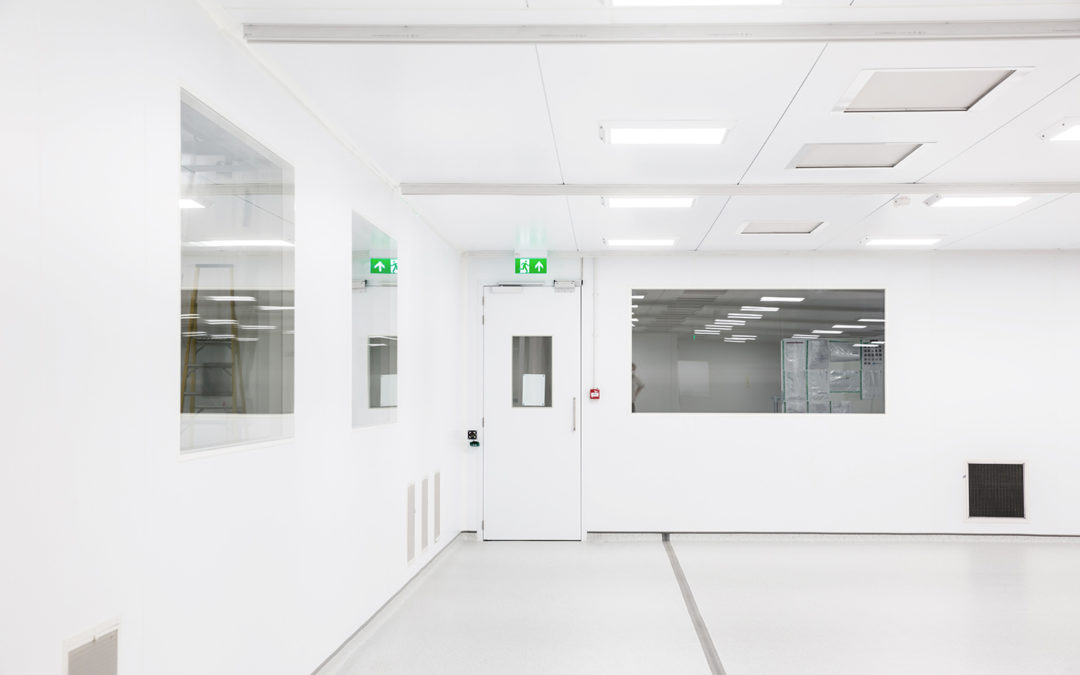
Global Cleanroom Expertise: Capabilities

Global Cleanroom Expertise: Capabilities

As you may already know, the Angstrom Technology Group of market leading cleanroom companies in the US, UK, and Europe has capabilities to provide multinational services to our global clients. But what does this mean for our customers?

The stringent control of process variables is a global requirement for pharmaceutical, electronics, and biotech industries worldwide. Our cleanrooms support top-tier multinational organizations to increase quality at sites across the world.


EXPANDED PRODUCT RANGE

Through in-house expertize and collaborations with specialist industry-partners, we can deliver facilities with precise requirements, such as battery dry rooms or cell and gene therapy suites.


CONSISTENT QUALITY

When it comes to global operations, maintaining consistent quality standards is crucial. Angstrom Technology understands this well and no matter where you are in the world, we can deliver compliance to the applicable regulations. This commitment to quality gives you the reassurance that partnering with Angstrom Technology will result in reliable and high-performing solutions for your business.


FASTER RESPONSE TIMES

In a fast-paced business environment, time is of the essence. Angstrom Technology’s global network of partners enable us to reduce shipping and installation times significantly. This streamlined approach translates into improved operational efficiency for your business, giving you a competitive edge.


LOCALIZED SUPPORT CAPABILITIES

By having a network of support teams strategically located across different regions, Angstrom Technology ensures that you receive personalized attention and timely assistance. This localized approach strengthens our commitment to customer satisfaction and builds long-lasting partnerships.


COMPETITIVE PRICING

Angstrom Technology’s global capabilities enable them to optimize their supply chain and take advantage of economies of scale. This optimized approach allows them to offer competitive pricing without compromising on quality. By partnering with Angstrom Technology, you can access cost-effective contamination control.


ACCESS TO GLOBAL EXPERTIZE

With a multi-disciplined, in-house team of cleanroom experts, we have expansive industry experience, with applied knowledge and skills across the globe, such as our global regulatory governance team.


GLOBAL CLEANROOM PROJECTS


Capabilities - Global cleanroom customers


SPEAK WITH THE EXPERTS AT ANGSTROM TECHNOLOGY

If your facility needs a new cleanroom, Angstrom Technology can design, build, and install one that meets your specifications. Using proven design strategies and quality build systems, you can trust that your work and employees will always be protected.

Request a cleanroom quote today, or contact our team for more information.

How to Decide on the Right Wall Material for Your Cleanroom

How to Decide on the Right Wall Material for Your Cleanroom

If you’re working on a technical specification for your new cleanroom design, you’ve likely noticed different types of cleanroom wall materials in the market. Unless you have experience with all the different types of cleanrooms, you might not yet know which cleanroom envelope system is suitable for your project.

Well, we’re here to help you out as best we can. We know it can be tough to find the info you’re looking for when it comes to cleanroom components, so we put together this blog to help you figure out your options for cleanroom walls. First, what essential elements do you need for a successful cleanroom wall that upholds your application’s standards?

When it comes to cleanroom walls, you’re looking for two things: smooth, dust-free surfaces. But finding the perfect surface type for your operation is easier said than done. Here are some considerations to determine what wall material type is best for you:


FLEXIBILITY

One of the biggest concerns for any new cleanroom is deciding how flexible your cleanroom should be. If you plan on housing it in the same building for a decade or more, you can probably get by with cheaper wall options.

Drywall coated with epoxy paint was a popular way to create cleanroom walls. You would take your building’s existing walls and paint them with an epoxy coating rated for cleanrooms. But one of the main problems with painted drywall is that those will be the walls you’re stuck with now and forever. When it comes to stick-built cleanrooms, there’s minimal scope for rearranging or expanding the space you started with, and providing the required extraction levels is challenging.

If you think your cleanroom is likely to expand once operations get underway, then a modular cleanroom with moveable wall panels would be a much better option. The materials might cost a bit more upfront, but you’ll also want to consider what you’d be getting for that additional fee.

Modular cleanroom wall panels are typically manufactured out of scratch and damage-resistant materials. This is helpful because if something runs into one of your modular wall panels, you don’t have to worry about drywall particulate below an epoxy coating seeping out and contaminating your cleanroom. If a modular wall panel gets a scratch, there’s very little cause for concern, and in most cases, you can return to business as usual. Worst case scenario: if the damage is substantial, you can arrange for a replacement panel to be easily fit into your existing system in no time.


STANDARDS

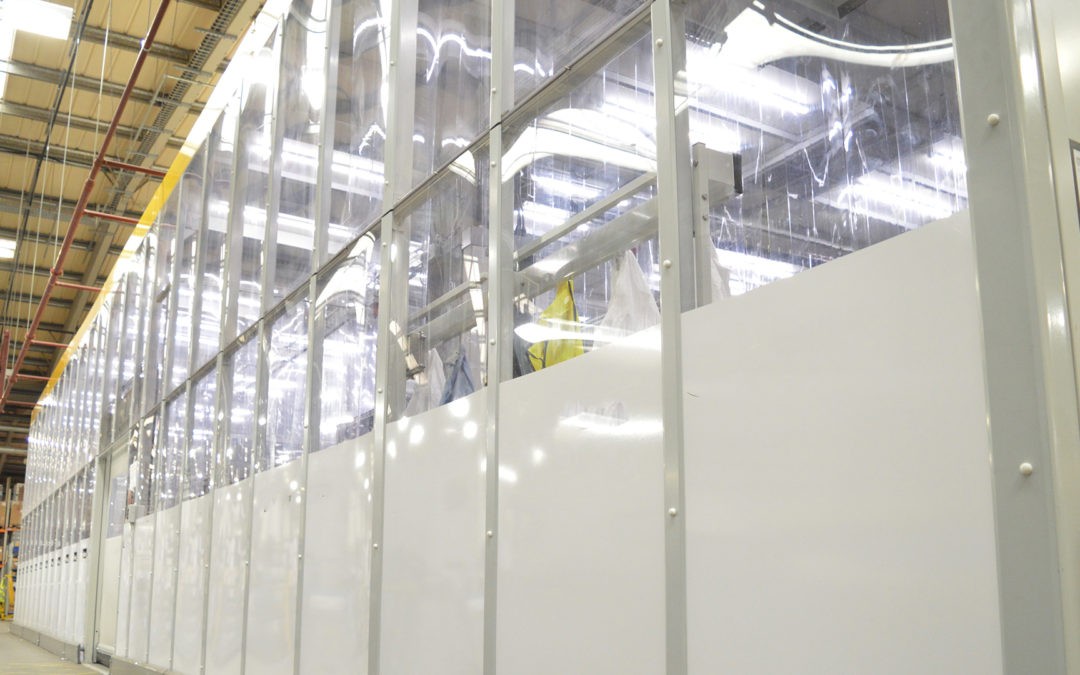
SoftWall cleanroom walls are the most economical type of modular cleanroom wall construction. Clear and flexible panels are mounted onto a robust steel frame, enclosing the clean area. As the panels overlap, the walls remain an effective barrier to create an ISO class 7-8 cleanroom, but with a higher volume of air required to achieve a higher level of cleanliness, you may need a solid wall panel.

RigidWall cleanroom construction can withstand the high airflow required for ultra-clean environments such as ISO class 5-6 clean zones. But the bright and durable finish makes them an attractive option for ISO class 7-8 cleanrooms.

HardWall cleanroom panels create a flush finish to a cleanroom wall. They are perfect for high-performance cleanroom applications with a range of proprietary features, such as raceway trunking to supply services, flush glazing, doors, and wall and ceiling panels.


CLEANING AGENTS

Once you’ve decided on modular cleanroom walls, it’s time to consider the cleaning agents you’ll be using on those walls. Every cleanroom classification is different and requires different levels of cleaning and disinfection. Pharmaceutical cleanrooms, for example, must be disinfected regularly with very harsh chemicals to prevent microbial buildup. In this situation, you need a HardWall cleanroom wall finish that can hold up to those chemicals without warping, corroding, or melting. Walls made from stainless steel with a cleanroom-specific coating are typically suitable for applications that use super-strong cleaning materials.

On the other side of the coin, if you plan on cleaning your cleanroom regularly but don’t need to use the highest-grade disinfectants, RigidWall cleanrooms wall options like acrylic, static dissipative PVC, or polycarbonate wall panels are a more cost-effective choice. When using lower-grade cleaning materials, you need a wall panel that prevents bacteria and particulate from sticking to it. You won’t have to worry about harsh chemicals eating through coatings and materials, causing a lot of particulate buildup within your cleanroom.


DURABILITY

As mentioned before, durability can play a significant role in choosing cleanroom wall material. Depending on your application, you’ll need varying levels of material durability. Some materials, like lightweight vinyl modular wall panels, or epoxy-coated drywall, can easily scratch. When the protective coating is breached, the material underneath is exposed and can give off dangerous particulate that can interfere with your processes. Moreover, some wall materials not certified for cleanroom use could outgas or start to give off particulate as they age.

Cleanrooms with more intensive standards are typically best served by walls made primarily of aluminum structure. Aluminum is lightweight, durable, and, best of all, doesn’t give off particulate as it ages. That said, it is a more costly option. So if your cleanroom doesn’t need quite that level of cleanliness, you might choose a less expensive option.


COST

Perhaps the most significant consideration for your cleanroom wall material decision is that you have to stick to a specific budget. With cleanrooms, particulate control is the most critical factor, so it stands to reason that a large part of the investment goes into the airflow, the expensive filtration systems, and the energy you use to keep your cleanroom functioning correctly. Because of this, many cleanrooms don’t look as expensive as they are.

Your cleanroom walls can be one of the least costly aspects of your cleanroom as they are relatively low-tech. So, if you’re looking for an area of the project where you can save money, this could be it.

That said, a few companies want their cleanrooms to reflect the expense put into them, so they spend more on their walls. A high cosmetic finish can be achieved if you have extra room in the budget and want to build a cleanroom that looks like a high-tech, cutting-edge facility. But know that you don’t have to have the highest specification of walls to meet your cleanroom standards.


When designing a new cleanroom, deciding which cleanroom wall material will work best for your application and convey the image you’re looking for can be difficult. If you have more questions about choosing a suitable wall material for your cleanroom, call the experts at Angstrom! We’re here to help you, and we’d love to provide you with any cleanroom information you want to make the best, informed choice for your company. Call our office at 888-768-6900, or request a quote online today!

Get Instant Access to Our Cleanroom Design Guide

The Most Comprehensive Guide for Cleanrooms and Modular Offices
Design-Guide-Thumbnail

Building a Battery Dry Room

Building a Battery Dry Room

Many materials and processes used in battery production are susceptible to moisture damage. For that reason, humidity control is critical in a battery dry room. The experts at Angstrom Technology can create a stable low dewpoint production environment to meet your requirements. In this blog post, we explain how.


Battery Dry Room Construction

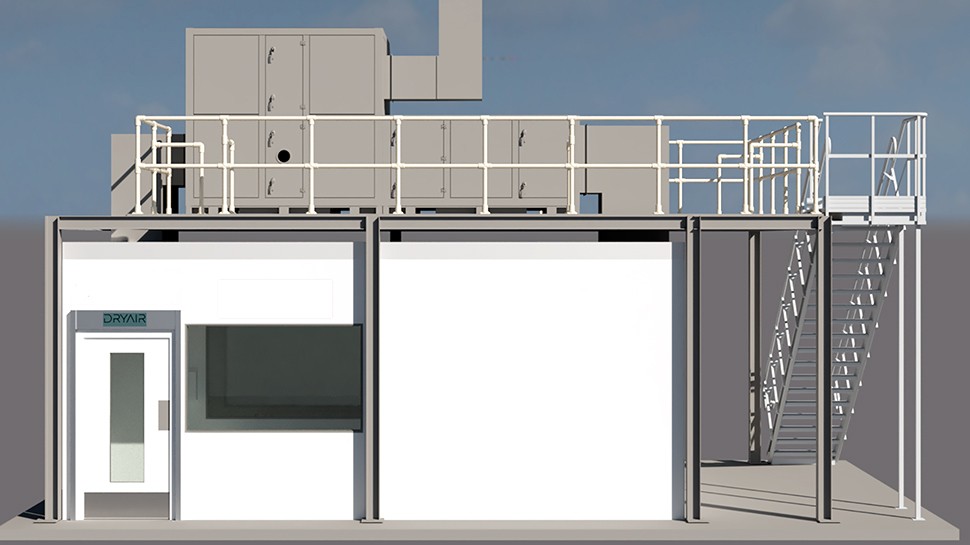
Battery dry rooms require a constant supply of ultra-dry air to create and maintain low-humidity conditions for the R&D and production of solid-state and lithium-ion batteries.

We can develop an energy-efficient dry room to protect your critical process in any of the following applications. We do this by combining airtight envelope systems, dehumidification systems, and HVAC design.

Small-scale battery research

Pilot plants

Mega / Giga-factory

Single-zone facilities for testing the chemicals and processes during battery R&D. Multi-zoned facilities for scaling up production to manufacture at volume. Large-scale battery production facilities for high-volume battery production.


Battery Dry Room Manufacturers

As battery dry room facility manufacturers, we deliver complete dry room systems. Working with specialist humidity control partners, we provide bespoke solutions that include industry-leading energy-efficient HVAC systems.

A typical clean room environment operates at 20.0°Cdb, 50% Relative Humidity — which is a dewpoint of 9.3°Cdp. Due to the materials’ sensitivity in the process, solid-state battery dry rooms can require control to minus 40.0°Cdp at the room’s exit point. A lower dewpoint of minus 50.0°Cdp is required for Lithium-ion battery dry rooms, and the next generation may have even tighter requirements. The battery chemistry may need the environment to reach minus 80.0°Cdp at the point of supply into critical areas, such as Electrolyte Fill.

Look at how we can custom-build your perfect battery dry room.


Footprint & zones

Establish a suitable layout for your process, featuring multiple zones, each with the optimum dew point temperature and ISO class.


Dehumidification systems

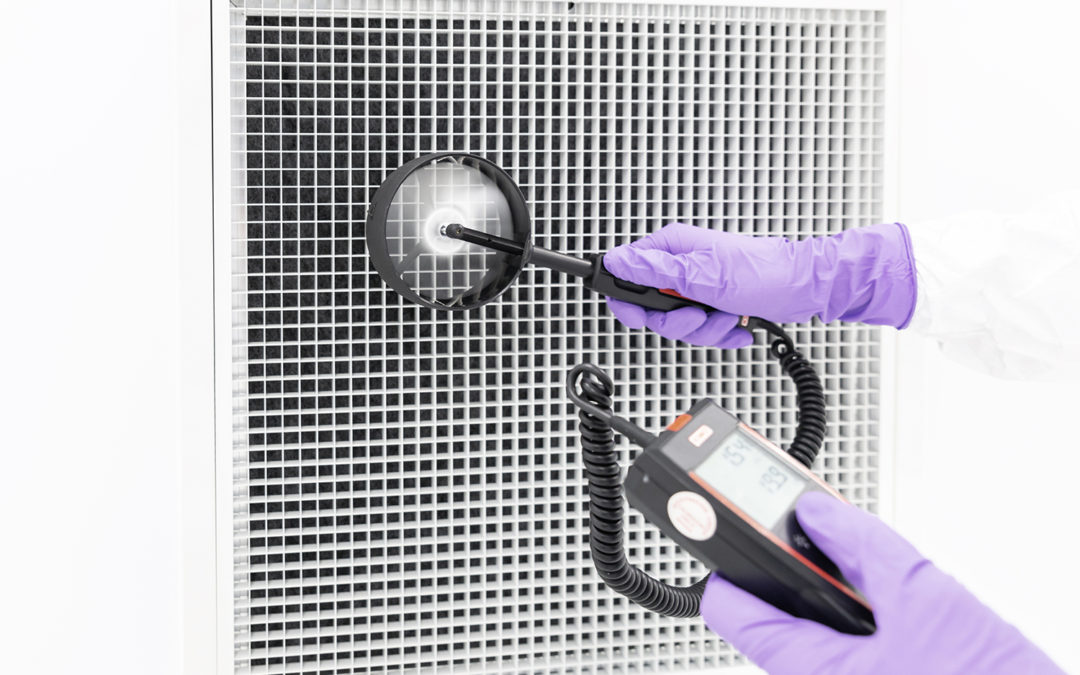
Single or multi-rotor low dewpoint AHU options to suit your budget, space, and specification needs.


Internal airflow distribution methods

Horizontal unidirectional airflow with a supply and return air plenum or a high-level distribution system with uni or non-unidirectional airflow.


Airflow modelling

Using Computational fluid dynamics (CFD) studies to verify HVAC design with equipment and furniture layouts.


Scalable HVAC designs

With specialist AHUs designed for deployment in battery facilities, airflows range from 2,000 m³h to 50,000 m³


Energy-efficient design

Airtight envelope systems and recirculated air manage energy efficiency.


Battery Dry Room Design-Build Projects with Angstrom Technology

As Angstrom Technology are cleanroom specialists, our dry rooms can also achieve ISO classification. Not only that, but they can also meet any applicable international engineering and building standards and regulations.

We’ve developed proven envelope solutions and reliable cleanroom HVAC designs for many applications. The Angstrom Technology group pride ourselves on our in-house expertise and capability to deliver over 100 cleanrooms annually across America, the UK, and Europe.

Tell us about your new dry room project!

WHITEPAPER: DRY ROOM DESIGN GUIDE FOR LITHIUM BATTERY MANUFACTURING

DOWNLOAD OUR HANDY GUIDE:


dry room design guide
5 Reasons You Need a Modular Cleanroom

5 Reasons You Need a Modular Cleanroom

At Angstrom Technology, our modular cleanrooms are a popular choice for organizations looking to create cleanroom space quickly. Here are just 5 reasons you need one.


1.     Flexibility to extend or relocate

If you need some cleanroom space right now but know you may soon need a larger area — don’t be held back by your future plans! Our modular cleanrooms can be extended or relocated. So your investment is futureproofed against any changes to your requirements — planned or unplanned!


2.     Self-installation option for modular cleanrooms

If your team is particularly hands-on, you can choose the self-assembly option. Since our modular cleanrooms are prefabricated at the factory, it will only take you about 2-3 days to install it. Or, you can hire the technicians at Angstrom Technology to put it together for you. Our team will manage the project from delivery to validation, with minimal distraction, so your team can get on with their workload.


3.     Protect your injection molding machines

Are you an injection molder? Are you looking to protect the tool face of your molding machine without enclosing the hopper? Look no further! Our modular SoftWall cleanrooms are the solution to your challenges. Many molders have used them to protect the critical zone, as the SoftWall curtains can be profiled around a machine to give part coverage and create an ultra clean zone where it counts.


4.   Use a modular cleanroom for R&D

Our modular RigidWall cleanrooms can quickly upgrade your R&D zone to create a classified environment. Many sectors, like medical device, space, and manufacturing, have taken advantage of this ultra-quick solution to protect their intricate and sensitive products.


5.     Medical device production

Our RigidWall modular cleanrooms can achieve particle counts according to ISO Class 5-8 requirements. What does this mean for medical device manufacturers? If your quality risk-based assessment deems this suitable, you can manufacture your medical devices in them!


Build an ISO Modular Cleanroom With Angstrom Technology

At Angstrom Technology, we’re proud to have delivered high-quality, high-performance cleanrooms across North America for over 30 years.

If you’re interested in building an ISO cleanroom in your facility, contact us online for information on how to get started.

What Is the Equivalent ISO Class for cGMP Areas?

What Is the Equivalent ISO Class for cGMP Areas?

At Angstrom Technology, we get asked a lot what the equivalent ISO class for a cGMP area is. Particularly from organizations at the start of a cleanroom project. Here, we answer that question for you.

The International Standard for cleanrooms and associated controlled environments is ISO 14644. To be classified as a cleanroom, zones must meet air cleanliness levels that are classified by particle concentration limits detailed in ISO 14644-1. While ISO 14644 governs all cleanrooms, the FDA Current Good Manufacturing Practice (cGMP) is specifically for medicines manufacturers. It describes the minimum standard they must meet in their production processes.

What are the different cGMP areas?

Two clean areas are of particular importance to sterile drug product quality in cGMP. These are the critical area and the supporting clean areas associated with it. Each area has a minimum recommended ISO class. Although, with ISO validation two particle sizes are usually considered, whereas cGMP standards dictate that only particles ≥ 0.5 μm should be controlled.

EU GMP takes a slightly different approach. Four grades (A-D) are detailed. Since each grade has particle concentration limits, there is an equivalent ISO class for each cGMP grade. Although they are not mentioned in cGMP guidance, these grades are becoming part of the common cGMP language in the US.

  • EU GMP Grade A is approximately equivalent to ISO Class 5
  • EU GMP Grade B is approximately equivalent to ISO Class 5
  • EU GMP Grade C is approximately equivalent to ISO Class 7
  • EU GMP Grade D is approximately equivalent to ISO Class 8

Need more information on the ISO particulate concentration limits? We have a table that breaks them down on our cleanroom classifications page.

What ISO Class Should Critical Areas Meet?

Critical areas must meet particle concentration limits according to ISO Class 5. These areas are equivalent to EU GMP grades A/B.

A critical area is one where the sterilized drug product is exposed to environmental conditions that must maintain product sterility. Activities conducted in such areas include aseptic processes. This can include manipulations of sterile materials before and during filling and closing operations.

Because an exposed product is vulnerable to contamination and will not be subsequently sterilized in its immediate container, this area is critical.

What ISO Class Should Supporting Clean Areas Meet?

Supporting clean areas must meet a minimum of ISO 7 (equivalent to EU GMP grade C). Depending on the activity in these areas, manufacturers can also classify them as ISO 6 or maintain the entire aseptic filling room at ISO 5.

Supporting clean areas can have various classifications and functions. Many support areas function as zones in which nonsterile components, formulated products, in-process materials, equipment, and container/closures are prepared, held, or transferred. These environments are soundly designed when they minimize the level of particle contaminants in the final product and control the microbiological content (bioburden) of articles and components that are subsequently sterilized.

Build a cGMP-Compliant Cleanroom with Angstrom Technology

At Angstrom Technology, we’re proud to have delivered high-quality, high-performance cleanrooms across North America for over 30 years.

If you’re interested in building an ISO or GMP-compliant cleanroom in your facility, contact Angstrom’s Life Sciences group for information on how to get started.

CONTACT A LIFE SCIENCE CLEANROOM EXPERT

The CHIPS Act: Designing your Semiconductor Cleanroom

The CHIPS Act: Designing your Semiconductor Cleanroom

On August 9, 2022, President Biden passed the CHIPS Act.

What’s that? We’re here to fill you in. 

The CHIPS Act

CHIPS stands for Creating Helpful Incentives to Produce Semiconductors for America Act. The investment promises $50 billion to domestic R&D and manufacturing, marking a seminal moment for US semiconductor manufacturing.

This article looks at how organizations can use the funding to create a cleanroom space that supports the semiconductor supply chain.

What does the CHIPS Act mean for OEMs?

The CHIPS Act presents an opportunity for semiconductor R&D companies and manufacturers—along with their supply chain—to upgrade or extend facilities.

The program also intends to incentivize new participants to the semiconductor industry, allowing companies in vertical industries, such as electronics manufacturers, to diversify with reduced risk.

Funding will be available for a range of purposes, including the following:

  • Construction or expansion of facilities for the fabrication, packaging, assembly, and testing of legacy and current-generation semiconductors
  • Facilities to produce new or specialty technologies or emerging technologies
  • Facilities that manufacture equipment and materials for semiconductor manufacturing, potentially co-located in regional clusters

Entering the semiconductor market

The cost of semiconductor fabrication plants—often termed semiconductor fabs—can run into the billions of dollars. This creates a significant barrier that has obstructed new entrants into the market. But to be part of the supply chain, a semiconductor fab is not essential.

Before they are scaled up to industrial production, there are pre-commercial activities that need to be conducted to research, develop, and learn about new products. A semiconductor pilot plant can produce small volumes of chips for R&D purposes.

Since chips are highly susceptible to damage, even the smallest particle could cause a defect. This is why the specification for semiconductor chip fabrication cleanrooms typically ranges from ISO class 4 to 6. A HardWall cleanroom would be able to achieve this level of particulate control for a pilot plant. Zones can provide segregated spaces with control of environmental parameters—such as temperature, humidity, and UV—to be optimized for various steps of the production process.

The packaging, assembly, and testing of circuits or chips could be performed in ISO class 7 or ISO class 8 cleanrooms, with all considerations handled on a project-by-project basis. Equipment can be enclosed in a modular cleanroom, either RigidWall or SoftWall construction.

Over the years, Angstrom Technology has served the semiconductor industry with a wide range of cleanrooms. We’ve put together a simple guide to help you understand more about what type of cleanroom is suitable for your process.


Whether you are an existing semiconductor specialist or looking to diversify — the Angstrom Technology team can support your organization.

Contact Angstrom Technology to discuss your semiconductor cleanroom

Our cleanrooms are proudly made in America. We have the expertise to support organizations looking to build domestic capacity in line with the principles of the CHIPS program.

Are you thinking about investing in a semiconductor cleanroom? Request a semiconductor cleanroom quote today, or contact our team of experts for more information.