Your Answers to Frequently Asked Questions About Cleanroom Classifications

Your Answers to Frequently Asked Questions About Cleanroom Classifications

Your Answers to Frequently Asked Questions About Cleanroom Classifications

Cleanroom classification can be one of the most confusing parts of designing and building your cleanroom – but it’s also usually the most important aspect. Every type of cleanroom requires a different classification depending on your industry and purpose. 

So, if you’re new to the world of cleanrooms and have questions regarding classifications, we’re here to help. Here are answers to some of the most common cleanroom classification questions we receive.

10 Cleanroom Classifications FAQs

If you’ve got cleanroom questions, you’re in the right place. We’ll explore what type of cleanroom classification you need, inspection requirements, design needs, and more! 

1. What cleanroom classification do I need?

Your required cleanroom classifications and standards will depend on your industry. The requirements will vary depending on what size particles need to be filtered, the sources of contamination present, and the recommended air change rate. 

If your industry is government-regulated, you can check applicable regulations for the required classification. If there is no government-mandated or industry default classification, you’ll need to determine the appropriate classification based on your application, and we can help with that.

2. How are cleanrooms classified?

Two different classification scales are generally used for cleanrooms: the U.S. General Service Administration standards (FS209E) and the International Standards Organization (ISO) classifications. The classes are determined by the maximum acceptable numbers of particles (by size) in the air per cubic meter. 

3. What are the ISO classes?​

The ISO classification system has eight classes and defines the level of cleanliness based on the concentration of airborne particles. Here’s a breakdown of the eight ISO classes from least controlled (ISO Class 8) to most controlled (ISO Class 1):

  • ISO Class 8: This class allows the highest concentration of airborne particles. The maximum allowable particle count is 3,520,000 particles per cubic meter of air (0.5 micrometers and larger in size).
  • ISO Class 7: The maximum allowable particle count is 352,000 particles per cubic meter of air (0.5 micrometers and larger). 
  • ISO Class 6: The maximum allowable particle count is 35,200 particles per cubic meter of air (0.5 micrometers and larger).
  • ISO Class 5: The maximum allowable particle count is 3,520 particles per cubic meter of air (0.5 micrometers and larger).
  • ISO Class 4: The maximum allowable particle count is 352 particles per cubic meter of air (0.5 micrometers and larger). 
  • ISO Class 3: The maximum allowable particle count is 35 particles per cubic meter of air (0.5 micrometers and larger).
  • ISO Class 2: The maximum allowable particle count is 7 particles per cubic meter of air (0.5 micrometers and larger). 
  • ISO Class 1: The most stringent of all, ISO Class 1 cleanrooms allow only one particle per cubic meter of air (0.5 micrometers and larger).

4. How often do I need to test my cleanroom to see if it’s meeting classification requirements?

ISO classifications require that air pressure difference and flow be tested every 12 months. Particle count tests must be performed every 12 months for ISO Class 6 and above and every six months for ISO Class 5 and below. 

There are also tests recommended for all classes every 24 months: installed filter leakage, containment filter leakage, recovery, and airflow visualization. These tests are regulated by ISO document 14644-2 Cleanroom Testing and Compliance.

5. How often do I need to have my cleanroom inspected?

How often you need your cleanroom inspected depends on your classification. The more stringent classifications will require inspection more often. Inspection may coincide with compliance testing, which may occur every six or 12 months, depending upon the cleanroom classification.

6. How does cleanroom classification affect my budget?

The more stringent the classification, the greater the cost of the cleanroom. Strict classifications require more air, energy, advanced technology, and equipment. For a more detailed breakdown of the costs, see How Does Cleanroom Classification Affect Your Cleanroom Budget?

7. Can I redesign my cleanroom if my required classifications change?

Yes, of course! Every company is bound to evolve, and our cleanrooms can change right along with them. All Angstrom cleanrooms are modular, meaning they can be expanded or decreased in size, components can be added or removed, and any other design changes can be made.

8. Can I replace a major cleanroom component if need be?

Yes, the Angstrom team would be happy to help you with that. We offer all necessary cleanroom components and can help you replace them quickly and easily.

9. Do I need a permit to build a cleanroom? 

In most cases, small cleanrooms built within a plant or any pre-existing structure usually do not require a permit. However, verifying this with your local building codes department is crucial before construction. 

Larger cleanrooms might require a permit under specific circumstances. Our team of seasoned cleanroom professionals can offer guidance on whether a permit is required and assist you in liaising with local building code officials.

10. Are hardwall cleanrooms or softwall cleanrooms more clean?

Both hardwall and softwall cleanrooms can be built to meet the same air-change-per-hour standards. However, hardwall cleanrooms typically offer a more complete barrier to particle intrusion and better control over atmospheric temperature and humidity. 

Softwall cleanrooms generally have a perimeter air gap to maintain very little positive pressure and no negative pressure differentials. Hardwall cleanrooms can hold a significant positive pressure, which prevents particulate intrusion.

Expert Cleanroom Services From Angstrom

At Angstrom, we aim to redefine excellence in cleanroom solutions, setting the industry standard for innovation, quality, and customer-centricity. If you have more questions about your cleanroom classifications or just cleanrooms in general, we’d love to chat! Request a quote today for all your cleanroom needs. 

10 Key Features of Certified ISO Cleanrooms

10 Key Features of Certified ISO Cleanrooms

ISO-certified cleanrooms are the backbone of industries where precision, quality, and contamination control are paramount. These highly controlled environments play a crucial role in sectors ranging from pharmaceuticals to forensic science, battery manufacturing, and more. 

At Angstrom, we understand the critical importance of ISO certification in cleanrooms. Let’s explore the essential features that every ISO cleanroom must have to ensure products and operations meet the designated quality standards. 

10 Key Features of Every Certified ISO Cleanroom

Incorporating these ten features into every cleanroom ensures compliance with ISO cleanroom standards and a top-of-the-line controlled environment.

1. Documentation & Compliance

Detailed documentation is the cornerstone of every ISO-certified cleanroom. It outlines specific procedures, maintenance logs, and audit records, all of which are crucial for ensuring compliance with ISO cleanroom standards. 

Meticulous documentation not only facilitates traceability but also plays a vital role in quality assurance, guaranteeing that every aspect of the cleanroom meets the stringent requirements set forth by ISO.

2. Environmental Monitoring Systems

Real-time monitoring systems help maintain the pristine conditions of ISO-certified cleanrooms. These systems continuously track temperature, humidity levels, and particle counts, providing valuable data for optimizing environmental parameters. Control systems integrated with monitoring enable swift responses to deviations, ensuring the cleanroom environment remains at its peak performance.

3. Quality Cleanroom Design and Construction

The design and construction of an ISO-certified cleanroom require in-depth attention to detail. Seamless wall and ceiling surfaces are essential to minimize particle generation, while proper sealing and high-quality construction materials prevent external contamination.

4. Air Filtration and Quality Control

HEPA filters are vital for ISO cleanrooms. They remove airborne particles to maintain exceptional air quality in the controlled environment. Regular maintenance and timely filter replacements are imperative for optimal performance and ensure the cleanroom’s air remains contaminant-free.

5. Personnel Protection and Hygiene

Personnel working in cleanrooms must adhere to strict protection and hygiene protocols. Cleanroom garments such as gowns, gloves, and shoe covers are required to act as barriers against personnel contamination. 

Proper training on hygiene practices is equally crucial, emphasizing the importance of maintaining cleanliness standards to uphold the integrity of the cleanroom environment.

6. Contamination-Resistant Equipment and Furniture

Contamination-resistant equipment and furniture are non-negotiable in cleanroom environments. For example, stainless steel surfaces are preferred for cleanroom furniture, ensuring minimal particle shedding and easy cleaning.

7. Controlled Access and Entry Protocols

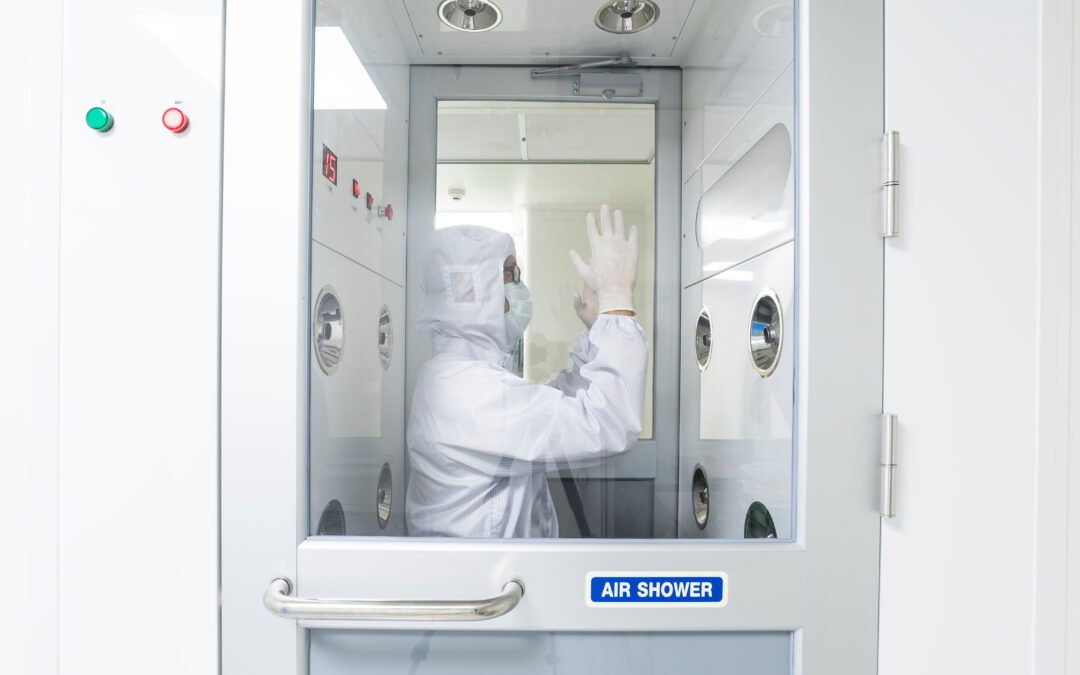
Access control, including airlocks and entry protocols, is implemented in cleanrooms to minimize contamination risks. Personnel training is pivotal to ensure strict adherence to entry and exit procedures, reducing the likelihood of introducing contaminants into the cleanroom environment.

8. Cleaning and Maintenance Practices

Effective cleaning and maintenance practices are essential for preserving the cleanliness of ISO-certified cleanrooms. Routine cleaning schedules, appropriate cleaning materials, and techniques tailored for contamination control are key for upholding the cleanroom’s sterile conditions.

9. Emergency Response and Contingency Planning

Detailed emergency response plans are critical components of certified cleanrooms. These plans should outline contingency measures to address potential risks such as power outages, equipment failures, or other emergencies. By having proactive contingency plans in place, cleanroom facilities can mitigate contamination risks effectively.

10. Training and Certification Programs

Regular training programs for cleanroom personnel are required to maintain protocols for hygiene practices, gowning procedures, and contamination prevention. Certification programs ensure strict adherence to cleanroom standards, boosting the overall effectiveness of ISO-certified cleanrooms in meeting industry requirements.

Partner with Angstrom for Industry-Leading Cleanroom Solutions

At Angstrom, we specialize in crafting cleanrooms tailored to every industry’s unique needs. Whether you’re in pharmaceuticals, electronics manufacturing, or any other sector requiring stringent cleanliness standards, our cleanroom turnkey services ensure that your facility meets and exceeds ISO requirements. 

Contact Angstrom today to discover how our expertise can elevate your cleanroom operations and drive excellence in your industry!

5 New Cleanroom Technology Trends

5 New Cleanroom Technology Trends

In the world of contamination control, cleanroom technology is constantly evolving. Here at Angstrom, we’re dedicated to staying at the forefront of these advancements, continuously updating our knowledge, and incorporating new technologies into our solutions.

This blog explores the latest advancements in cleanroom news, from automation to energy efficiency, and more. Keep reading to discover how these innovations refine contamination control and set new standards for excellence.

5 New Cleanroom Technology Trends

Let’s break down five of the latest technological advancements in cleanroom news. 

1. Automated Operations

Automation is transforming the landscape of cleanroom operations by introducing seamless processes and minimizing manual interventions. This technological advancement leverages robotics, intelligent controls, and other automated systems to optimize efficiency and enhance precision. 

Robotic arms are utilized for intricate handling of sensitive components, ensuring accuracy and minimizing contamination risks. Automated material handling systems streamline logistics, facilitating efficient movement of goods and reducing downtime.

The adoption of automation in cleanrooms brings numerous benefits. Increased efficiency is achieved through faster processes and reduced cycle times, enhancing productivity and cost-effectiveness. Automation also reduces human error, improving product quality. 

2. Data Monitoring Solutions

Real-time data monitoring is critical in cleanroom environments to maintain optimal conditions and promptly identify deviations. By monitoring key metrics in real-time, deviations can be addressed quickly, minimizing contamination risks and ensuring consistent product quality.

Advanced data monitoring technologies, such as sensors and IoT devices, are revolutionizing data collection in cleanrooms. Sensors accurately measure critical parameters like temperature, humidity, and particle levels. IoT devices enable data integration and analysis, facilitating predictive maintenance and continuous improvement initiatives.

3. Dehumidifiers and Desiccant Systems

Cleanrooms demand precise control over environmental conditions, including humidity levels, to maintain optimal operational efficiency and product quality. Excessive humidity can lead to moisture-related issues such as microbial growth, equipment corrosion, and compromised product integrity. Dehumidifiers are crucial to mitigate these risks by effectively regulating humidity levels within cleanrooms, ensuring a controlled and stable environment.

Modern dehumidifiers are designed with energy-conscious features, making them efficient and cost-effective solutions for cleanroom humidity control. These energy-efficient dehumidifiers utilize advanced technologies such as variable-speed compressors, smart humidity sensors, and programmable settings to optimize energy usage while maintaining precise humidity levels. 

At Angstrom, we crafted a state-of-the-art cleanroom with humidity control for Anaphite, a company that creates cathode powders to make Li-ion batteries. Anaphite’s main requirement for the project was achieving the target dewpoint, but they also stipulated they needed to quickly drive the dry room down to specification from a dormant state. Angstrom gave Anaphite the option of three different desiccant systems. After reviewing the performance and energy consumption, Anaphite chose the DT-LDP5 multi-rotor system as it provided an energy reduction of over 33% less when compared to the traditional single-rotor design.

4. Energy-Efficient Technologies

Sustainable practices and energy-efficient technologies are being embraced more than ever in cleanrooms to minimize environmental impact and reduce operational expenses. Examples of energy-efficient technologies in cleanrooms include LED lighting and advanced HVAC systems. 

LED lighting offers energy savings and a longer lifespan than traditional lighting solutions. HVAC systems with smart controls optimize energy usage, maintaining optimal conditions while reducing energy consumption.

5. Sustainable Practices

Cleanroom products increasingly incorporate renewable and plant-based materials, reducing reliance on non-renewable resources and minimizing environmental impact. These sustainable materials offer comparable performance while reducing carbon footprint and promoting a greener cleanroom ecosystem.

Many cleanroom equipment manufacturers are utilizing recycled plastics in their product designs. These plastics are sourced from post-consumer or post-industrial waste, reducing the demand for virgin plastics and diverting waste from landfills.

Cleanroom construction materials with low VOC emissions contribute to indoor air quality and environmental health. Choosing paints, adhesives, and sealants with low VOC content minimizes pollution and enhances occupant comfort in cleanroom facilities.

Partner with Angstrom for Cutting-Edge Cleanroom Solutions

Angstrom is a pioneer in cleanroom technology, consistently leading the way with innovative solutions. Whether you require advanced automation, precise data monitoring, energy-efficient designs, or sustainable practices, Angstrom is your trusted partner for all cleanroom needs. 

With our expertise and commitment to excellence, we ensure that your cleanroom operations meet the highest standards of quality, efficiency, and environmental responsibility. Partner with Angstrom today and experience the difference in contamination control and cleanroom technology.


What is the Difference Between a Controlled Environment and a Cleanroom?

What is the Difference Between a Controlled Environment and a Cleanroom?

The words cleanroom and controlled environment are often used interchangeably when talking about environment control in critical spaces. But what is a cleanroom? What is a controlled environment? There is a difference, and that difference is crucial. When it comes to controlled environments vs. cleanrooms, here’s what you need to know:

Controlled Environments vs. Cleanrooms

What Is a Controlled Environment?

A controlled environment, or critical environment, is an area that must have specific parameters controlled. The parameters include pressure, temperature, and segregation. Many laboratories are considered controlled environments, as they have controlled temperature and pressure and are separated from other operations, such as manufacturing or shipping. Unlike cleanrooms, controlled environments do not necessarily have to meet certain standards for particle contamination.

Common Applications for Controlled Environments:

  • Life science laboratories
  • Engineering laboratories
  • Laser labs
  • High-energy physics facilities
  • Hospitals
  • Cannabis grow rooms
  • Clean manufacturing
  • Food processing rooms
  • Pharmacies
  • Quality labs

What Is a Cleanroom?

A cleanroom is a type of controlled environment with much more stringent requirements. Cleanrooms require temperature and pressure control, as well as separation from the outside environment and other operations. 

All the requirements of cleanrooms are regulated and must meet designated standards. Cleanrooms are classified by the maximum acceptable number of particles (by size) in the air per cubic meter, and must be regularly tested to ensure compliance with that standard (see more about cleanroom classifications here). Compared to standard controlled environments, cleanrooms may require more energy, air, and advanced technology to maintain the cleanroom conditions.

Common Applications for Cleanrooms:

  • Semiconductor manufacturing
  • Pharmaceutical manufacturing
  • Research and development 
  • Laser and optics 
  • Electronics manufacturing 
  • Medical device manufacturing 
  • Precision industrial manufacturing 
  • Aerospace 
  • Mask manufacturing
  • 3D printing 
  • Nutraceutical cleanroom
  • Food processing/bottling

Do I Need a Cleanroom or a Controlled Environment? 

The answer to this question depends on two factors: your application and your industry. If packaging medical devices, you’ll need an ISO class 7 compliant cleanroom or higher. If you have a process control laboratory for a chrome plating company, you aren’t required to meet a specific ISO classification, but you need to control the environment. 

You may even have different needs within your facility; you may need a controlled environment for sensitive materials that don’t need to meet cleanroom standards but also require an ISO class 8 cleanroom for quality control testing.

When building and designing a cleanroom, contractors consider various factors to determine the necessary construction materials and regulating equipment. To ensure the facility is accurately equipped and meets standards, the contractor will consider the following: 

  • Required ISO class FDA regulations
  • Types and placement of HEPA or ULPA filters
  • Environmental conditions 
  • HVAC requirements
  • Spatial specifications
  • Construction materials
  • Air showers
  • Pass-thru units
  • Fire protection
  • Light and air supply
  • Electrical and plumbing requirements
  • Equipment hookups and special equipment

Partner with Angstrom Technology for Expert Guidance

Understanding the difference between controlled environments and cleanrooms is pivotal in determining the appropriate solution for your specific requirements and industry standards. 

With over 30 years of industry experience, we offer unparalleled expertise and a comprehensive portfolio to meet your cleanroom needs. From conceptualization to installation and ongoing support, our commitment to excellence ensures a seamless journey toward achieving your cleanroom objectives. 

Contact the Angstrom team today for all your cleanroom needs!

Get Instant Access to Our Cleanroom Design Guide

The Most Comprehensive Guide for Cleanrooms and Modular Offices
Design-Guide-Thumbnail

How Can I Control Cleanroom Humidity?

How Can I Control Cleanroom Humidity?

Maintaining optimal humidity levels in your cleanroom is paramount to meeting regulatory standards and safeguarding the quality of your processes and products. 

In this blog, we’ll explore the importance of cleanroom humidity control and provide insights and strategies to ensure your cleanroom operates at peak efficiency.

Understanding Cleanroom Humidity

Cleanroom humidity plays a crucial role in various industries, from semiconductor manufacturing to pharmaceutical production. If the humidity is too high, bacterial growth can flourish, metal products or equipment can corrode, photolithographic degradation can occur, and condensation and water absorption can occur. This can cause issues for processes with moisture-sensitive products, like semiconductor manufacturers.

If the humidity is too low, static buildup and discharge can become an issue, possibly causing shorts for products in electronics cleanrooms. Plus, poorly controlled humidity can make working conditions uncomfortable for your employees. Therefore, it’s essential to strike the right balance to mitigate these risks effectively.

What Factors Impact Cleanroom Humidity?

Various factors influence cleanroom humidity levels, each critical in achieving optimal conditions.

Factors impacting cleanroom humidity include:

  • Temperature: Lower temperatures reduce relative humidity, while higher temperatures can increase it. Maintaining precise temperature control is vital for regulating humidity levels.
  • Airflow: Proper airflow distribution helps to prevent moisture buildup and ensures uniform humidity throughout the cleanroom.
  • External Environmental Conditions: Factors such as outdoor humidity, weather changes, and nearby sources of moisture can impact cleanroom humidity levels. Monitoring and adjusting for these external conditions are necessary for consistent humidity control.

3 Methods for Controlling Cleanroom Humidity Levels

So, what are some of the methods you can use to control humidity in your cleanroom? The experts at Angstrom Technology are here to answer that question.

1. Air Conditioning and Mechanical Refrigeration

Humidity is relative, meaning that the lower the temperature is, the lower the relative humidity is. So it only makes sense then that lowering a cleanroom’s temperature will decrease humidity. 

When using air conditioning systems to dehumidify a space, the system reduces the temperature of a surface within the condenser unit to a temperature below the dew point of the airstream in the cleanroom. That surface is then exposed to the airstream in the cleanroom and the water vapor in the airstream condenses, subsequently dehumidifying the space. The air must be re-heated to the desired room temperature and piped back into the cleanroom.

2. Desiccants

Desiccant systems draw air through a desiccant medium, which absorbs moisture. The dehumidified air is then routed to the cleanroom. Consumer-grade desiccant systems collect condensate in a receptacle that must be emptied. 

On the other hand, commercial systems exhaust humid air through the ductwork out of the building. Vented systems can dehumidify to lower relative humidity levels at lower temperatures.

These systems are not mutually exclusive. In fact, where temperature control is also important, they work best when used in conjunction. Using a desiccant system in addition to air conditioning can also help reduce the load on the HVAC system, saving energy, wear and tear on the HVAC system, and, of course, money.

3. An Integrated Approach

An integrated approach to humidity control combines air conditioning with desiccant systems to comprehensively regulate temperature and moisture levels within the cleanroom environment. By integrating these systems, businesses can effectively address both temperature and humidity concerns, ensuring optimal conditions for processes and product integrity. 

This approach not only enhances energy efficiency by optimizing the utilization of both systems but also extends the lifespan of the HVAC system by reducing its workload and minimizing wear and tear on components. Consequently, businesses can benefit from lower maintenance costs and prolonged equipment longevity. 

Moreover, the integrated approach optimizes cleanroom performance by maintaining precise and consistent control of humidity levels, safeguarding sensitive processes and products. This strategy offers operational flexibility by providing redundancy in humidity control mechanisms, minimizing downtime and disruptions in cleanroom operations. 

Angstrom Technology: Your Cleanroom Solution Partner

At Angstrom Technology, we specialize in state-of-the-art cleanrooms tailored to your specific needs. Our expertise ensures compliance with ISO classifications and international standards, guaranteeing cleanroom integrity and performance. By implementing advanced humidity control methods and partnering with us, you can ensure optimal cleanroom performance and regulatory compliance.

Get in Touch for Your Dry Room Project!

Whether you’re embarking on a new cleanroom project or upgrading an existing facility, Angstrom Technology is your trusted partner. Contact us today to discuss your requirements and discover how we can elevate your cleanroom operations.

WHITEPAPER: DRY ROOM DESIGN GUIDE FOR LITHIUM BATTERY MANUFACTURING

DOWNLOAD OUR HANDY GUIDE:


dry room design guide
Do You Know the Difference Between Negative Pressure vs. Positive Pressure Cleanrooms?

Do You Know the Difference Between Negative Pressure vs. Positive Pressure Cleanrooms?

In today’s fast-paced world of technology, pressurized cleanrooms are being utilized in more and more industries and applications. Two main types of cleanrooms are negative pressure rooms and positive pressure rooms. 

The level of pressure determines the way air naturally moves in a space. High and low, or positive and negative, pressure can be used as tools in cleanroom environments to help cleanrooms reach their required classifications.

Negative Pressure vs. Positive Pressure Cleanrooms

Let’s dive deeper, learn the difference between negative pressure vs. positive pressure cleanrooms, and discover how they work. 

How Does Air Pressure in Cleanrooms Work?

Air naturally flows from areas of high pressure to areas of low pressure. Examples of this are found around us every day. For example, wind and weather are formed from the uneven heating of the earth’s surface, which generates pockets of high and low pressure air. 

Have you ever witnessed the sudden closing of a door as air is sucked out of a room even though there’s no breeze? This experience is high pressure air moving to a low pressure area to achieve stasis. 

Another example of this process is when air escapes from a balloon. The air travels from a high pressure environment to the relatively low pressure of the surrounding air. 

What happens in all of these situations is that when air is moving in one direction, it’s not moving in the opposite direction. When air is moving out of the balloon, air isn’t also moving into the balloon, as long as the air inside the balloon is more pressurized. 

This concept can be applied to cleanrooms to stop airflow into a cleanroom or out of it, limiting particle transfer via the air and maintaining a cleaner environment.

To put this as simply as possible:

Higher pressure air within a cleanroom (compared to the air outside the room) blocks contaminants from entering the cleanroom, as air naturally wants to flow out. Conversely, lower pressure air within a cleanroom can trap contaminants and prevent them from leaving a cleanroom, as the natural flow of air wants to move in. 

Using Positive and Negative Pressure in Cleanroom Design

Using pressure in cleanrooms, either high pressure (positive pressure) or low pressure (negative pressure), can benefit many cleanroom applications, but how do you implement it in the cleanroom design?

Cleanroom pressure is achieved by controlling how much air is put into the cleanroom and how much is withdrawn. 

In a positive pressure cleanroom, filtered air is consistently pumped into the room through the HEPA filtration and cleanroom HVAC system. If a door or window were opened in the cleanroom, air would rush out into the outside environment. This positive pressure ensures that the products and processes within the cleanroom are protected in the event of a breach or leak. Because the cleanroom has positive pressure, the air is forced out of the cleanroom, preventing contaminated or unfiltered air from seeping in. 

To achieve negative air pressure, external exhausts pull air from the cleanroom at a faster rate than air is introduced over a span of time. The resulting negative pressure means the air will want to flow into the cleanroom to fill the low pressure area, effectively stopping contaminants from going against that natural movement to escape the cleanroom.

To maintain positive or negative pressure in cleanrooms, adjacent spaces must be maintained at a lower or higher pressure than that of the cleanroom. If you implement a pressurization system into your cleanroom design, a pressure monitoring system is vital to ensure balance and consistency. The monitoring system will check and maintain consistent pressure, which can be adjusted manually or automatically.

Positive PRESSURE CLEANROOM APPLICATIONS:

High pressure, or positive pressure rooms are beneficial in applications where the slightest particle interference could disrupt processes within the cleanroom. 

Semiconductor cleanrooms, microprocessor cleanrooms, and aerospace and defense cleanrooms are examples of industries that benefit from positive pressure cleanrooms, as they are highly averse to contaminating particles. Medical cleanrooms also use positive pressure to protect sensitive patients and maintain a controlled space.

Even when the stakes aren’t as high, using slightly positive pressure in cleanrooms can help reach cleanroom classifications and maintain an overall cleaner environment.

negative PRESSURE CLEANROOM APPLICATIONS:

Low pressure cleanrooms, or negative pressure rooms, are ideal for applications that need to isolate substances, particles, or fumes inside the cleanroom environment to protect the space outside. They are widely used in medical cleanrooms for research, testing, and the development of treatments using sensitive substances. 

Pharmaceutical applications also use negative pressure in cleanrooms as part of a segmented layout. One room is kept at a lower pressure, while the anteroom immediately outside is maintained at a slightly higher pressure. This allows employees to transition into the negative pressure room with minimized disruption.

Need Help Choosing the Right Cleanroom Pressure? Angstrom Technology Can Help

Using the natural air movement due to pressure, we can build safer, more effective cleanrooms. Positive and negative pressure cleanrooms can protect against entering contaminants (in positive pressure cleanrooms) or contaminant leakage (in negative pressure cleanrooms). 

Which cleanroom pressure best suits your needs? At Angstrom Technology, we’re here to guide you. Our dedicated cleanroom experts are ready to precisely tailor airflow patterns and containment solutions for your unique application. Get in touch with us today for expert assistance in creating the ideal cleanroom environment for your specific requirements.

Get Instant Access to Our Cleanroom Design Guide

The Most Comprehensive Guide for Cleanrooms and Modular Offices
Design-Guide-Thumbnail