
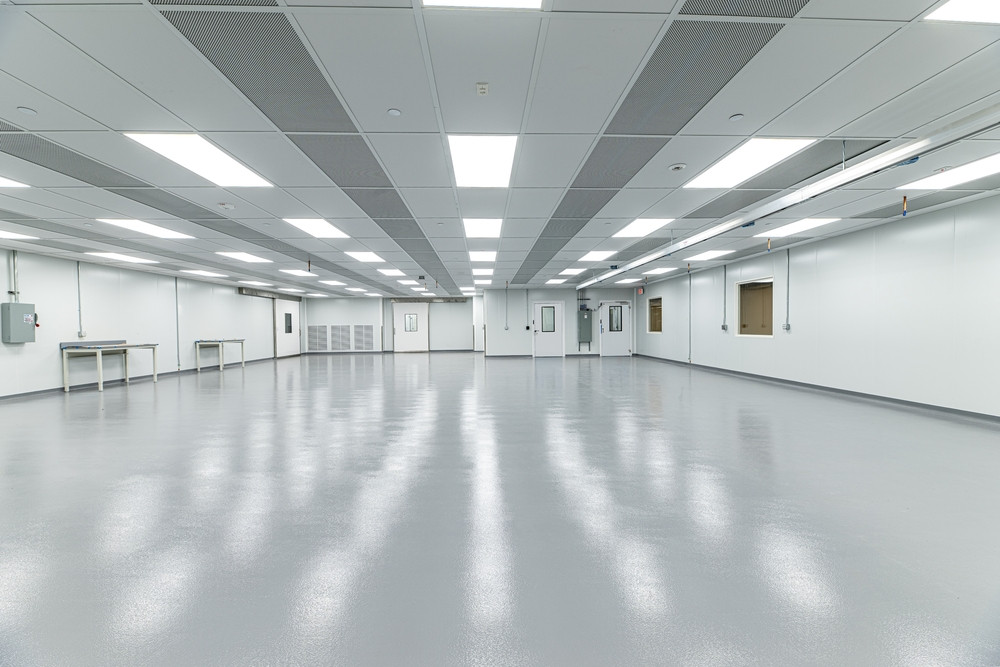
The battery manufacturing landscape is evolving rapidly. As traditional lithium-ion technology advances and next-generation alternatives like solid-state batteries rapidly gain momentum, manufacturers face intense pressure to build production facilities that can adapt just as quickly.
When investing in a battery dry room today, building for static, near-term specifications is a major long-term risk. A fixed environmental envelope built tightly around current process needs can quickly become obsolete as production techniques, safety protocols, and chemistries shift.
Rather than designing for today’s limits, forward-thinking manufacturers are future-proofing their investments with highly adaptable infrastructure engineered to evolve alongside the industry.
What Is a Battery Dry Room?
A battery dry room is a highly controlled manufacturing environment designed to maintain extremely low humidity levels during battery production.
These environments help prevent moisture contamination that can damage sensitive battery materials, reduce product quality, and create safety risks during manufacturing.
Modern dry rooms for battery manufacturing must often support evolving battery chemistries, changing environmental requirements, scalable HVAC systems, and flexible production layouts.
Why Changing Battery Chemistries Are Rewriting the Environmental Rules
Different battery chemistries require fundamentally different environmental conditions during manufacturing.
When transitioning between battery generations or launching new production methods, the tolerances for moisture, particulate levels, airflow velocity, and temperature stability can all change significantly:
- Traditional Lithium-Ion Manufacturing: Typically requires ultra-low dew point environments to aggressively isolate sensitive active materials from catastrophic moisture contamination.
- Solid-State Production: May introduce entirely unique environmental tolerances, complex chemical processing hazards, and completely rewritten process requirements.
- Advanced Assembly Techniques: Implementing new mixing, coating, or cell assembly workflows often demands reimagined airflow pathways or entirely separate environmental zoning strategies.
Without a flexible baseline, supporting these shifting criteria later means dealing with punishingly expensive retrofits or catastrophic facility shutdowns.

The Hidden Costs of a Fixed Dry Room Design
While prioritizing a highly specific, fixed or permanent dry room design might look like a smart way to shave down upfront capital expenditures, it creates massive operational liabilities over time:
| Design Limitation: | Long-Term Operational Impact: |
| Fixed humidity control capacity | Difficulty supporting future chemistries with tighter tolerances |
| Non-expandable HVAC systems | Expensive, disruptive rip-and-replace infrastructure projects |
| Permanent wall layouts | Inefficient production flows when rearranging lines |
| Limited utility access | Complicated, compromised equipment integration later |
| Tight, process-specific footprint layouts | Reduced scalability for deploying new production lines |
Facilities built without adaptive safety nets inevitably lead to higher retrofit costs, operational downtime, chronic production bottlenecks, and delayed expansion timelines.
The Four Pillars of a Future-Ready Dry Room for Battery Manufacturing
A future-ready dry room embeds scalability directly into its architectural and mechanical DNA from day one.
Rather than locking you into a single process layout, a flexible space allows you to efficiently reconfigure zones, scale throughput, and dial in precise environmental changes.
1. Adaptable Humidity Control Ranges
Moisture management dictates dry room performance, but next-generation chemistries will inevitably shift the dew points you require.
Instead of clipping your mechanical targets close to current needs, systems should plan for:
- HVAC systems engineered for broader overall dew point ranges.
- Expandable, modular dehumidification capacities.
- Controls and software that seamlessly support future calibration modifications.
- Built-in mechanical redundancy to ensure rock-solid operational stability.
2. Modular Construction Strategies
Relying strictly on traditional permanent wall framing limits your agility.
Utilizing advanced modular cleanroom wall systems enables your facility to:
- Expand active production areas with minimal structural disruption.
- Quickly reconfigure line footprints as equipment footprints alter.
- Add localized environmental process zones to segregate hazardous workflows.
- Incrementally scale total manufacturing space to optimize capital deployment.
This modular agility directly minimizes standard installation downtime compared to messy traditional construction methods.
3. Expandable HVAC Infrastructure
Mechanical air handling capacity is frequently the single largest bottleneck in scaling older cleanroom facilities.
Flexible dry room design bypasses this restriction by building in expansion capacity on day one:
- Oversized mechanical space planning: Preserving explicit physical floor space for future HVAC additions.
- Expandable ductwork runs: Engineering duct layouts that can scale volume without requiring complete redistribution.
- Additional utility pathways: Running spare, accessible plumbing, electrical, and control loops early.
- Scalable automation systems: Utilizing industrial control hardware designed for flexible input expansions.
4. Native Layout Modifiability
As cell formats shift (ex. pouch to cylindrical), automation equipment footprint increases, and updated safety regulations arrive, your room must dynamically adjust.
Top structural elements include:
- Movable, load-bearing cleanroom wall panels.
- Expandable access and material corridors.
- Flexible overhead utility drops to eliminate tangled floor connections.
- Open-span infrastructure ceiling integration.
- Generous future equipment clearance zoning.
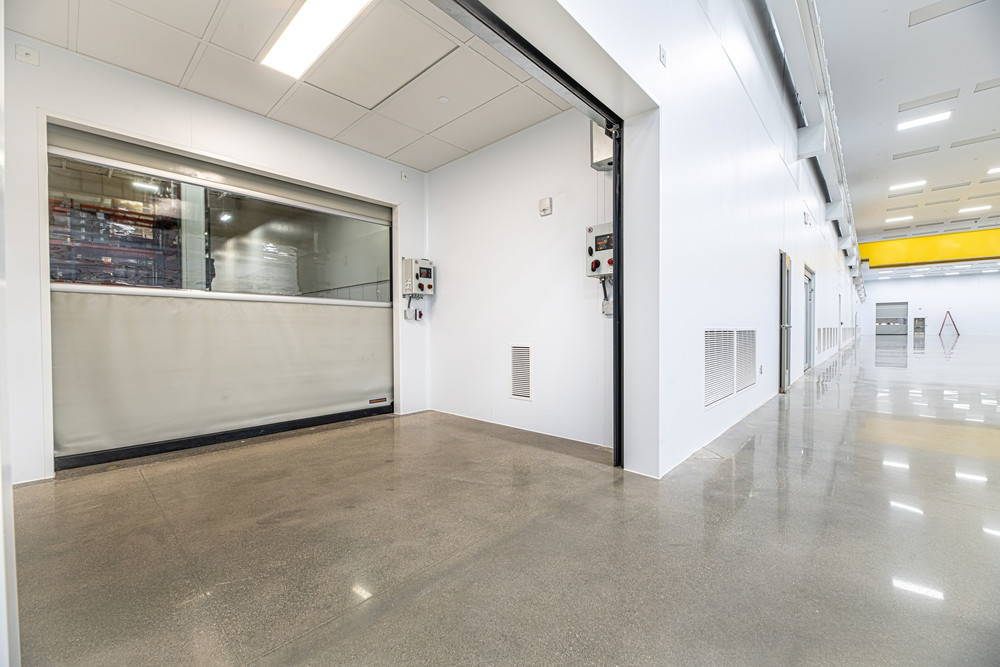
7 Key Considerations for Flexible Dry Room Design
When designing a future-ready battery dry room, manufacturers should prioritize:
- Expandable humidity and dew point control ranges
- Modular cleanroom wall systems
- Scalable HVAC and dehumidification infrastructure
- Flexible production layouts
- Additional utility capacity for future equipment
- Environmental adaptability for evolving battery chemistries
- Long-term scalability to reduce retrofit costs
Frequently Asked Questions About Battery Dry Rooms
Why are dry rooms important in battery manufacturing?
Dry rooms help control moisture during battery manufacturing processes. Excess humidity can damage sensitive battery materials, reduce performance, create contamination risks, and impact product safety.
What humidity levels are required in a battery dry room?
Humidity requirements vary depending on the battery chemistry, manufacturing process, and material sensitivity. Many lithium-ion battery manufacturing applications require extremely low moisture conditions, often maintaining dew points between -40°C and -60°C (-40°F to -76°F) to prevent moisture contamination that can damage sensitive electrode materials and reduce battery performance. Emerging battery chemistries, including some solid-state technologies, may require even tighter environmental controls depending on the production process.
What is the biggest challenge in dry room design?
One of the biggest challenges is designing a dry room that can adapt to changing battery chemistries, production methods, and future manufacturing expansion without requiring expensive retrofits.
Why is flexibility important in a battery dry room?
Flexible dry room design helps manufacturers adapt to evolving technologies, increase production capacity, modify layouts, and support future environmental requirements more efficiently.
Can modular construction improve battery dry room scalability?
Yes. Modular construction strategies enable manufacturers to expand or reconfigure dry room layouts more efficiently, minimizing downtime and operational disruption.
How do HVAC systems impact battery dry room performance?
HVAC systems control humidity, airflow, temperature stability, and environmental consistency. Scalable HVAC infrastructure is critical for supporting future production growth and changing manufacturing requirements.
Protect Your Manufacturing Investment
Building a dry room is a multi-million-dollar, long-term commitment intended to support your organization for years to come. Because battery chemistry innovation moves significantly faster than standard facility lifecycles, designing around static specs introduces unnecessary structural risk.
Incorporating flexibility early positions your facility to capitalize on market demand instantly, scale seamlessly, and avoid crippling retrofit invoices down the road.
At Angstrom Technology, we help battery pioneers design and integrate scalable, high-performance controlled environments that balance near-term yield goals with absolute long-term operational modularity.
Whether it is modular layout strategies or highly scalable HVAC system engineering, we design environments built for the next generation of battery technology.
Planning a Battery Dry Room?
Choosing the right dry room design strategy early can help reduce long-term operational risk, improve scalability, and support future growth in battery manufacturing.
Whether you are planning a new battery manufacturing facility or expanding an existing operation, designing for flexibility today can help prevent costly infrastructure limitations tomorrow. Request a quote to get started.