How to Control Static in Your Cleanroom

How to Control Static in Your Cleanroom

Many applications require limited static:  electronics manufacturing, air traffic control, chemical labs, and semiconductor are just a few examples. If your cleanroom application involves sensitive, specialized electronics, hazardous chemicals, or other delicate equipment or processes that may be sensitive to static, you’re going to want to ensure that your cleanroom environment controls static. Here are things to consider when designing your cleanroom when you want to control static.


Anti-static flooring

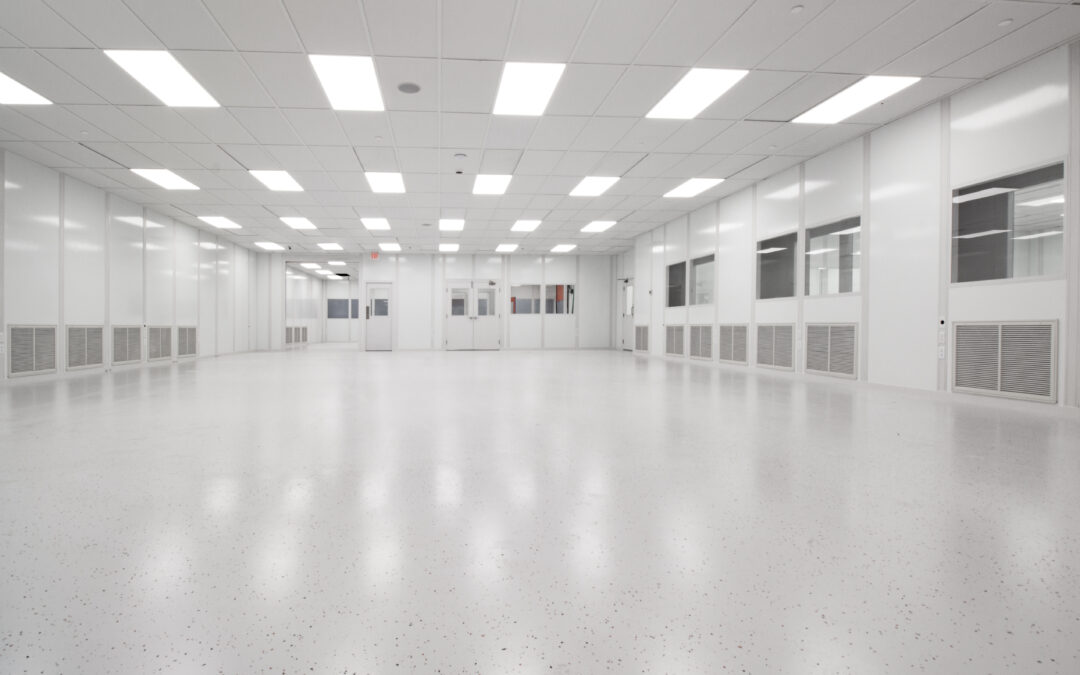
There are several flooring options for static control. They work by grounding the static charge that naturally builds up in any environment, moving it through the floor to the ground and preventing it from building up and affecting your processes.

There are two main types of anti-static flooring, dissipative and conductive, and these are both available at varying levels of resistance (measured in ohms). The resistance and type of anti-static flooring you need will depend on the risk of electrostatic discharge as well how critical the effects of electrostatic discharge would be for your application.


Anti-static wall panels

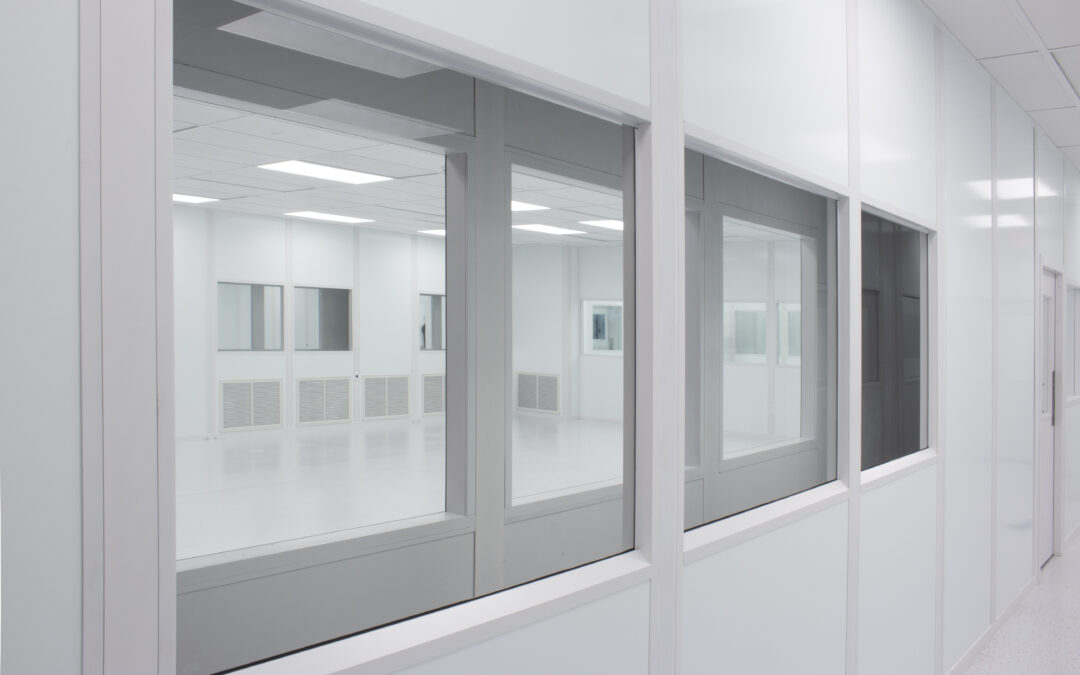
Anti-static wall panels are also available for controlling static within a cleanroom. Cleanroom-specific anti-static wall materials are crucial, as cleanroom wall materials will also control particle shedding, preventing particulate contamination in the cleanroom environment. Additionally, wall panels with picking bins or storage for ESD components can protect static-sensitive items.


Clothing and gowning procedures 

In addition to the gowning procedures already in place for your cleanroom, if your aim is to control static, you may want to implement new clothing and gowning protocols. These may include anti-static garments or ESD cuffs, low-static shoes, or even equipment such as an air shower before entry to the cleanroom environment.

Even if anti-static garments aren’t necessary, you may want to prohibit wearing static-prone and high-static clothing articles, like those made of fleece and similar fabrics, in the cleanroom environment, or require basic gowning in a lab coat.


No matter the environmental factors you need to control, Angstrom Technology can design and install a cleanroom that works for your application.


How to Repurpose or Move Your Modular Cleanroom

How to Repurpose or Move Your Modular Cleanroom

Modular cleanrooms are valuable for their versatility and the ability to deploy them almost anywhere. When your organization’s needs change, you might find that you need to move your modular cleanroom—great, that’s what it’s for! Whether you need to move your modular cleanroom to a new location or adapt it to a new application, here’s how to repurpose or move your modular cleanroom.


Disassemble cleanroom following included directions

The first step is to disassemble the cleanroom—completely if you’re moving it to a new location, only as much as necessary if you’re simply making some modifications—following the instructions. Your modular cleanroom should have come with instructions for both assembly and disassembly (ours do!). Following the instructions is critical to ensure that nothing is accidentally damaged in the process and that when you go to put it back together again, nothing is missing or broken.  If you need additional help, our skilled installation teams are professionals at both assembly and disassembly of these modular cleanrooms.


Move or change and reassemble in desired configuration

If you’re moving the cleanroom, move it to the new location and then begin reassembling the cleanroom. If you’re adding onto the cleanroom or making changes to the configuration, make those changes and reassemble. Again, following the instructions you’ve been provided is of utmost importance to ensure that everything fits together properly and that a tight seal is maintained for the controlled environment. 


For complicated installations, get pros involved

For both assembly and disassembly of the modular cleanroom, when it comes to complicated systems like HVAC integration, laminar air flow, or multi-stage air filtration, enlist the help of professional cleanroom installers like ours. You don’t want to risk damage to your cleanroom or to those delicate systems or compromise your cleanroom environmental controls. 


If you’re interested in a modular cleanroom that can change to meet your business’s ever-changing needs, it’s time to talk with an Angstrom Technology engineer.


Should You Install Your Cleanroom Yourself or Hire A Pro?

Should You Install Your Cleanroom Yourself or Hire A Pro?

Once you’ve designed and ordered a cleanroom, then comes the good part: installing it and putting it to use. Unlike traditional construction, with modular cleanrooms, you have the option of installing it yourself or having a professional handle the installation. How do you know which cleanroom installation option is right for your organization? That depends on a variety of factors, including timeline, personnel, and complexity.

How much time do you have?

Modular cleanroom design means that cleanrooms can be assembled and installed quickly to meet business needs. But, this depends on your timeline. If your cleanroom installation isn’t an urgent priority, having your own employees handle the installation might work. If you’re on a tight deadline (and you probably are) having a professional installation crew install your cleanroom can get the job done faster and more efficiently.

How confident are you in your personnel?

Your employees are great—if they weren’t, you wouldn’t have hired them. And though they may have lots of experience in facilities maintenance and other operations, cleanrooms can be complicated and complex assembly projects, even with the best of instructions. If you want to ensure that the job is done right and that your employees aren’t overburdened, consider hiring an installation crew for your new cleanroom. 

How complex is your cleanroom design?

It follows that the more complex your cleanroom design, the more time, effort, and difficulty there will be in installing it. This is especially true if your design includes any delicate or specialized equipment. In the case of a complex design, it’s best to leave it to the professionals. 

A simple storage cleanroom, on the other hand, can be simple enough to be installed easily, without a professional installation crew.

Whether you want to install your own cleanroom or have it installed professionally, Angstrom Technology can help. We provide detailed instructions for installation with all of our cleanrooms in case you chose to DIY, but also offer installation services.


Cleanroom Terminology: BioSafety Hoods & Cabinets

Cleanroom Terminology: BioSafety Hoods & Cabinets

Anyone in quality assurance or testing who works in or has to design a cleanroom knows how confusing the terminology around cleanrooms can be. To demystify some of the cleanroom design processes, here is an explanation of two potentially confusing terms: biosafety hoods and biosafety cabinets.

What is a biosafety hood?

A biosafety hood is generally known as a fume hood. The purpose of a fume hood is to isolate fumes from materials that may be hazardous and filter those fumes out of your cleanroom space. An exhaust fan at the top of the cleanroom building pulls air, fumes, and airborne contaminants out of the fume hood and exhausts outside of the building.

What is biosafety cabinetry?

Biosafety cabinetry works very similarly to biosafety fume hoods. Biosafety cabinetry uses laminar airflow to filter airborne fumes and contaminants away from the cabinet area, which like a fume hood can be used as a work surface or storage area.

What are the classifications?

There are three classes of biological safety cabinets, Class I, Class II, and Class III. The classification determines the level of protection. Class I protects the user and the surrounding environment, but does not protect the sample. Class II and Class III protect the user, sample, and surrounding environment. Class II is divided into four subcategories, A1, A2, B1, and B2, based on exhaust system and minimum airflow. Class III is the highest level of protection and control. Class III cabinets are also known as “glove boxes” and are completely gas-tight with a double-door autoclave or dunk tank. 


Protection

User

Environment

Sample

Class I

Yes

Yes

No

Class II

Yes

Yes

Yes

Class III

Yes—highest 

Yes—highest 

Yes—highest 


Special considerations

If your cleanroom requires work with dangerous, hazardous, or toxic substances with airborne contaminants or fumes, your cleanroom likely requires some kind of biosafety cabinetry or hood. The level of protection necessary for your specific application, whether your application requires Class I, Class II, or Class III cabinetry, will depend on the specific operations and substances used in your cleanroom. 


Looking for a cleanroom that incorporates biosafety cabinetry? Angstrom Technology can design a cleanroom to accommodate any kind of cabinetry or other equipment necessary for your application.

Design Services

Cleanroom Design

We have the tools, materials, and knowledge to design a cleanroom that fits your specifications.

Design Services

Cleanroom Installation

Cleanroom installation is quick & efficient with minimal distraction to you & your staff.

Design Services

Industries

Various industries include manufacturing, pharmaceutical, medical industries and more.

Do You Need A Soundproof Cleanroom?

Do You Need A Soundproof Cleanroom?

A cleanroom can be designed to meet the needs of almost any application with any requirements, from controlling static and humidity to even controlling sound. You probably know whether your application requires control for things like humidity and static, but what about sound. Do you need a soundproof cleanroom? Here are some conditions where you might.

Loud Manufacturing Environments

If your facility is a manufacturing environment that requires protective hearing equipment like earplugs ear, soundproofing your cleanroom is a good idea, especially if hearing protection isn’t necessary for your cleanroom processes. Hearing protection might even hinder those processes, as foam from earplugs and earmuffs can hold and shed particles.

If your cleanroom contains the loud equipment and the rest of your processes outside the cleanroom don’t require hearing protection, it can be worthwhile to soundproof your cleanroom so that hearing protection is only required inside. This can greatly reduce hearing-related injuries to your personnel and reduce the cost of hearing protection for your company.

Loud Equipment Containment

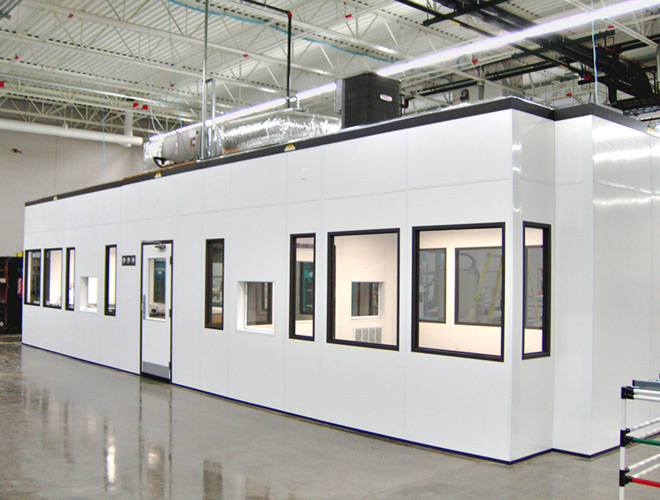
If you have a piece of equipment or pieces of equipment that are particularly loud, rather than creating a soundproof cleanroom, a more efficient solution might be creating a soundproof containment room for that equipment. A modular soundproof room can be created around a loud piece of equipment. The benefit to this is reduced noise and need for ear protection in your facility. Additionally, modular containment rooms can be freestanding or can incorporate your existing structure, so no matter where a piece of equipment is housed, it can be soundproofed.

Sensitive Processes

If your cleanroom operation is a particularly sensitive process, a soundproof cleanroom may also be beneficial. Sound is vibration, and delicate operations may be affected by loud noises and strong vibrations, which a soundproof cleanroom can reduce.

Proprietary Information

If your cleanroom operations are top secret or deal with proprietary information which should not leave the walls of the cleanroom, a soundproof cleanroom can also prevent the unplanned and unwanted spread of information by containing sound within the cleanroom.


Angstrom Technology’s modular cleanrooms and in-plantinplant buildings can be customized to control sound, if your application requires. Get in touch with one of our design engineers to discuss your project.