Cleanroom Classification Standards
Tailored Cleanroom Solutions for All Classifications
Angstrom Technology designs, builds, and installs cleanrooms that meet ISO classifications and industry-specific standards. Hardwall, Softwall, Seamless, and Rigidwall wall systems can be configured to support nearly any application and can be modified, expanded, downsized, or relocated as your needs evolve.
Our cleanroom experts work with you to determine the ideal layout, airflow strategy, filtration level, and environmental controls required to achieve and maintain your desired cleanroom class.
What Are Cleanroom Classifications?
Cleanroom classifications are a critical factor in a cleanroom’s design, development, and use. They define the allowable levels of airborne particles in a controlled environment — specifying both the permitted particle counts by size and the air change rates required to maintain those limits — ensuring that contamination risks to manufacturing processes are effectively mitigated.
Let’s breakdown cleanroom classifications in more detail.
Types of Cleanroom Classifications
ISO 14644-1
The primary framework governing all cleanrooms is ISO 14644-1, first published by the International Standards Organization in 1999. It applies across all industries and applications, giving manufacturers a predictable, quantifiable environment that helps ensure their products are safe and effective for use.
Industry-Specific Standards
Individual industries may layer on additional requirements to further protect products, processes, and employees. Standards like USP, ASTM, and GMP address fields such as pharmaceuticals, biotechnology, and aerospace. Within the ISO family, standards like ISO 13485 and ISO 14698 go further still, targeting medical device manufacturing and biocontamination control specifically.
The Universal Standard: ISO 14644-1
In 2001, ISO 14644-1 became the official cleanroom classification system, replacing the Federal 209E Standard. The new system expanded the classification range to nine classes — ISO 1 through ISO 9 — with two stricter classes at the upper end and one less stringent class at the lower end.
ISO 14644-1 requirements describe contamination levels based on an allowable number of airborne particles per cubic meter of air. . Classes in ISO 14644-1 are divided from 1 to 9, where Class 9 is equivalent to room air and Class 1 represents the cleanest possible cleanroom environment. As the classification number falls, cleanrooms rapidly become cleaner and must comply with stricter standards. The majority of cleanrooms fall within ISO Classes 7-8. ISO 5 is considered to be the dividing line where cleanrooms become heavily restricted by rigorous requirements for filtration, contamination, and environmental control.
ISO 14644-1 Cleanroom Standards
(a more detailed version of this chart can be found here)
| 209 E Standard | Class | Maximum Allowed Concentration (particles per m³) | |||||
|---|---|---|---|---|---|---|---|
| ≥0.1 µm | ≥0.2 µm | ≥0.3 µm | ≥0.5 µm | ≥1 µm | ≥5 µm | ||
| — | ISO 1 | 10 | — | — | — | — | — |
| — | ISO 2 | 100 | 23.7 | 10.2 | — | — | — |
| CLASS 1 | ISO 3 | 1,000 | 237 | 102 | 35 | — | — |
| CLASS 10 | ISO 4 | 10,000 | 2,370 | 1,020 | 352 | 83 | — |
| CLASS 100 | ISO 5 | 100,000 | 23,700 | 10,200 | 3,520 | 832 | 29 |
| CLASS 1,000 | ISO 6 | 1,000,000 | 237,000 | 102,000 | 35,200 | 8,320 | 293 |
| CLASS 10,000 | ISO 7 | — | — | — | 352,000 | 83,200 | 2,930 |
| CLASS 100,000 | ISO 8 | — | — | — | 3,520,000 | 832,000 | 29,300 |
| — | ISO 9 | — | — | — | 35,200,000 | 8,320,000 | 293,000 |
While ISO cleanroom classes are defined solely by the concentration and size of allowable airborne particles, achieving those particle limits depends heavily on design factors such as air change rates, airflow velocity, and the percentage of ceiling coverage with fan filter units (FFUs). Particle count is the basis of ISO classification, and airflow and filtration strategies are key engineering mechanisms used to meet and maintain those particle limits.
Particle Count
Particle count in each class is measured based on particles of a certain size per cubic meter. As the class number decreases and requirements become stricter, the allowed number of particles is reduced, as well as the size of those particles. You can see, for example, the difference between particle count and size allowed in Class 7 cleanrooms (352,000 particles ≥0.5µm per cubic meter) versus a Class 5 cleanroom (only 3,520 ≥0.5µm per cubic meter).
Particle size is measured in microns (µm) per cubic meter. In stricter classes, even the tiniest particles can interfere with and contaminate products and operations within a controlled cleanroom environment. As the classification becomes more stringent, specialized filters must capture smaller particles before they can compromise operations. A carefully designed airflow pattern helps filters trap and remove contaminants efficiently, continuously replacing room air with fresh, contaminant-free air. The rate at which this process completely changes and replaces the room’s air is called the air change rate (ACH).
Air Change Rates
In ISO Classes 6-9, air change rates are expressed as the rate per hour the air in the cleanroom is completely refreshed (ACH = air changes per hour). As cleanroom classifications become more stringent, the air change rate must increase to remove particles and keep the air cleaner. In Class 5 and lower, Classes 1-4, the strictest cleanroom classifications, the air change rate is so rapid it is expressed instead as airflow velocity, either in meters per second or feet per minute. These cleanroom environments require air that is extremely clean, so the constant changing of contaminant-free air is vital to maintain classification standards.
Upgrading to a stricter classification requires increasing both filtration capacity and air change rate. For example, ISO Class 7 requires between 60-90 ACH and allows for 352,000 particles at 0.5 microns per cubic meter. To move to an ISO Class 6, the facility would need to increase to 150-240 ACH to filter all but 35,200 particles at 0.5 microns per cubic meter. The more stringent the classification, the more extreme the standards of cleanliness. Extremely clean cleanrooms require extensive filtration and powerful HVAC systems to maintain classification standards.
Ceiling Coverage
Ceiling coverage refers to the percentage of ceiling coverage for HEPA filter/fan units, or FFUs. Ceiling coverage is closely related to air change rate, as more FFUs will allow for more air changes to occur. Because FFUs are energy-intensive, the lowest ceiling coverage percentage that still maintains the required cleanliness level is generally recommended.
It’s important to note that cleanrooms in ISO Class 5 and lower also measure cleanliness at different stages, specifically “in operation,” and “at rest.” These stages are defined because cleanrooms with extremely stringent requirements have different certification levels depending on the cleanroom’s stage. A room “at rest” means that all of the equipment, furniture, etc. is in the cleanroom, but no people or processes are working or running. “In operation,” on the other hand, means that all people and machinery are running at full production. It will understandably take less HEPA filtration and ACH to achieve certification “at rest,” as opposed to “in operation,” because there is less activity in the room and fewer contaminants being shed or transferred.
ISO 14644-2 Cleanroom Classification Monitoring
ISO 14644-2 describes the practices for testing and monitoring cleanrooms to ensure they comply with classification standards. Periodic testing ensures all cleanrooms reach the necessary particle count allowances and maintain a clean environment. Higher-classification cleanrooms (ISO Class 5 and stricter) must complete particle count tests every six months, while all others must do so annually. In addition, every cleanroom must test airflow and air pressure differentials on a yearly basis.
Additional Cleanroom Standards
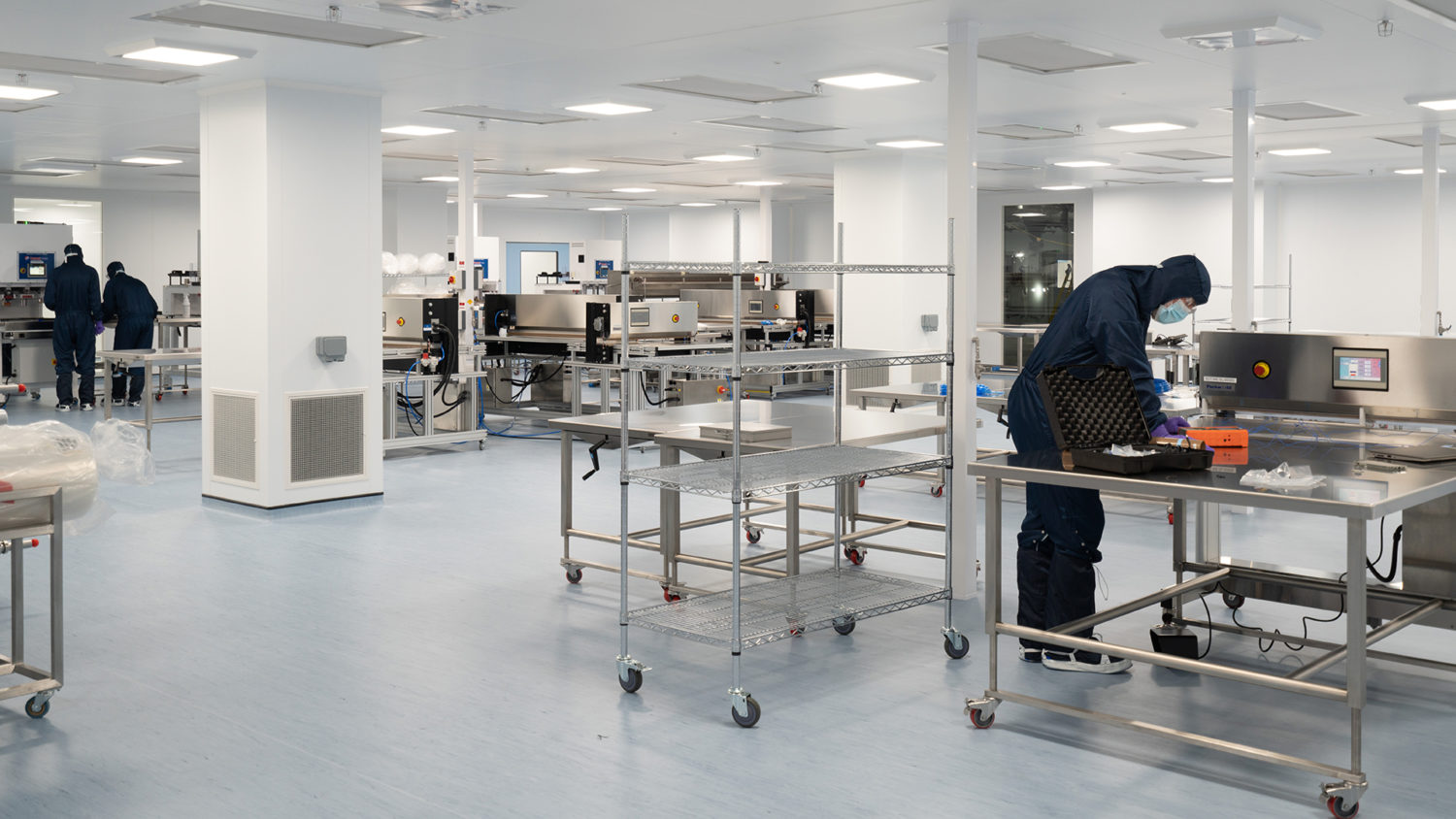
Some cleanroom applications must comply with special standards that are uniquely tailored to the threats facing their products and processes. Additional standards and industry requirements provide an extra level of protection, limiting contaminants within controlled cleanroom spaces and specifying layouts, safe operating practices, and cleaning procedures. Together, these standards protect both the products developed in cleanrooms and the people working to create them. A few examples of additional cleanroom standards are USP, ASTM and GMP.
Common Cleanroom Standards
Federal 209E Standards
USP Standards
US Pharmacopeia (USP) is a scientific organization that develops standards and science‑based solutions to help ensure the quality of medicines, dietary supplements, and food ingredients. These standards support product safety, purity, and consistency across healthcare.
In cleanroom environments, the USP standards most commonly referenced are those governing pharmaceutical compounding, outlining environmental and procedural requirements and cleanroom conditions needed to safely prepare compounded medications.
- USP 795: non-sterile pharmaceutical compounding
- USP 797: sterile non-hazardous compounding
- USP 800: hazardous compounding (sterile and non-sterile)
USP Standards exist to ensure product strength, quality, and purity so that all compounds are certified to be high quality, safe to use, and effective for patient use.
ASTM International Standards
American Society for Testing and Materials International (ASTM) develops technical standards for many different industries from manufacturing to consumer product safety, some of which use cleanrooms to develop, test, manufacture, or package products. Three major cleanroom applications that subscribe to ASTM standards are automotive cleanrooms, aerospace cleanrooms, and plastics manufacturing cleanrooms.
ASTM standards are used to regulate a number of products, substances, and processes, including metal, rubber, construction materials, petroleum, textiles, solar technology, medical products and devices, nanotechnology, additive manufacturing, and industrial biotechnology, to name just a few examples.
GMP & CGMP Regulations
Good Manufacturing Practice, or GMP, regulations ensure product consistency and quality, specifically when applied to drugs, medical devices, biologics, and food production. GMP covers topics from materials used in handling and production to employee training, facility requirements, and hygiene practices. The purpose of GMP regulations is to make sure all products are effective, pure, safe, and free of contamination.
In the United States, the US Food and Drug Administration (FDA) establishes and enforces GMP regulations. These standards are particularly important in medical cleanrooms, including pharmaceutical manufacturing, medical research, and medical device production. GMP also applies to food production and biosafety cleanrooms.
cGMP, or current Good Manufacturing Practices, refers to the most up-to-date practices businesses are required to follow. The “current” is significant — it places an ongoing obligation on manufacturers to incorporate the latest standards and technologies into their operations. Because regulations are regularly revised, each business bears the responsibility to ensure its facilities, processes, and staff remain compliant.

Designing For Cleanroom Classifications
As we’ve examined, cleanroom classifications are mainly determined through the management of particle count and size, air change rates or airflow velocities, and ceiling coverage for filtration. As a result, designing a cleanroom to meet a cleanroom classification requires careful attention to all three of these areas. The major components of cleanroom design include cleanroom filtration, airflow patterns, pressurization, HVAC, and other cleanroom supplies and materials.
Cleanroom Filtration
What is the difference between HEPA and ULPA filters?
Depending on your cleanroom classification, you must filter out a certain number of particles of a specific size. HEPA and ULPA filters remove contaminants from the air to provide a consistent, contaminant-free environment, with the appropriate filter type determined by target particle size:
- HEPA filters, or High-Efficiency Particulate Air filters, remove 99.99% of particles 0.3µm or larger in diameter.
- ULPA filters, or Ultra Low Particulate Air filters, function similarly to HEPA filters, but are rated to remove 99.999% of all contaminants larger than 0.12µm.
Most cleanrooms utilize multi-stage filtration to extend the life of HEPA filters and trap contaminants more effectively and efficiently. To accomplish this, pre-filters draw out larger particles before air reaches the HEPA or ULPA filters. Prefilters are generally replaced every other month, while HEPA and ULPA filters can last up to 7 years.
Airflow Patterns
Airflow patterns are critical to maintaining a consistent flow of clean air and assist filters in doing their job effectively. Higher-classification cleanrooms (those with a lower ISO number) typically use laminar, or unidirectional, airflow, which pushes clean air in a single direction through the space to prevent particles and contaminants from settling or accumulating. By contrast, lower-classification cleanrooms may use turbulent, or non-unidirectional, airflow instead, which is less precise but sufficient for less stringent environments.
Layout plays an equally important role. Your cleanroom should allow the air to flow according to its pattern without creating spaces where contaminants could build up or block filters. During the design phase, computational fluid dynamics software can be used to model airflow patterns to determine the optimal placement of FFUs, cleanroom walls, and even equipment and cleanroom furniture.
Cleanroom Pressurization
Pressure within the cleanroom is determined by the amount and direction of air flowing in and out of the cleanroom environment, and getting it right is an important part of cleanroom design. Most cleanrooms use positive pressure, meaning more air is filtered into the space than removed. As a result, unfiltered outside air cannot leak in through doors, seams, or any crevices to cause contamination.
Some cleanrooms, particularly those working with hazardous or infectious substances, use negative pressure instead. In these environments, more air is exhausted out than is brought in, keeping any dangerous contaminants from escaping into surrounding areas. Negative pressure cleanrooms are still fully filtered and controlled environments; the pressure differential simply contains what’s inside rather than protecting against what’s outside.
HVAC Environmental Control
A big part of environmental control in any cleanroom is managed by its HVAC system, which controls the temperature, humidity, and circulation of air within the space. Beyond basic comfort for employees, the HVAC system creates an environment that protected products and processes from the dangers of moisture, humidity, and fluctuations in temperature.
Depending on the level of precision required by your cleanroom classification, a more powerful HVAC system may be needed to maintain your environment to exact specifications.
Cleanroom Supplies & Materials
Filtration and HVAC are essential, but cleanroom design extends well beyond these core systems. Your cleanroom classification also governs industry-specific equipment, cleanroom furniture, and the materials used in construction. If you’re building your cleanroom around existing structures or mounted equipment, you may need to adjust your layout and filter placement to prevent contaminant buildup in the space.
Materials and furniture must also meet cleanroom standards. Each ISO class carries specific material requirements to protect products and limit contamination risk. For example, some applications require the use of ESD-safe (electro-static discharge) materials to protect employees and products from contamination or charges resulting from static electricity.
Cleanroom Classifications by Industry & Application
Designing a cleanroom for different applications requires careful attention to your cleanroom classification. Some industries require more control over the cleanroom environment and are regulated by stringent requirements, particularly in medical applications or processes that involve fine electronics. Let’s look at typical cleanroom classifications and special standards associated with a few major industries.
Aerospace Cleanrooms
Per ASTM E2352, aerospace cleanrooms must meet ISO 14644-1 standards, starting from a minimum ISO Class 7 (Federal Standard 209 Class 10,000) requirement. More stringent standards apply for highly sensitive applications, where airborne particle concentrations must be strictly controlled, such as in the development of spacecraft hardware, fine electronics, or optical devices.
Medical Cleanrooms
Medical cleanrooms encompass a range of applications, from research laboratories to device manufacturing, and typically fall within ISO Class 5–8. The required classification depends on the risk level of contamination to operations and the safety of the end product.
Device production, assembly, and packaging each carry different cleanliness requirements and often fall under separate classifications. Most medical device manufacturing cleanrooms must comply with ISO 5–8 standards per ISO 14644-1, while medical device packaging typically requires ISO 7–8. In addition, all medical device cleanrooms must also comply with ISO 13485:2016, which designates a quality management system to ensure product quality and assess risk throughout the device’s lifetime.
Medical research laboratories have their own set of cleanroom requirements, generally falling within ISO Class 5–7. As with device manufacturing, the rigorousness of the standard is dictated by the sensitivity of the research and the risk level of contaminants to cleanroom operations and safety.
Life Sciences Cleanrooms
Life sciences cleanrooms support a broad range of research and production activities, including pharmaceutical manufacturing, biotechnology, genomics, and cell and gene therapy. These environments typically fall within ISO Class 5–7, though the specific classification depends on the sensitivity of the work being performed.
For pharmaceutical cleanrooms, the minimum standard is generally ISO 5 (Federal Standard 209 Class 100), which requires high air change rates and significant ceiling coverage to maintain a tightly controlled particle environment. Beyond ISO standards, pharmaceutical cleanrooms must also follow regulations from the US Pharmacopeia (USP Standards) and, for biologics and drug manufacturing, the FDA.
Because life sciences applications frequently involve biological materials, contamination control goes beyond particle counts alone. Microbial contamination is an equally important concern, and for that reason, cleanrooms in this sector are often designed to meet both ISO 14644-1 particulate standards and the biosafety level (BSL) requirements set by the CDC and NIH. Furthermore, clean-in-place (CIP) and sterilize-in-place (SIP) systems are also common features in life sciences cleanrooms to support aseptic processing and reduce contamination risk between production runs.
Plastics Cleanrooms
Plastics cleanrooms typically fall within an ISO 14644-1 Class 7-8, and are also managed by ASTM Standards. The type of plastic and its intended application determine how much additional contamination control the cleanroom requires. For example, plastic used in packaging of medical devices will require more aseptic control than plastic manufactured for building products.
Plastics cleanrooms are also sensitive to static electricity. Similar to medical device and aerospace cleanrooms, ESD-safe materials should be used to protect products and employees within the cleanroom environment.
Automotive Cleanrooms
Automotive cleanrooms typically fall within ISO Class 7-8 and require strict control over temperature, humidity, and pressure across a wide variety of manufacturing processes. From drying paint to assembling fine electrical components, a controlled environment is critical to ensuring product effectiveness and safety on the road.
To ensure product durability and consumer safety, automotive cleanrooms are subject to ASTM regulations. In fact, ASTM standards exist for nearly every component of automotive manufacturing and assembly, from steel production to fasteners and paint to airbag safety ratings.
Cleanroom Systems for all Classifications
Angstrom Technology’s cleanroom experts design and install modular cleanroom systems across the full range of cleanroom classifications and industry requirements. Whether you’re building a new cleanroom from the ground up or reconfiguring an existing space, softwall, hardwall, rigidwall, and seamless systems offer flexible solutions tailored to your application.
Softwall Cleanrooms
Softwall cleanrooms are a lightweight, flexible cleanroom option well suited for ISO Classes 6–8, though they can accommodate some Class 4–5 applications depending on configuration. Their flexible design makes them a strong choice for operations that need room to grow or adapt over time. Softwall cleanrooms can fit in almost any space and are fully customizable with a wide variety of filtration options and door types, making them one of the most affordable and easy-to-maintain cleanroom solutions available.

Hardwall Cleanrooms
For cleanrooms with rigorous classification requirements, hardwall cleanrooms offer a high level of environmental control. Built with a coated aluminum frame and prefabricated panels, hardwall cleanrooms can be freestanding or incorporated into an existing building. Their construction achieves precise control over static, pressure, humidity, and contamination, making them suitable for the most demanding ISO classifications.

Rigidwall Cleanrooms
Rigidwall cleanrooms offer a middle ground between the flexibility of softwall and the structural rigidity of hardwall systems, and are well suited for ISO Classes 5–8.. Available in acrylic, static dissipative PVC, or polycarbonate wall panels, rigidwall cleanrooms provide effective contamination control in a transparent enclosure — useful for monitoring operations, supervising staff, or demonstrating your facility to visitors and investors. Their panel-based construction also makes it straightforward to reconfigure the layout as your operations evolve.

Seamless Cleanrooms
Seamless cleanrooms are the highest-performing option for the most demanding classifications, suitable for ISO Class 1 through Class 8. Their studless, flush wall panels are cold-welded together so that no seams or crevices are exposed, eliminating points of air leakage and contaminant buildup. This construction provides superior control over pressure, humidity, temperature, and static, and makes seamless cleanrooms exceptionally easy to clean and fumigate — a key advantage for applications with stringent cGMP requirements. Seamless wall systems are also Class A non-combustible and FM-approved, making them a strong choice for applications that require a high degree of fire resistance.
Cleanroom Services for all Classifications
Angstrom Technology’s cleanroom experts support your project at every stage, from initial design through long-term maintenance, ensuring your cleanroom meets all classification requirements and industry standards throughout its lifetime.
Cleanroom Design
Cleanroom design begins with your classification requirements and unique application needs. We can even help you decide where to install your cleanroom to work best for your facility. We use many tools, including computational fluid dynamics software, to model your cleanroom space and determine the optimal airflow pattern, reducing the strain on your HVAC system and improving air change efficiency. From filter placement to wall panel selection, every design decision is made with your classification and operational goals in mind.
Cleanroom Construction
Angstrom Technology can design and install a new freestanding modular cleanroom, adapt your site for cleanroom installation, or retrofit an existing structure to accommodate a cleanroom build. Because modular cleanroom systems arrive pre-manufactured, on-site assembly is efficient and straightforward. Our crew can handle installation, or we can provide instructions for self-installation. We also install industry-specific equipment to get your cleanroom operational as quickly as possible, verifying all systems and materials against your classification before handoff.
Reconfiguring or Upgrading Your Cleanroom
If your operations have changed, Angstrom Technology can help you redesign your cleanroom to meet revised needs or classification requirements. Modular panel construction makes it possible to expand, condense, or reconfigure your space to accommodate new equipment, additional personnel, or an updated layout. For example, upgrading to a higher ISO class may involve adding fan filter units, improving your HVAC system, adjusting your airflow pattern, or increasing filtration capacity — all of which our team can assess and implement while keeping your operations running as efficiently as possible.
Cleanroom Maintenance
Consistent evaluation keeps cleanrooms compliant with classification standards and ensures all systems perform safely and efficiently. Routine maintenance addresses mechanical systems, while regular cleaning reduces contaminant generation and prevents transfer within the cleanroom environment. Angstrom Technology offers scheduled maintenance programs covering HVAC service, filter replacement, deep cleaning, and more, so your cleanroom stays compliant and your team stays focused on the work that matters.
Download the
Cleanroom Checklist