
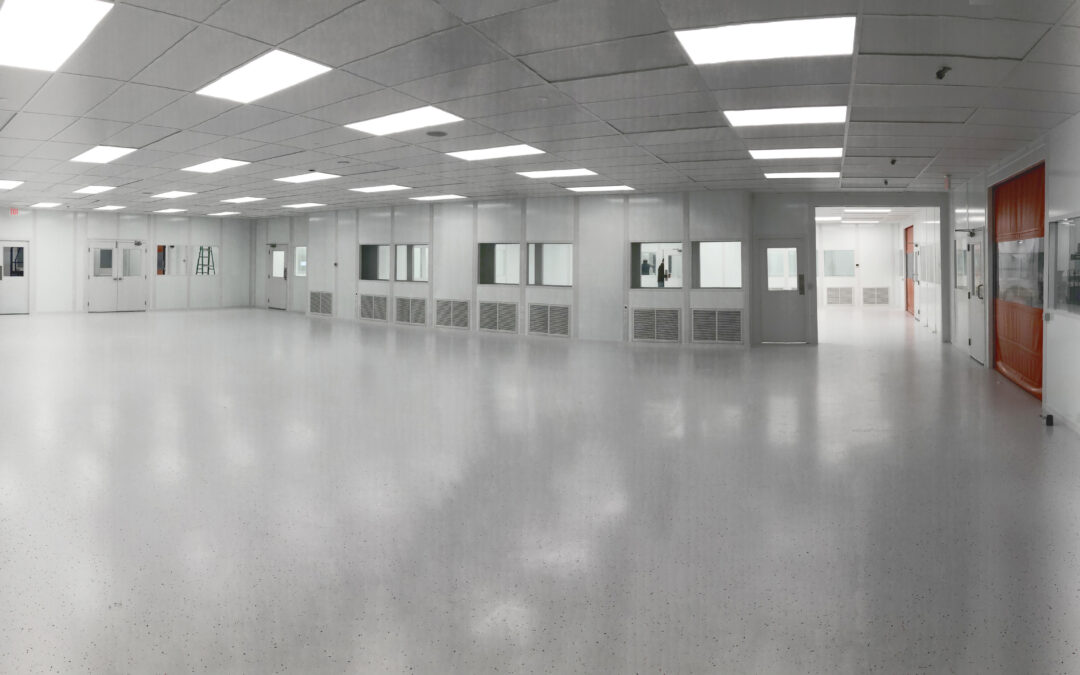
Designing Modular Cleanrooms for Medical Device Manufacturing Expansion
Modular cleanroom construction lets medical device manufacturers add capacity, new product lines, or higher classification zones without tearing down and rebuilding an existing facility. Because modular wall panels are engineered to be reconfigured rather than demolished, manufacturers can scale production while staying compliant with ISO and FDA requirements throughout the process.
For a growing medical device manufacturer, that difference matters. A full facility redesign can take a production line offline for months and put quality certifications at risk. A modular expansion strategy, planned effectively from the start, avoids both problems.
What Makes a Cleanroom Layout “Scalable” for Medical Device Manufacturing?
A scalable, or modular, cleanroom layout is one designed with extra capacity and reconfigurable zones built in from day one, so growth doesn’t require rebuilding core infrastructure. Instead of maximizing every square foot for current needs, a modular design reserves space, utility capacity, and structural flexibility for what comes next.
Key features of a modular medical device cleanroom layout:
- Movable wall panels that let teams reconfigure room dimensions or add new suites without demolition
- Oversized utility chases with extra capacity for electrical, compressed air, and process gas lines
- Flexible gowning and airlock zones that can be resized as headcount or material flow changes
- Defined expansion pathways: Physical space adjacent to the cleanroom reserved specifically for future build-out
- Standardized ceiling grids and HEPA filter layouts that make adding filtration capacity straightforward
Talk to our specialists about modular cleanroom design →
How Do You Plan HVAC and MEP Systems for Cleanroom Expansion?
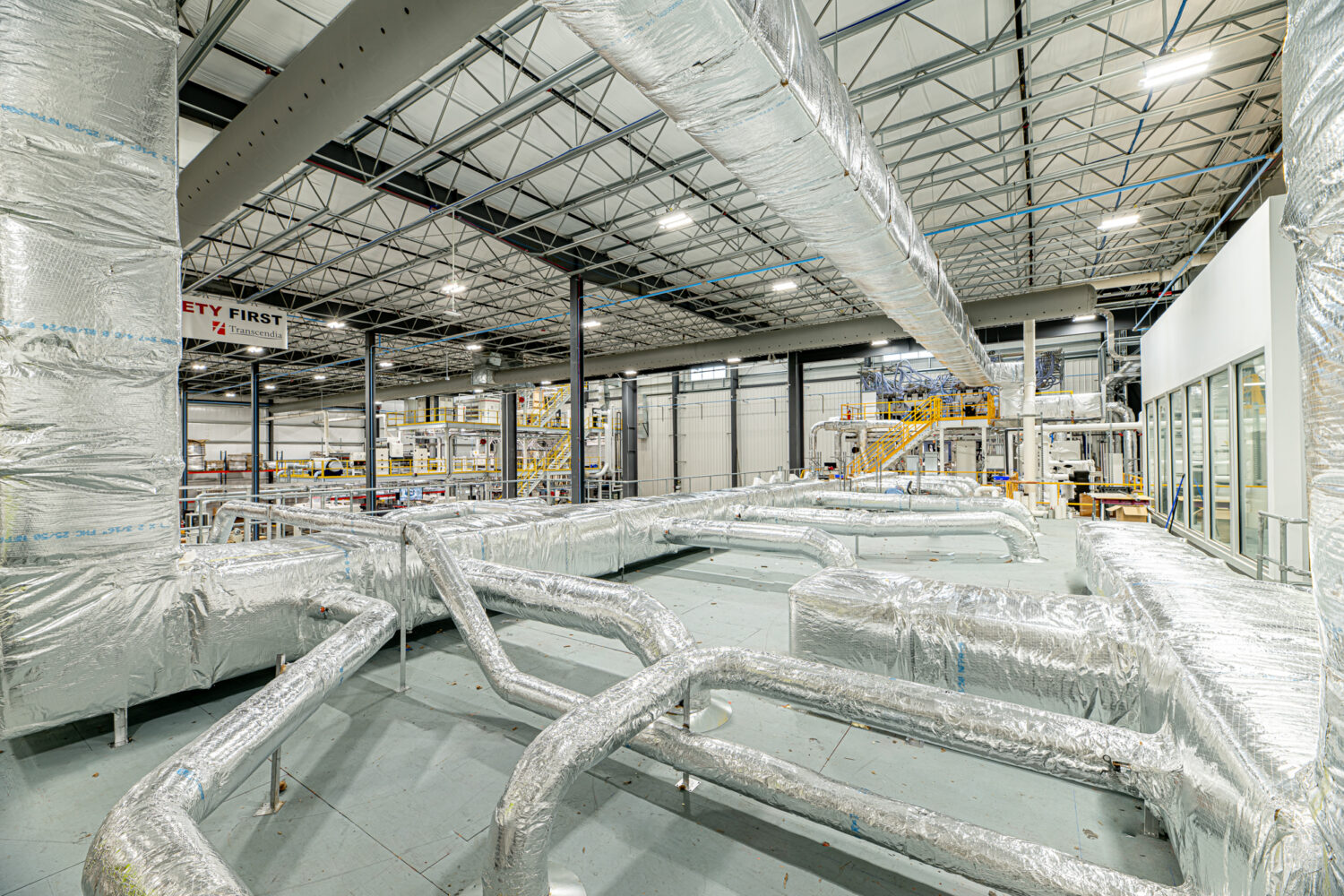
HVAC and MEP (mechanical, electrical, and plumbing) systems should be sized for future square footage and air change requirements, not just the cleanroom’s current footprint. Undersized air handling capacity is one of the most common, and most expensive, mistakes manufacturers make when they don’t plan for growth.
Air Handling Capacity Considerations for Cleanroom Expansion
Air handling capacity matters most because it’s the hardest and costliest system to retrofit later. Cleanrooms rely on air changes per hour (ACH) to maintain particle counts, and ISO Class 7 and 8 environments common in medical device manufacturing typically require 10 to 60 ACH depending on the process. If your air handling units are sized exactly to today’s footprint, expanding later often means replacing the entire HVAC system rather than simply extruding ductwork.
Manufacturers planning for cleanroom expansion should consider:
- Oversized air handling units with reserve capacity for additional square footage
- Modular ductwork paths that can extend into future cleanroom zones
- Segmented HVAC zones so new areas can be balanced independently without disrupting production in existing zones
- Redundant fan filter units (FFUs) that allow classification upgrades without a full system overhaul
Electrical & Plumbing Considerations for Cleanroom Expansion
Electrical and plumbing systems need spare capacity and accessible pathways, since medical device manufacturing equipment often changes faster than the facility around it. Running additional conduit, spare electrical panel capacity, and accessible plumbing chases during initial construction (even if they aren’t used right away) is significantly cheaper than opening walls and ceilings later.
What ISO Compliance Considerations Apply During a Cleanroom Expansion?
ISO compliance during a cleanroom expansion depends on maintaining continuous classification control while construction is underway, which usually means physically separating active production from the construction zone.
According to ISO 14644-1, cleanroom classification is based on the maximum allowable particle count per cubic meter, and that standard doesn’t pause just because a project is mid-expansion. Learn more about ISO classifications →
|
ISO Class |
Common In Medical Device Manufacturing |
Expansion Consideration |
|
ISO 6 |
Implantable device assembly, high-risk components |
Requires the strictest construction containment; often built as a separate phase with dedicated airlocks |
|
ISO 7 |
General device assembly, packaging |
Most common target class for phased expansions |
|
ISO 8 |
Support areas, secondary packaging |
Easier to expand incrementally with fewer containment requirements |
Medical device manufacturers also need to account for FDA 21 CFR Part 820 quality system regulations, which require documented process validation any time production environments change. That means an expansion plan isn’t just a construction project, but a documentation project as well. Requalification testing, updating standard operating procedures, and revalidated cleaning protocols should all be built into the expansion timeline.
How do Modular Cleanroom Systems Support New Product Lines and Production Changes?
Modular cleanroom systems support new product lines by allowing manufacturers to add or reconfigure production zones without disrupting existing operations. Because modular wall systems, whether softwall or hardwall, are engineered as reconfigurable components rather than permanent structures, manufacturers can respond to new regulatory requirements, product changes, or increased demand much faster than with traditional stick-built construction.
This flexibility shows up in a few practical ways:
- Segregated zones for new product lines can be added without shutting down existing production
- Classification upgrades (moving a zone from ISO 8 to ISO 7, for example) are achievable without full demolition
- Equipment changeovers are easier when utility drops and floor space were planned with future equipment footprints in mind
- Regulatory changes in gowning, airflow, or documentation can be addressed zone by zone instead of facility-wide
Modular vs. Traditional Cleanroom Construction: Which Is Better for Expansion?
Modular construction is the better choice for medical device manufacturing cleanroom expansion because it minimizes production downtime and allows for phased build-outs, while traditional construction typically requires longer shutdowns and offers less flexibility once built.
|
Factor |
Modular Construction |
Traditional Construction |
|
Expansion Timeline |
Weeks to a few months |
Several months to a year+ |
|
Production Downtime |
Minimal (can be phased around active operations) |
Often requires extended shutdowns |
|
Reconfigurability |
High (wall panels and utilities designed to move) |
Low (walls and systems are permanent) |
|
Upfront Cost |
Comparable or slightly higher for wall systems |
Comparable or slightly lower |
|
Long-term Flexibility |
Strong (supports future changes) |
Limited (future changes often mean rebuilding) |
For manufacturers who expect to add product lines, adjust ISO classifications, or scale headcount over the next several years, the long-term flexibility of modular cleanroom construction usually outweighs any small difference in upfront cost.
See how a modular medical device cleanroom comes together in this Medical Molding Cleanroom project feature →
How to Expand a Medical Device Cleanroom Without a Full Redesign
Expanding a medical device cleanroom without a full redesign starts with an engineering assessment of existing infrastructure capacity, followed by a phased construction that isolates active production from new construction.
A typical cleanroom expansion process looks like this:
- Assess existing HVAC, electrical, and structural capacity against the proposed expansion.
- Identify contamination control risks created by construction near active cleanroom space(s).
- Design the expansion in phases, so each phase can be validated and brought online independently.
- Plan containment barriers to physically separate construction from ongoing production.
- Schedule requalification and documentation updates required under FDA and ISO frameworks.
- Validate the new or reconfigured space before returning it to production.
Planning a Modular Medical Device Cleanroom?
Building (or expanding) a medical device cleanroom is a compliance and engineering challenge. At Angstrom Technology, we design modular cleanroom systems engineered for the growth you’re planning today and the changes you haven’t fully mapped out yet.
Whether you’re adding a new product line, upgrading ISO classification, or planning a multi-phase facility expansion, contact us online to talk through your project with our cleanroom experts.
Frequently Asked Questions About Medical Device Cleanroom Expansions
How long does a cleanroom expansion take?
Most modular cleanroom expansions take a few weeks to a few months to complete, depending on square footage, ISO classification, and how much new HVAC or utility capacity is required. This is significantly faster than traditional construction, which often takes six months to a year or more.
Can you expand a cleanroom while it’s still in production?
Yes, in most cases. Modular cleanroom construction allows phased build-outs with containment barriers that physically separate active production from construction activity, so manufacturers can expand capacity without a full shutdown.
What ISO class do medical device cleanrooms need?
Most medical device cleanrooms fall into ISO Class 7 or 8, with ISO Class 6 or tighter reserved for implantable devices and high-risk components. The right classification depends on your specific product and regulatory pathway.
Does expanding a medical device cleanroom require FDA validation?
Yes. Under FDA 21 CFR Part 820, any change to a production environment requires documented process validation, including requalification testing and updated standard operating procedures.
Is modular cleanroom construction more expensive than traditional construction?
Upfront costs are often comparable, and sometimes slightly higher for modular wall systems. However, modular cleanroom construction costs less over time because future expansions don’t require rebuilding existing infrastructure.
Does my cleanroom have enough capacity to expand?
An engineering assessment of your HVAC, electrical, and structural systems is the best starting point to determine if your cleanroom has enough expansion capacity. This identifies whether your current infrastructure has reserve capacity or whether upgrades are needed to support the planned expansion.