How are Cleanrooms Validated?

How are Cleanrooms Validated?

Validation is an important process for any cleanroom. It serves to ensure that the cleanroom is properly installed and designed for its intended ISO classification and that all of the components (facility, environment, equipment) meet regulatory requirements and other defined standards. So what’s the cleanroom validation process?

Most often, cleanrooms are validated by third-party validation agencies. This entails a thorough inspection and several tests, whereafter the cleanroom is certified to a specific class indicating its level of control, usually to an ISO14544-1 class.

Validation has several phases, beginning with design qualification, and ending in final certification.  Some of the tests performed in these phases include airflow volume and velocity tests, HEPA/ULPA filter leak testing, air movement visualization (smoke testing), room pressurization, room recovery, airborne particle count tests, relative humidity, temperature, and other testing conditions.

Certification consists of three main phases. Installation qualification is also referred to as Phase 1 or “As built” testing. Testing is performed with all services connected and working, but no materials, production equipment, or employees present, proving that the equipment is correctly installed

Phase 2 is the operational qualification or “At rest” testing. Testing occurs when equipment is installed but not operating, and no employees are present. This proves that the equipment works properly to achieve the required environmental conditions.

Phase 3 is what is referred to as performance qualification. In this phase, testing is performed with all equipment installed and operating and employees performing their regular work duties and tasks. This testing proves that the cleanroom has the required operational performance for the cleanroom application.

Once initial certification is complete, it is important to regularly recertify to ensure that your cleanroom continues to operate as it did when it was built.  At a minimum, annual certification is recommended. Depending on industry and product, semi-annual or even quarterly certification may be required.

Need a cleanroom to meet ISO or other standards? Angstrom Technology can design it and build it!
 

Hardwall vs. Softwall Cleanrooms

Hardwall vs. Softwall Cleanrooms

If you’ve been looking into cleanroom options for your company, you may have come across the terminology “hardwall” and “softwall” in reference to different types of cleanrooms. But, what’s the difference in those types of cleanrooms? And how do you know which is right for your application? Let us break it down for you.

Hardwall Cleanrooms

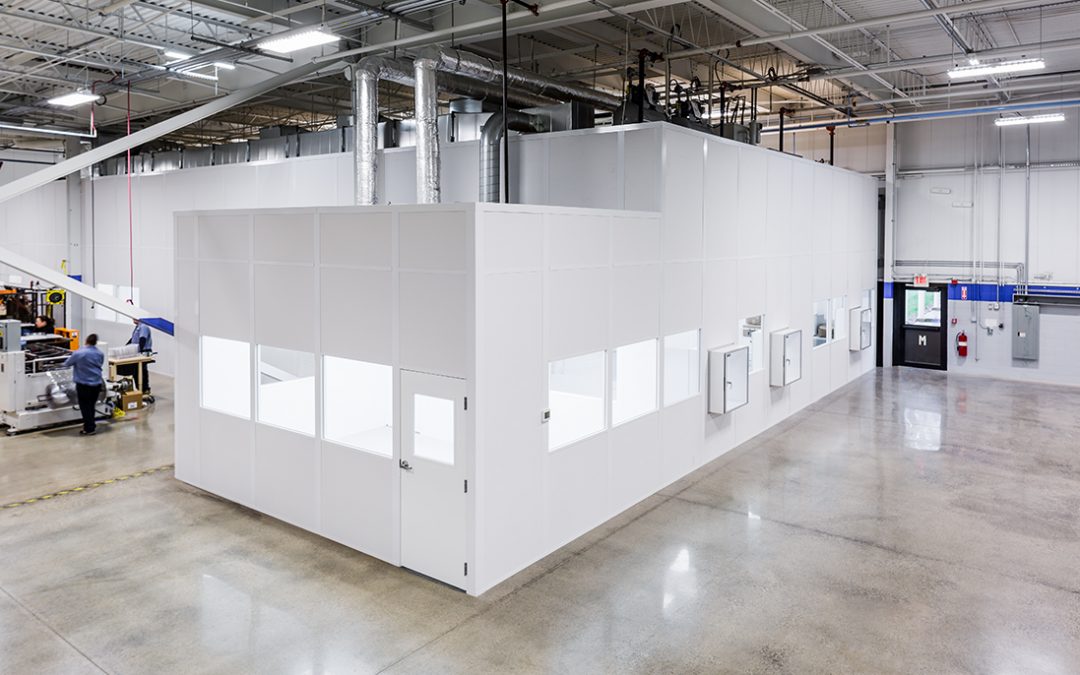
Hardwall cleanrooms mimic traditional construction in that they have solid walls (hence the name) but retain greater flexibility. The benefits of hardwall cleanrooms are numerous:

  • Existing HVAC incorporation—hardwall cleanrooms can utilize your building’s existing HVAC while maintaining your cleanroom standards.
  • Mounted equipment—hardwall cleanrooms can be designed around already mounted equipment that is floor mounted or ceiling mounted.
  • Strong environmental control—hardwall cleanrooms allow you total control over your cleanroom environment from static and temperature to particle decontamination to meet even ISO Class 1 standards
  • Able to modify—hardwall cleanrooms have a modular design that makes it easy to expand or upgrade as your cleanroom needs change.     
  • Durable—hardwall cleanrooms have a durable frame and strong ceiling grid, so they last for a long time and never sag.

Hardwall cleanrooms are excellent for large cleanrooms and traditional cleanroom applications and can work well when strict environmental control is necessary.

Softwall Cleanrooms

Softwall cleanrooms function essentially like a tent, they are made of flexible material, unlike traditional walls, and can be freestanding or suspended from your existing structure. Some of the benefits of softwall cleanrooms include:

  • Affordability—softwall cleanrooms require minimal materials and are simple in design, making them a budget-friendly option.
  • Customizable—softwall cleanrooms are super flexible and can easily be customized to your application with the necessary HEPA or ULPA filters or required door type.
  • Flexible—softwall cleanrooms are light and can be easily moved, whether freestanding or attached to your existing structure.
  • Easy to install—softwall cleanrooms can be installed in just a few hours, with minimal tools
  • Space-saving—softwall cleanrooms tend to be compact and can fit nearly anywhere.  

These attributes make softwall cleanrooms great for temporary cleanrooms or cleanrooms requiring less stringent classifications, such as storage applications.

Angstrom Technology is a leader in the design, construction, and installation of both hardwall and softwall modular cleanrooms. Call us today for more information on which is right for your application!


Choosing the Right Cleanroom Design and Installation Company

Choosing the Right Cleanroom Design and Installation Company

For facilities requiring a clean environment, the cleanroom itself is a crucial component. As a general contractor or builder, you know that finding the right company to design/build and service, your cleanroom is a critical part of your projects success. How do you choose the right cleanroom design and installation company? Here are some qualities a good cleanroom design company should have:

Good communication—quick response times

Communication is essential in any construction project, and it’s vital for subcontracted work. The cleanroom design company that you chose should give respond quickly with a budgetary quote, and be able to answer any technical questions you may have in the design/build portion of your project. Once the project is underway supply you with weekly project updates, keeping your timeline in check.

Fast lead times and ability to meet deadlines

You don’t have months and months to get this cleanroom constructed—you need it done quickly and efficiently, within your timeframe. You have deadlines that you have to meet, and the cleanroom designer should understand and respect that. Given a reasonable amount of time and all the necessary information to complete the cleanroom project, a good cleanroom design firm should be able to make quick turnaround times and keep the cleanroom, and therefore the rest of your project, on schedule.

Customization capabilities

Good cleanroom designers will work with you to create the right cleanroom for the client, and this may include custom requests. Good designers aren’t inflexible—they won’t just provide a boilerplate, cookie-cutter, one-size-fits-all cleanroom, because the needs of each client are unique, based upon cleanroom application and other circumstances. The cleanroom design firm you choose should be willing and able to design custom elements such as casework, cleanroom benches, and tables, to fit the client’s specific needs.

Ability to stay on budget   

Cleanrooms can be an enormous cost for your client, and as such, the budget must be respected. If a cleanroom designer can’t stick to the agreed-upon budget, the project can’t succeed, and problems will arise for all parties, the cleanroom design company, you, and the client. Good cleanroom designers will be able to provide a workable cleanroom design within budget constraints.

Selecting the best company for your cleanroom design and installation project is the first and most essential step in providing your client with the cleanroom their company needs. Finding a cleanroom design company with good communication practices, quick turnaround times, the ability to customize, and budget-consciousness will ensure that your cleanroom design is a success.

If you’re tasked with a cleanroom design project and have questions about designing a new cleanroom, give the experts at Angstrom a call. We install all kinds cleanrooms and have a selection of necessary cleanroom equipment and supplies.

New Trends in Cleanroom Design

New Trends in Cleanroom Design

Now that the holidays are over and the new year has begun, you might finally be getting around to implementing a new cleanroom in your facility. If you’re designing a new cleanroom or updating your current one, here are the latest trends in cleanroom design that you should consider as you design your cleanroom space.


Sustainability

Sustainability is an important consideration for all of us, including corporations. Because cleanrooms use so much energy to maintain the desired environmental conditions, engaging in sustainable practices when possible is crucial. Not only do these sustainability efforts support the natural environment, they are also energy efficient, which can help you save on energy costs. Using energy efficient equipment and energy efficient LED lighting can aid in sustainability efforts, as can a modular cleanroom. Modular cleanrooms can be altered and right-sized as the needs of your company change, while reusing the modular components, and require less material than traditional construction. Additionally, modular cleanrooms can make use of the currently existing HVAC and ventilation systems in your space, rather than requiring separate systems.


Transparency

Now, more than ever, we’re aware of the value of transparency from leaders and companies. When it comes to your cleanroom, the primary concern will always be the integrity of the controlled environment within, and it may also be important to maintain privacy for the safety of intellectual property, but cleanrooms can benefit from some openness and visibility. Using transparent partitions in the place of opaque walls can provide some benefits, the biggest of which being that lab processes can be observed, whether by compliance regulators or supervisors within your organization, without disturbing cleanroom processes or the environment within.


Flexibility

Many organizations are resisting the use of specific dedicated spaces for certain tasks or operations, instead opting for more shared spaces and flexibility in order to reduce costs and under-utilized space. This means incorporating fixtures and furniture, such as lab benches and workstations, into your cleanroom that can accommodate a variety of tasks or processes, as well as modular cleanrooms that can be easily expanded, contracted, or reconfigured to maximize use of space.


As you’re working on your cleanroom design or redesign, consider the needs of your company and your cleanroom, as well as how the cleanroom can continue to meet those needs over time, with organizational and regulatory changes. Incorporating sustainability, transparency, and flexibility into your cleanroom design can make your cleanroom efficient and future-proof, not matter the changes to come.

Looking to design a new cleanroom? Get in touch with the cleanroom experts at Angstrom Technology.

All About E-Liquid Cleanrooms

All About E-Liquid Cleanrooms

With the surge in popularity of electronic cigarettes, the need for regulation and standardization of e-cigarette and e-liquid manufacturing has emerged. In May 2016, the FDA issued a final rule which brought these products under its authority. In addition to regulatory compliance, cleanrooms for e-liquid manufacture allow for quality control and product consistency by providing a controlled environment free of harmful contamination.

The American E-liquid Manufacturing Association dictates a dedicated “lab/mixing space” and that manufacturing processes meet food preparation standards. (Click here to see the current AEMSA standards.) E-cigarette and e-liquid manufacturing is now regulated by the FDA, which is working to require that these products be manufactured within a controlled cleanroom environment. The necessary cleanroom classification is dependent upon the specific product and process, but e-liquid manufacturing would generally require cleanrooms to meet and be certified to ISO Class 7 or ISO Class 8 standards.

When it comes to installing a cleanroom for your e-liquid manufacturing business, sooner is better than later, especially with FDA legislation looming. Modular cleanrooms are one of the best options for e-liquid cleanrooms for a variety of reasons. Modular clean rooms have better lighting options than traditionally constructed spaces, as well as greater flexibility since modular cleanrooms can be easily reconfigured or expanded when your operation changes. They are often less expensive and time-consuming to install than traditional construction and offer greater flexibility when it comes to location and placement. Modular cleanrooms are essentially self-contained and can be placed nearly anywhere in your space for greatest efficiency and convenience, even in the middle of a large warehouse-type building.

Additionally, various parts of your process may require different levels of cleanroom control. Hardwall cleanrooms provide the highest level of control over contamination, humidity, and pressure, and are ideal for manufacturing activities and quality control testing; softwall cleanrooms can provide clean, contaminant-free space for e-liquid bulk storage.

As demand for e-liquid increases, so does consumer and regulatory scrutiny on its manufacture. Manufacturing e-liquids in a cleanroom environment is becoming a necessity, and ensuring that the cleanroom meets the industry ISO standard and your company’s needs is an important consideration.

Designing a cleanroom for your e-liquid company? Call Angstrom Technology. We have the experience and the technology to create the cleanroom you need.


Benefits of Cleanroom Pass-Through Chambers

Pass-through chambers are a commonly used cleanroom term, and they’re also an ideal addition to just about any cleanroom. They’re easy to install, they don’t draw much out of your budget, and they hold tons of benefits for the operation of your cleanroom. While there are all types of pass-through chambers, from basic transaction windows to industrial roll-up door pass-throughs, most cleanroom pass-throughs fall into the dual-door category. Because the removal of contaminants is any cleanroom’s top priority, most cleanroom pass-through chambers have two doors, one on the outside and one on the inside of the cleanroom. Those cleanrooms that must meet higher standards often install pass-throughs with additional features like an air shower or fire resistance, but the general construction and operation is the same.

What are the benefits of cleanroom pass-through chambers?

  • They allow your employees to transfer materials in and out of your cleanroom without contamination.
  • They make it easy for employees to pass materials into the cleanroom without having to gown. This also cuts down on the number of employees in your cleanroom at any one time.
  • They come in a variety of sizes and materials, ensuring you get the pass-through that meets the needs of your employees. Stainless steel options are corrosion-free, which extends the life of your pass-through, and helps keep your cleanroom clean.
  • Double door designs ensure cross contamination doesn’t happen. And heavy duty sealing lock features keep contaminants out of the chamber when it’s not in use.
  • Most pass-through chambers are customizable, allowing you to choose the option that best fits the needs of your cleanroom. Whether you need a fire safe option, one that’s chemical resistant, or a pass-through chamber that includes a blower with HEPA filtered air, you can choose the chamber that best suits your cleanroom needs, ensuring you benefit from a pass-through chamber, regardless of your cleanroom classification.

How do cleanroom pass-through chambers increase productivity?

The single greatest benefit of a cleanroom pass-through chamber is its ability to speed up your processes and increase employee productivity. Pass-through chambers eliminate the need for employees to properly gown to enter a cleanroom environment just to hand off a necessary item or sample. As you likely know, the gowning process can be time-consuming, and additionally, the more employees you have in a cleanroom, the greater the chance for contamination. When employees can simply place materials in the pass-through chamber, you save a great deal of time on both sides of the cleanroom. Best of all, pass-through chambers are easily installed, whether you have an existing cleanroom or you’ve just commissioned a new one.

Who uses pass-through chambers?

The benefits of pass-through chambers are clear. They boost productivity without sacrificing cleanliness. So, which cleanroom industries use pass-through chambers, and how?

Research Facilities

Because research facilities often study new and unpredictable chemicals and substances, they need pass-through chambers for safety more than for convenience. Because some chemicals can easily become volatile and cause fires, fire safe pass-throughs are commonly used in this application. These pass-through chambers can withstand fire exposure for up to 90 minutes, and their sturdy construction maintains frame shape that protects research labs from destruction. While these labs also often make use of air shower pass-throughs to decontaminate materials before they’re introduced to the lab, fire safe pass-throughs are the most common.

Medical and Pharmaceutical cleanrooms

Decontamination is the first priority of both medical and pharmaceutical cleanrooms. Because hospital laboratories often deal with highly contagious substances, it’s paramount that the environment remains sterile. In the same vein, pharmaceutical cleanrooms have to ensure there is absolutely no contamination in the manufacturing process that could alter their product. In both cases, these cleanrooms require pass-through chambers that keep samples, specimens, and other materials sterile as they’re brought into the cleanroom. These industries typically make use of a standard two door pass-through chamber that keeps outside contaminants from entering the cleanroom and ensures the materials remain sterile as they’re waiting to be brought in.

Electronic and technology manufacturing cleanrooms

Manufacturing facilities that put together the complex inner workings of technological devices like computers and smartphones require very strict cleanroom environments that filter out even the smallest particles of dust and other contaminants. Just one tiny particle settling on a single piece in the manufacturing environment could render a future hard drive useless. Many electronic and technology manufacturing cleanrooms opt for highly monitored pass-through windows in order to maintain the sterility necessary to produce quality electronic products while maintaining a high level of productivity.


Pass-through chambers are a highly useful component of any cleanroom. They help you ensure that you keep your processes moving, while maintaining the high standard of cleanliness within your cleanroom. If you’re installing a new cleanroom, or even if you’re considering adding a pass-through chamber to your existing cleanroom, be sure to give the experts at Angstrom Technology a call! We’ve been manufacturing top-of-the-line cleanrooms for years and would be more than happy to help you find the pass-through best for your operation. Call our office at 888-768-6900 or contact us online today!