
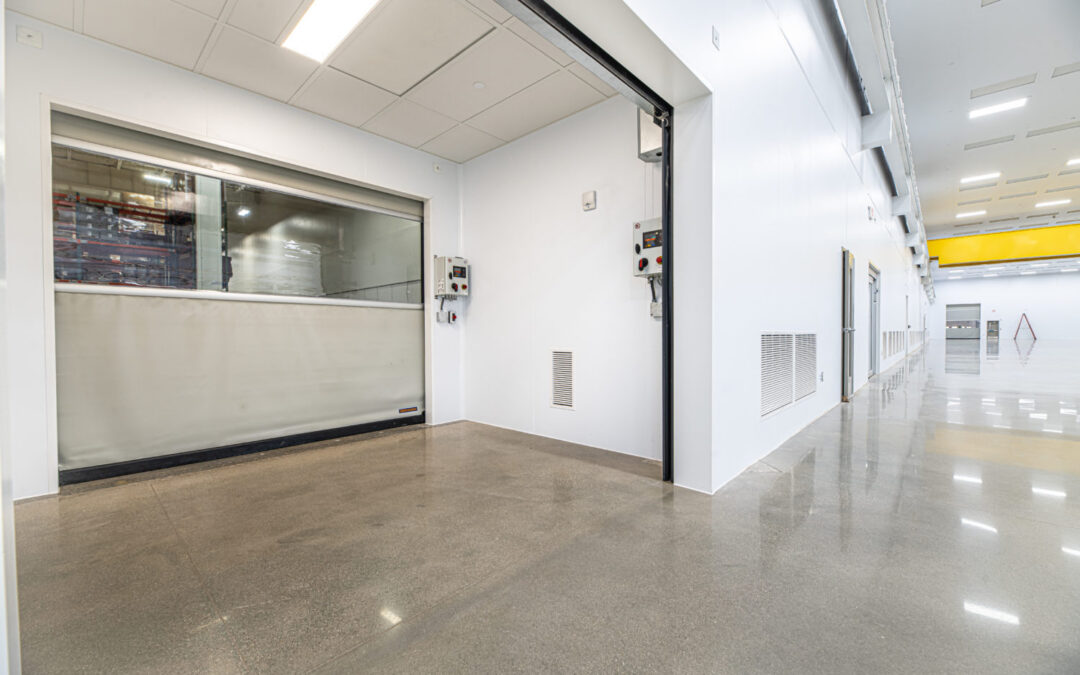
When you step into the world of cleanroom design, the terminology can feel overwhelming. From ISO classifications to pressure cascades and gowning protocols, there’s a lot to understand.
One of the most essential components of a controlled environment is the airlock.
So, what is an airlock in a cleanroom? How does it work? And why is it critical for ISO and cGMP compliance?
Let’s break it down.
What Is an Airlock in a Cleanroom?
An airlock is a controlled transitional space with two electronically interlocked doors that prevent both doors from being opened at the same time.
Its primary purpose is to:
- Prevent contamination transfer
- Maintain pressure differentials
- Support ISO 14644 classifications
- Help facilities meet cGMP requirements
Airlocks act as a protective buffer between different cleanliness zones.
What Is an Airlock?
In cleanroom design, an airlock is a small enclosed space located between two areas of differing cleanliness classifications. They’re typically located between:
- An uncontrolled corridor and a cleanroom
- Two cleanrooms with different ISO classes
- A gowning area and a production space
Airlocks have the unique ability to:
- Control particle migration
- Maintain environmental stability (pressure, temperature, humidity)
- Regulate personnel or material movement
- Support compliance in regulated industries
Industries such as pharmaceuticals, medical devices, aerospace, semiconductors, and biotechnology rely on properly designed airlocks to protect product integrity and reduce contamination risk.
How Does an Airlock Work?
An airlock creates a controlled transition zone between spaces. Its functionality is rooted in interlocking door systems and pressure management.
Here’s how a typical airlock operates:
1. Two-Door Interlock System
An airlock includes:
- One door to the “less clean” space
- One door to the “more clean” space
These doors are electronically interlocked, meaning only one door can be open at a time. This prevents direct airflow between the two areas.
2. Pressure Differential Control
Most cleanrooms operate at a higher pressure than the surrounding spaces. This creates a positive pressure cascade that pushes air outward rather than allowing contaminants to enter.
When a person enters the airlock:
- The outer door closes fully
- The system stabilizes pressure
- Only then can the inner door be opened
This protects the controlled environment from contamination intrusion.
3. Environmental Stabilization
Modern airlocks may integrate with the building management system (BMS) to:
- Monitor pressure in real time
- Adjust airflow automatically
- Track humidity and temperature
- Log compliance data
Advanced systems now feature:
- Differential pressure sensors
- Real-time alerts
- Automated airflow balancing
These technologies help maintain ISO classification and support regulatory audits.
4. Personnel & Gowning Protocol
In many sterile applications, personnel must:
- Wear cleanroom garments
- Apply hair and shoe covers
- Follow defined entry procedures
The airlock serves as a controlled preparation zone before entering the cleanroom.
Types of Cleanroom Airlocks
Airlocks can be designed differently based on security requirements, compliance requirements, and the facility’s risk profile.
Secure vs. Non-Secure Airlocks:
| Type | Description | Best For |
| Secure Airlock | Doors remain locked until access is granted via keypad, badge, or request-to-enter device | Regulated industries, high-security environments |
| Non-Secure Airlock | Doors remain unlocked until one is opened, triggering the other to lock | Lower-risk applications |
Supervised vs. Unsupervised Airlocks:
| Type | Description | Best For |
| Supervised Airlocks | Access request verified by CCTV or operator | Common in high-security pharmaceutical or research facilities |
| Unsupervised Airlocks | Controlled via biometric readers, badge systems, or keypads | Suitable where only authorized personnel require access |
3 Must-Have Modern Airlock Features
Cleanroom technology continues to evolve. Today’s airlocks can include:
1. Smart Access Control
Modern airlocks now integrate advanced authentication systems to enhance both security and traceability.
- Biometric authentication
- RFID badge systems
- Integration with facility security platforms
2. Real-Time Monitoring
Continuous environmental monitoring helps maintain compliance and quickly identify potential issues before they impact production.
- Live pressure differential tracking
- Automated alarm notifications
- Data logging for audit readiness
3. Energy-Efficient Design
High-performance airlocks are increasingly engineered to reduce energy consumption while maintaining strict environmental control.
- Optimized airflow strategies
- Variable frequency drives (VFDs)
- Reduced air change energy consumption
These features improve both compliance and operational efficiency.
Additional Features To Enhance Cleanroom & Airlock Security
Depending on your ISO classification or cGMP requirements, additional safeguards may be necessary.
1. Breach Alarms
Breach alarms provide an immediate alert if the integrity of the airlock is compromised. Triggered when:
- Doors are forced open
- Unauthorized access occurs
- Pressure differential drops outside tolerance
2. Door Open Duration Alarms
Door open duration alarms help prevent environmental disruption caused by doors being left open too long. If a door remains open beyond the preset time, the system alerts personnel to prevent:
- Loss of pressure cascade
- Contamination risk
- Environmental instability
3. Door Status Indicators
Door status indicators provide real-time visual confirmation of airlock conditions to reduce human error. Visual or digital displays show:
- Door locked/unlocked status
- Safe-to-enter confirmation
- Pressure stability indicators
Why Airlocks Are Critical for ISO & cGMP Compliance
Airlocks play a foundational role in helping controlled environments meet regulatory standards and maintain validated operating conditions.
Properly designed airlocks support:
- ISO 14644 cleanroom classification
- cGMP compliance in pharmaceuticals and medical devices
- Controlled material and personnel flow
- Documented environmental monitoring
Without airlocks, maintaining pressure cascades and contamination control becomes significantly more difficult — and regulatory risk increases.
Cleanroom Airlock FAQs:
What is the purpose of an airlock in a cleanroom?
The goal of a cleanroom airlock is to prevent contamination transfer between spaces while maintaining pressure and environmental control.
Do all cleanrooms need an airlock?
Not, not all cleanrooms require an airlock. Clearroom requirements depend on ISO classification, regulatory standards, and risk assessment.
Can airlocks be used for materials?
Yes. Material airlocks (MALs) are commonly used to transfer equipment or supplies
without compromising cleanliness.
Are airlocks required for cGMP facilities?
In most pharmaceutical and biotechnology environments, airlocks are considered essential to maintaining compliance and proper flow control.
Ready to Design a Compliant Cleanroom?
At Angstrom Technology, we design and build cleanrooms (including modular, stick-built, and application-specific environments) with properly engineered airlock systems that support contamination control, environmental stability, and compliance.
If your cleanroom requires an airlock or you’re evaluating your current design, our experts are here to help.
Contact Angstrom Technology to discuss your application and build a cleanroom environment engineered for performance, compliance, and long-term reliability.